Goldman Sachs explains how its businesses make money
Goldman’s three-business map shows where revenue comes from, why wealth and platform work matter more, and how that shapes mobility, bonuses, and visibility.
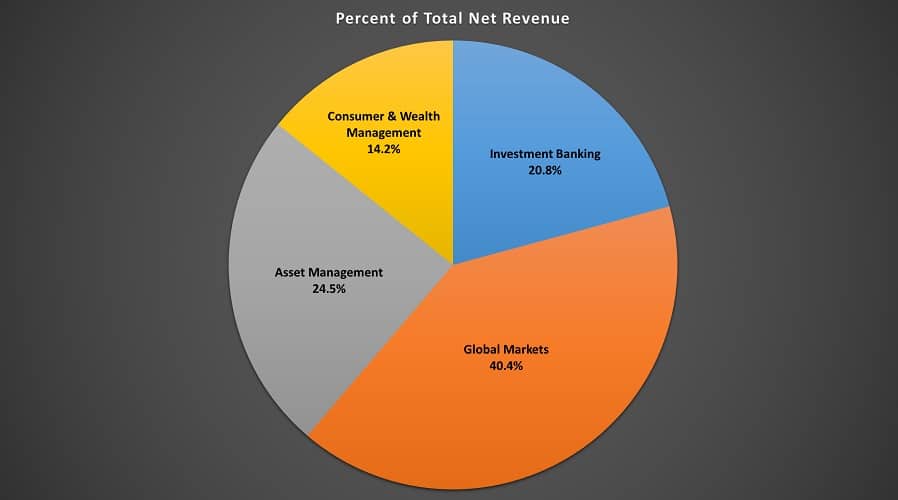
Global Banking & Markets, Asset & Wealth Management, and Platform Solutions are the three operating segments Goldman Sachs uses to describe its business. An analyst on a deals team, a fixed-income strategist, a wealth specialist, and a platform engineer can all sit under the same brand while chasing very different scoreboards.
How Goldman actually makes money
Global Banking & Markets
This is the most cyclical part of the franchise, and the one most directly tied to deal flow, interest rates, and volatility. When underwriting activity, M&A, or trading volumes are strong, this business tends to carry more of the firm’s visible momentum, which is why it often sets the tone for prestige inside Goldman. For employees, that means the work is usually the most market-sensitive and the most exposed to sudden swings in demand.
A lot of high-profile client coverage, execution work, and market-moving analysis lives here. The downside is just as clear, because compensation, staffing, and day-to-day pressure can move with the market cycle. If you sit here, your visibility usually comes from being close to revenue-producing transactions and from helping senior bankers or traders win the next mandate.
Asset & Wealth Management
Asset & Wealth Management gives Goldman a more recurring revenue base, which matters when banking and markets are choppier. This part of the firm continued to produce solid results in 2024, and the January 15, 2025 earnings readout highlighted a record year for private banking and other arms, along with double-digit revenue growth in wealth management. Total asset and wealth management net revenue was up 10 percent year over year, even though it dipped 14 percent from the prior quarter.
Wealth and asset management can be less flashy than a deal desk, but they often create steadier revenue, stronger client stickiness, and a clearer path for employees who want durable franchise value rather than only cyclical upside. The work also rewards a different skill set: relationship management, product depth, portfolio thinking, and the ability to keep assets from walking out the door.
Platform Solutions
Platform Solutions adds a different language to Goldman, one that is less about classic investment banking and more about technology-enabled financial products and services. For employees, that means more product thinking, more engineering coordination, and more emphasis on building services that can scale outside a single deal or trade.
Platform work can create internal bridges between client coverage, product design, and distribution. It also gives the firm another way to diversify revenue, which is important when the banking and markets cycle slows. For people inside the firm, it can be a place where commercial instincts and technical execution both get rewarded, even if the path looks less traditional than investment banking.
Why the mix matters inside the firm
Goldman keeps listing the same three operating segments in its investor relations materials and annual report. Each business runs on different metrics and different rhythms, and that means promotion timing, transfer options, and the kind of work that gets noticed are not the same everywhere. An analyst in banking, a strategist in rates, and a product specialist in wealth management may all work hard, but they are not building the same résumé inside the firm.
Internal mobility depends on learning the architecture first. If you want to move from product coverage into client strategy, or from asset management into a broader commercial role, you need to know which adjacent teams control distribution, execution, and client entry points. The smartest career moves inside Goldman usually come from building relationships across those boundaries, not from chasing prestige in isolation.
A few patterns matter most:
- In Global Banking & Markets, visibility comes from originating, structuring, and executing transactions that create fee or trading revenue.
- In Asset & Wealth Management, the high-value work is usually tied to retaining assets, winning new mandates, and deepening client relationships.
- In Platform Solutions, the important wins come from product adoption, technical delivery, and building services that can scale.
- Cross-division work matters because Goldman keeps pushing integrated coverage, and that often rewards people who can connect clients to the right combination of banking, markets, wealth, and product expertise.
What the 2024 numbers say about the franchise
In 2024, Goldman increased net revenues by 16 percent year over year to $53.51 billion and grew earnings per share by 77 percent to $40.54. Net earnings for the year ended December 31, 2024 were $14.28 billion.
Those numbers shape how leadership talks about capital allocation, where it invests, and which teams are likely to have leverage in internal budget fights. When the firm is producing that level of earnings, the question inside the building is not just who had a good quarter, but which businesses can keep compounding across cycles.
Why the 2020 reset still matters
Goldman traces today’s structure back to its Investor Day in January 2020, when the firm laid out a strategy to grow and strengthen the franchise. Since then, firmwide net revenues have increased by roughly 60 percent, earnings per share have grown by 144 percent, returns have improved by 500 basis points, and total shareholder return has been over 340 percent, the most in its peer group over that period.
This article was produced by Prism’s automated news system from verified source data, official records, and press releases, then run through automated quality and moderation checks before publishing. The system is built and supervised by the people who set the standards it runs under. Read our full AI policy.
Did this article answer your question?