Goldman Sachs wealth management careers mix client service and investing
Goldman’s wealth careers blend client trust and investing, inside a $3.6 trillion platform that now looks central to the firm’s growth.

At its February 2023 Investor Day, Goldman Sachs said it had a $3.0 trillion firmwide investment platform, $2.5 trillion in assets under supervision, and a “premier ultra high net worth franchise.” Goldman Sachs’ wealth management jobs sit in a different lane from classic dealmaking. The work still demands market judgment, discretion, and long hours, but the center of gravity is client relationships, portfolio decisions, and long-term planning for ultra-high-net-worth families.
What Goldman’s wealth business actually does
Goldman Sachs Private Wealth Management serves ultra-high-net-worth individuals and families with holistic guidance to grow, preserve, and activate their wealth. On its private wealth homepage, the firm calls the business “Powering Global Wealth” and says it is “Internationally recognized as the best private bank for ultra high net worth individuals and families.” The role extends beyond selling products or executing trades to building a durable advisory relationship around how a client’s capital is managed over years, not weeks.
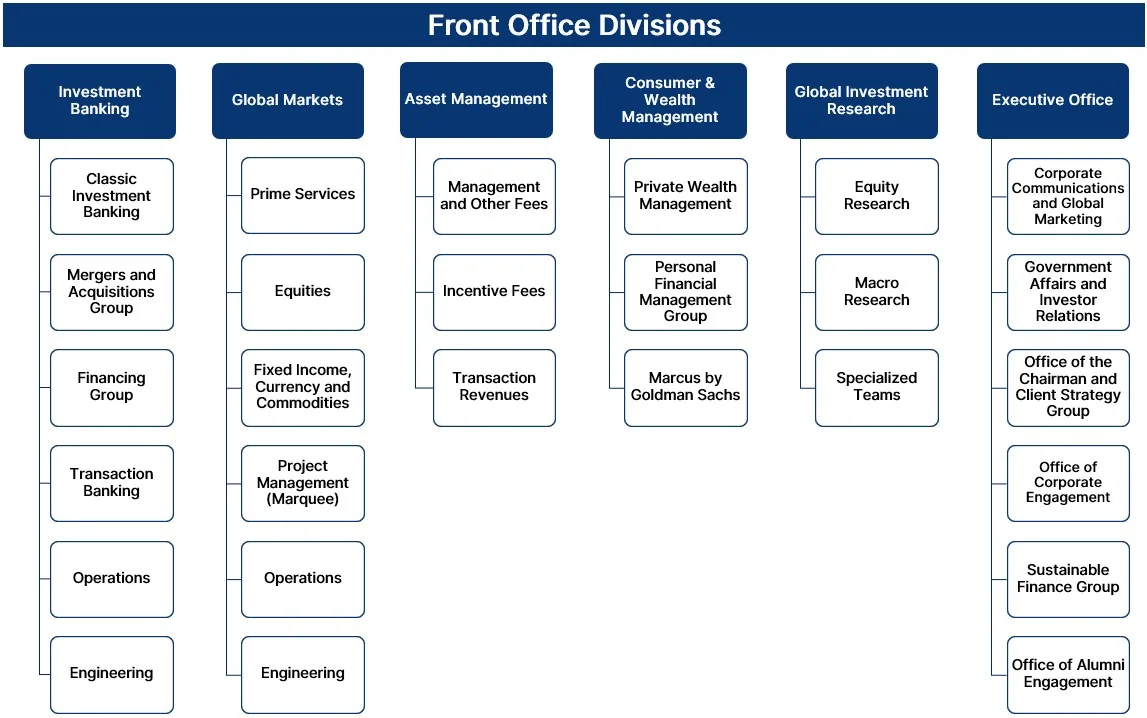
The business also sits inside Goldman Sachs Asset & Wealth Management, where wealth has become a core growth engine rather than a side offering. The platform combines private wealth, asset management, and the infrastructure needed to serve wealthy individuals, families, and related institutions. For employees, that means the day-to-day work can stretch well beyond investment ideas and into the operational plumbing that keeps a sophisticated franchise moving.
How the work splits by function
Wealth management at Goldman is not a monolithic role. It includes client advisory, portfolio construction, investment specialists, operations, technology, risk, and product work, and each of those tracks rewards a different skill set. Advisory roles lean heavily on communication, judgment, and discretion, while portfolio construction and investment specialist roles are closer to the markets side of the house and require comfort with asset allocation, alternatives, and multi-asset decision-making.
Operations, technology, risk, and product sit farther from the client conversation but are essential to scaling the platform. That is where the firm’s push into digital tools, alternatives distribution, and family-office coverage becomes visible in day-to-day work. If you are coming from banking or markets, that mix can feel familiar in technical terms but different in pace: the product is not a one-off transaction, it is a relationship that has to work over time.
The business also serves a broader audience than private individuals alone. Goldman’s private wealth presence spans individuals, families, and foundations, which helps explain why the platform needs both front-office advice and institutional-grade infrastructure behind it.
What changes by seniority
At the junior level, wealth management still rewards analysts and associates who can think like investors. Technical investment knowledge matters, but so do client-prep skills, clean communication, and the ability to support complex decisions without creating noise. The work can be demanding, yet it is usually less tied to the all-or-nothing cadence of a live merger process or a trading day, which is one reason it attracts bankers looking for a different rhythm without leaving front-office work.
At the VP and managing director level, the job becomes more about owning relationships and shaping long-duration decisions. In Goldman’s July 2025 relationship guide, the firm says “relationships are built, not transacted,” and that private wealth decisions can shape decades of wealth preservation. The senior role is not simply recommending a portfolio, but earning trust from clients whose balance sheets, tax exposure, family goals, and investment horizons can change over decades.
That also explains why private wealth can be an exit from classic banking hours without being a step down in complexity. The work still asks for market fluency, tax-aware thinking, and comfort with alternatives, but it replaces constant transaction flow with a more durable client franchise.
Why the platform matters inside Goldman
Goldman has spent years signaling that wealth is a strategic priority.
The financial results back that up. Goldman’s 2024 annual report showed net revenues rose 16% year over year to $53.5 billion, earnings per share rose 77% to $40.54, and assets under supervision reached another record, marking the 28th consecutive quarter of long-term fee-based net inflows. Goldman’s 2025 annual report put assets under supervision at $3.6 trillion and client assets at $1.9 trillion. Goldman Sachs wealth management saw double-digit revenue growth in 2024, and assets under supervision increased 12% to a record $3.14 trillion.
A larger wealth franchise creates more room for advisory, product, alternatives, and family-office roles, and it can create a different kind of upside than classic investment banking. You may not be chasing the same transaction bonus cycle as M&A, but you are working inside a business where recurring-fee relationships and sticky client assets can support a steadier career path.
What the recognition says about the job
Euromoney’s 2025 private banking awards identify Goldman Sachs as the world’s best private bank for ultra-high-net-worth clients and as the world’s best private bank in 2025.
This article was produced by Prism’s automated news system from verified source data, official records, and press releases, then run through automated quality and moderation checks before publishing. The system is built and supervised by the people who set the standards it runs under. Read our full AI policy.
Did this article answer your question?