Goldman Sachs shares HackerRank tips for engineering candidates
Goldman’s HackerRank guide points engineering candidates to the real first gate: timed coding, edge cases, and clean reasoning that decide who moves forward.

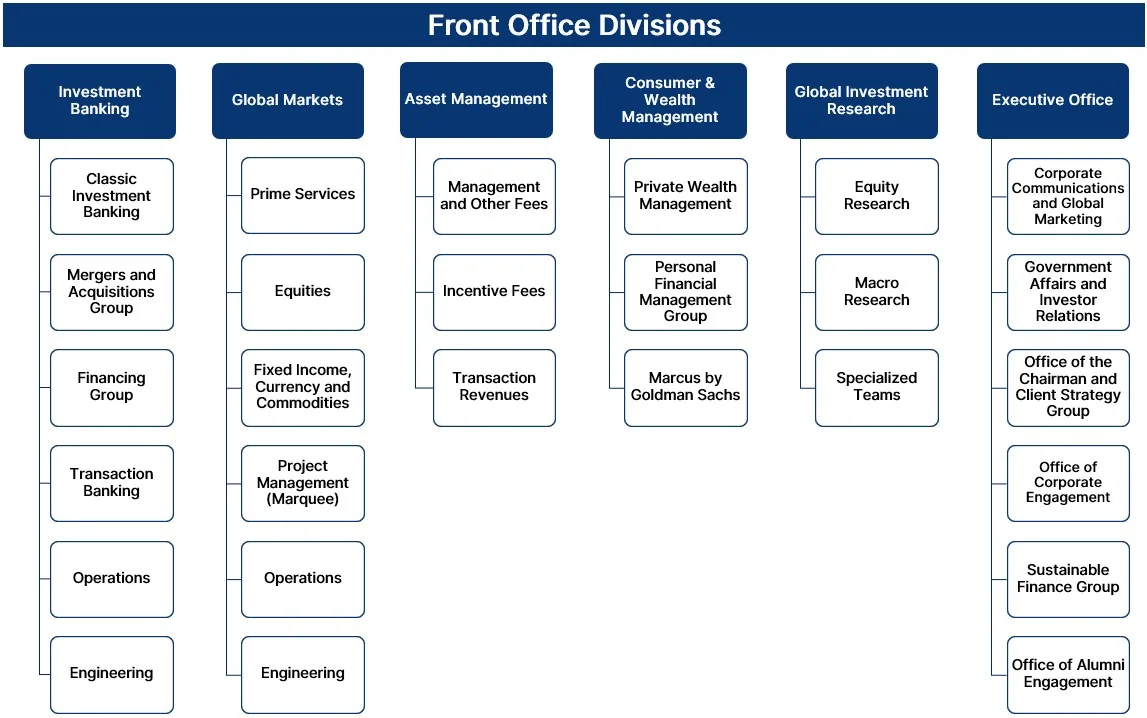
At Goldman Sachs, more than 15,000 engineers work across 100+ offices, 180+ citizenships, 150+ languages and 20 divisions, and one of the first real gates is often the HackerRank screen. The assessment screens for whether you can think clearly, code accurately, and keep moving under deadline pressure.
Why the HackerRank screen matters
At Goldman, HackerRank sits in the path to roles where the code can touch client transactions, internal controls, pricing systems, or data pipelines. The firm’s own guidance treats the assessment as a serious hiring gate rather than a formality. For candidates, the test can shape whether you even reach the interview rounds where you can talk about architecture, business judgment, and fit.
HackerRank’s Interview Preparation Kit draws from “learnings from 1000+ companies” and organizes challenges around “core concepts commonly tested during interviews.” The same core expectations tend to show up across technical hiring in banking and technology.
What Goldman is really screening for
A Goldman HackerRank test is not a pure puzzle. It tests job readiness under pressure: can you parse the prompt carefully, choose a workable approach quickly, and write code that still holds up when the easy path breaks on a corner case? That usually means fluency in arrays, strings, recursion, hash maps, sorting and basic complexity analysis, not just memorized solutions.
A strong submission also shows discipline. Clean reasoning matters because banks do not hire engineers only to produce working code once; they need people who can build software that survives real operational constraints, where empty inputs, duplicates, overflow, and performance limits all matter. Candidates who advance usually balance speed with caution instead of racing into an answer and hoping the edge cases never appear.
What the format can look like
Goldman’s HackerRank screen does not look the same for every role. One Reddit candidate said the test lasted 180 minutes and included two coding questions plus 10 math questions. Another candidate said a Goldman Sachs New Analyst HackerRank had two coding questions and 10 multiple-choice questions.
In candidate accounts, the screen extends beyond pure coding. If math or multiple-choice sections appear, the pressure is not just on implementation speed but on accuracy across different formats. The first round may be testing breadth, not only programming muscle.
How to prepare in a way that actually helps
The most useful preparation is not collecting shortcuts. It is building repeatable habits that hold up when the clock starts. That means practicing the problem types that appear again and again, then rehearsing how you will work through them under time pressure.
- Drill arrays, strings, hash maps, recursion and sorting until the patterns feel automatic.
- Practice writing down the edge cases before you code, especially empty inputs, duplicates and large values.
- Time yourself so you know how long you need to read, plan, code and test.
- Practice debugging without overcorrecting, because one bad assumption can burn the whole window.
- Review basic complexity analysis so you can explain why your solution is efficient enough.
HackerRank’s kit is built around common interview concepts, so the goal is not to memorize one answer set but to get comfortable with the kinds of reasoning employers repeatedly test.
Why Goldman keeps leaning on this gate
Goldman Sachs has used HackerRank in its recruiting pipeline for years, and the platform’s Goldman CodeSprint contest describes Goldman as building solutions to complex problems in the financial industry. The work is global, distributed, and broad enough that a structured online screen helps narrow a very large applicant pool.
A September 2018 eFinancialCareers piece titled “How I passed Goldman Sachs' difficult Hackerrank test” treated the assessment as a meaningful obstacle for candidates, and later candidate accounts still mention Goldman Sachs HackerRank screens.
What gives candidates the best odds
If you are aiming for Goldman, think like the person reading your code. Keep your solutions readable. State your assumptions. Test the edge cases before you submit. And do not let the clock push you into brittle code that works only on the sample input.
This article was produced by Prism’s automated news system from verified source data, official records, and press releases, then run through automated quality and moderation checks before publishing. The system is built and supervised by the people who set the standards it runs under. Read our full AI policy.
Did this article answer your question?