Goldman Sachs Defends DEI Commitments Amid Advocacy Group Pressure
Color of Change took its Goldman Sachs campaign to Times Square as the word "diversity" shrank from 39 to just 6 mentions in the firm's latest proxy statement.
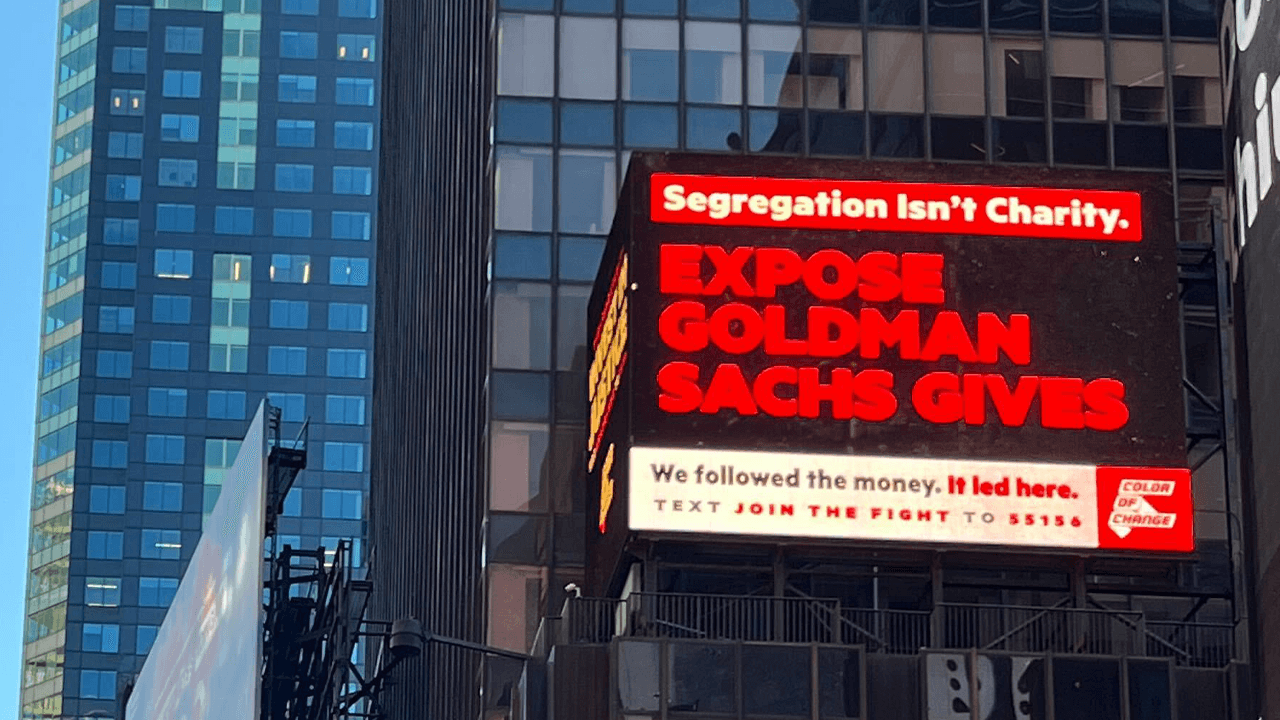
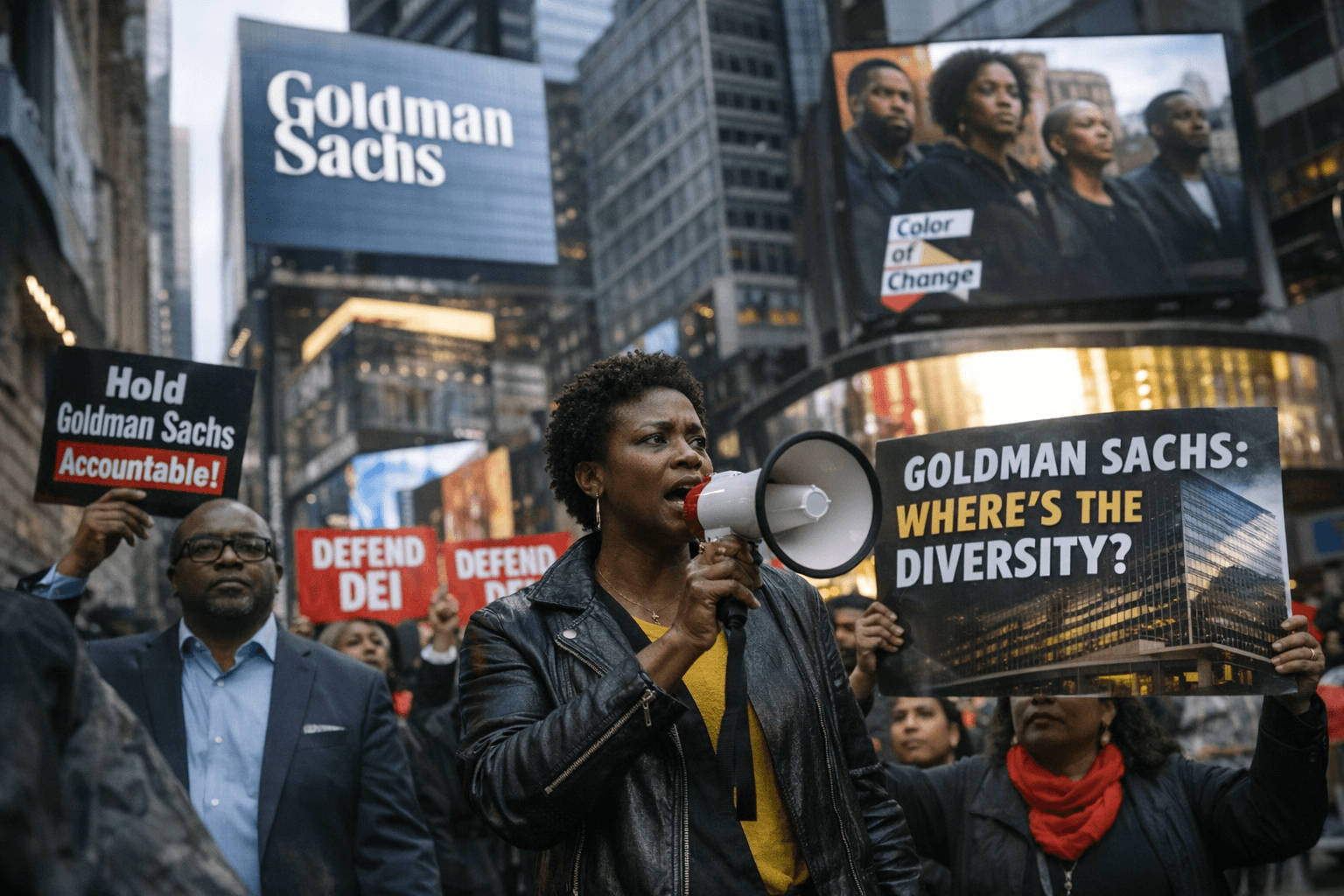
Color of Change planted itself at Goldman Sachs's front door, literally. The racial-justice advocacy group ran billboard ads in Times Square and on New York City bus stops targeting the firm, and announced plans to extend the campaign to Dallas and Salt Lake City, escalating a public pressure campaign that forced one of Wall Street's most recognizable names into an uncomfortable posture: defending its own DEI record against criticism from the left while navigating legal constraints tightened from the right.
Goldman pushed back against Color of Change's accusations, reaffirming its commitment to diversity, equity and inclusion amid allegations that it was retreating from those commitments. Spokesperson Tony Fratto offered the firm's measured defense: "We are strong believers in diversity. It's important to our business. It's important to our people. But we have to operate within the guidelines of the law in recruiting our talent and developing our programs."
The phrase "within the guidelines of the law" carried weight precisely because the legal landscape has shifted. Color of Change accused the firm's employee donor-advised fund, Goldman Sachs Gives, of funding attacks on civil rights and directing money to anti-DEI organizations. Goldman contested that characterization, but the optics of the fund became a liability: Goldman Sachs Gives is a vehicle that employees have used for matched giving and community philanthropy, and it is now a named target in a national ad campaign.
The proxy statement numbers gave Color of Change its sharpest line of attack. "Diversity" appeared 39 times in Goldman's 2024 proxy statement. It appears six times in the 2026 filing. That 85 percent decline in a single governance document is the kind of measurable, citation-ready data that advocacy groups build campaigns around, and it framed the entire dispute as one of documented retreat rather than mere allegation.
Goldman pointed to its One Million Black Women initiative, a $10 billion commitment with $100 million directed to grants and investments, as evidence of continued engagement. But even that program has been retooled. Goldman retooled the One Million Black Women initiative, removing explicit references to race as it recalibrated programs to align with the post-2025 legal environment.
The board governance changes told a parallel story. The National Legal and Policy Center submitted a shareholder proposal in September calling for the elimination of DEI-based board criteria. Goldman agreed to remove those criteria, and the proposal was withdrawn. That agreement, reached quietly months before Color of Change's billboard campaign, illustrated how Goldman was responding to conservative shareholder pressure on one front while now facing progressive institutional pressure on another.
Several Wall Street peers, including Morgan Stanley and Citi, softened diversity-related language and initiatives amid shifting regulatory and political signals. Goldman was not an outlier; it was, in many ways, the pace-setter. The first widely publicized sign that U.S. banks were distancing themselves from DEI came when Goldman walked back its four-year-old policy barring it from taking public any companies with all-male, all-white boards. JPMorgan Chase and others followed.
For analysts, associates, and mid-level employees who rely on affinity networks and formal sponsorship for promotion pathways, the practical stakes are real. Goldman Sachs Gives is under public scrutiny in a way it has never been before. Mentorship programs and inclusion networks that depend on internal resource allocation will increasingly sit inside a compliance-review process rather than a culture-building one. HR and talent teams should expect more legal-sign-off requirements on program design and external messaging, a shift that tends to slow program iteration and reduce visibility.
Goldman's Summer Analyst pipeline depends partly on the firm's employer brand among diverse undergraduate recruiting pools, and that brand is now being tested in public, on billboards, in two of its major business-hub cities.
This article was produced by Prism’s automated news system from verified source data, official records, and press releases, then run through automated quality and moderation checks before publishing. The system is built and supervised by the people who set the standards it runs under. Read our full AI policy.
Did this article answer your question?