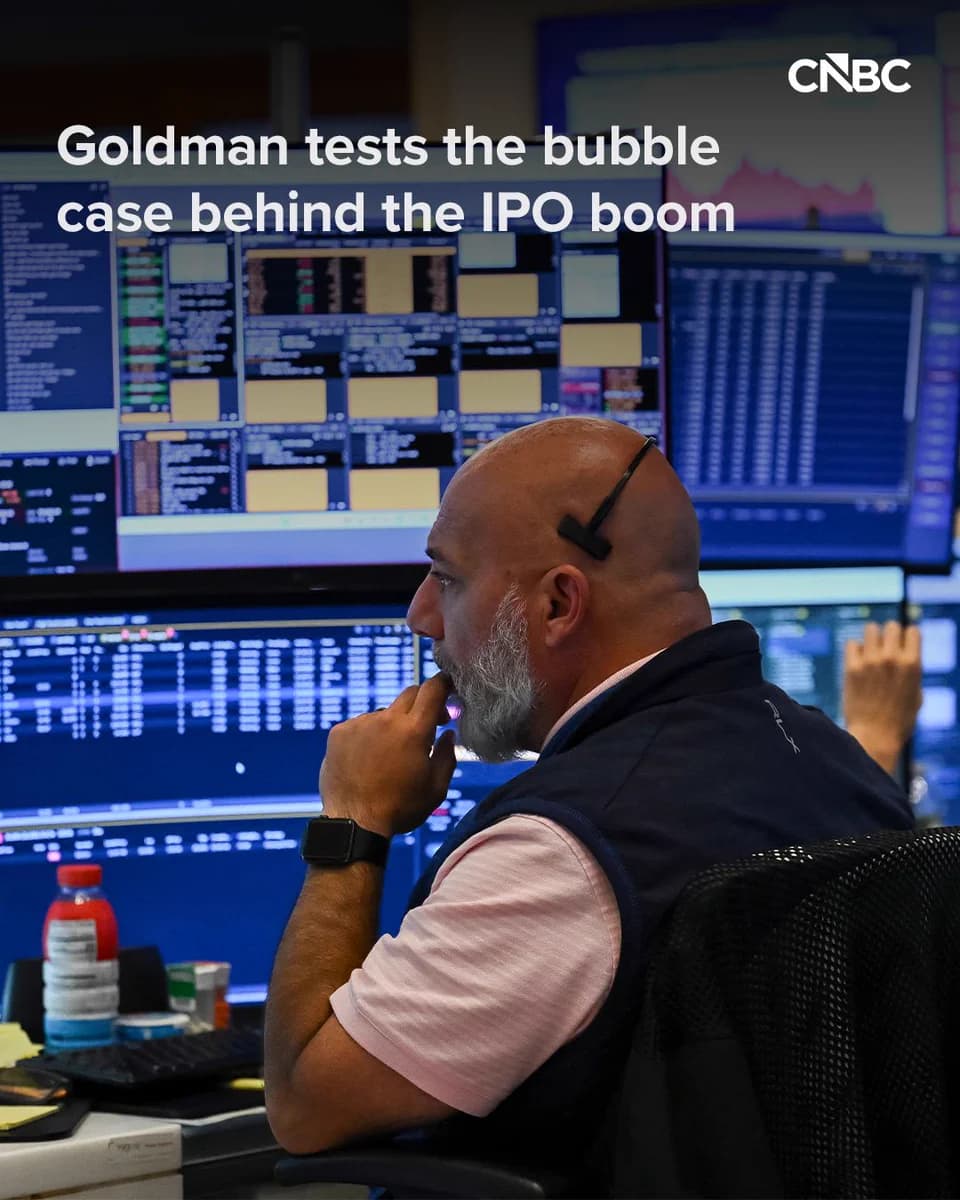
Goldman Sachs earnings loom as investment banking rebound takes center stage
Goldman’s July 14 report will show whether bankers keep the upper hand after investment-banking fees jumped 48% to $2.84 billion in the first quarter.

Goldman Sachs will report second-quarter results on Tuesday, July 14, at about 7:30 a.m. ET, with a conference call set for 9:30 a.m. ET, and the real internal question is whether the firm’s banking rebound keeps shifting power toward the deal teams. After a first quarter that delivered $17.23 billion in net revenues, $5.63 billion in net earnings, diluted EPS of $17.55 and an annualized return on common equity of 19.8%, Goldman’s investment-banking engine is heading into a tougher comparison, but one that still gives bankers a chance to claim more influence, more budget and more promotion momentum if the pace holds.
The first quarter already showed why the debate inside the firm matters. Investment-banking fees rose 48% to $2.84 billion, while CNBC said Goldman posted record equities trading revenue and its second-highest quarterly revenue overall. That split tells the story for analysts, associates and VPs: trading can still deliver a headline quarter, but banking is the part of the business that most directly drives client coverage intensity, pitch volume and the late-night work that fills out bonus cases and promotion memos. If July 14 brings another banking-heavy print, the argument for leaning resources toward coverage and advisory teams gets a lot stronger.

Goldman’s own M&A outlook says 2026 dealmaking is being supported by AI, strategic transformation, private markets and flexible capital solutions, and co-chair of global M&A Tim Ingrassia said the surge in first-quarter activity suggests the cycle still has room to run. Goldman has also said pure M&A could reach $3.8 trillion this year, above 2025 and 2021 levels, while its outlook says M&A cycles typically last six to seven years. Reuters reported in mid-June that Goldman had already managed more than $1 trillion in announced M&A in 2026, a record half-year pace for any investment bank. For junior bankers, that means more live mandates and fewer dead pitches; for managers, it means a better case for adding headcount instead of squeezing it.
There is one more capital signal in the background. After the Federal Reserve’s 2026 stress test, Goldman said it intends to raise its common dividend from $4.50 to $5.00 per share beginning July 1, subject to board approval. That says management is comfortable enough with the balance sheet to return more cash, even as the firm tries to prove that the current deal cycle is not just a burst of activity but a durable source of earnings and internal leverage. July 14 will show whether bankers are winning that argument.
This article was produced by Prism’s automated news system from verified source data, official records, and press releases, then run through automated quality and moderation checks before publishing. The system is built and supervised by the people who set the standards it runs under. Read our full AI policy.
Did this article answer your question?