Goldman Sachs Economist Says $450B AI Spending Added Nothing to GDP Growth
Goldman's chief economist told the Atlantic Council that hundreds of billions in AI spending added "basically zero" to U.S. GDP in 2025 — because most of the hardware was imported.

Jan Hatzius, Goldman Sachs' chief economist, told the Atlantic Council that all the AI capital spending by major tech companies in 2025 produced "basically zero" contribution to U.S. GDP growth — a conclusion that cuts directly against a narrative that had been amplified by prominent economists, Wall Street analysts, and President Trump himself.
"We don't actually view AI investment as strongly growth positive," Hatzius said. "I think there's a lot of misreporting, actually, of the impact AI investment had on U.S. GDP growth in 2025, and it's much smaller than is often perceived."
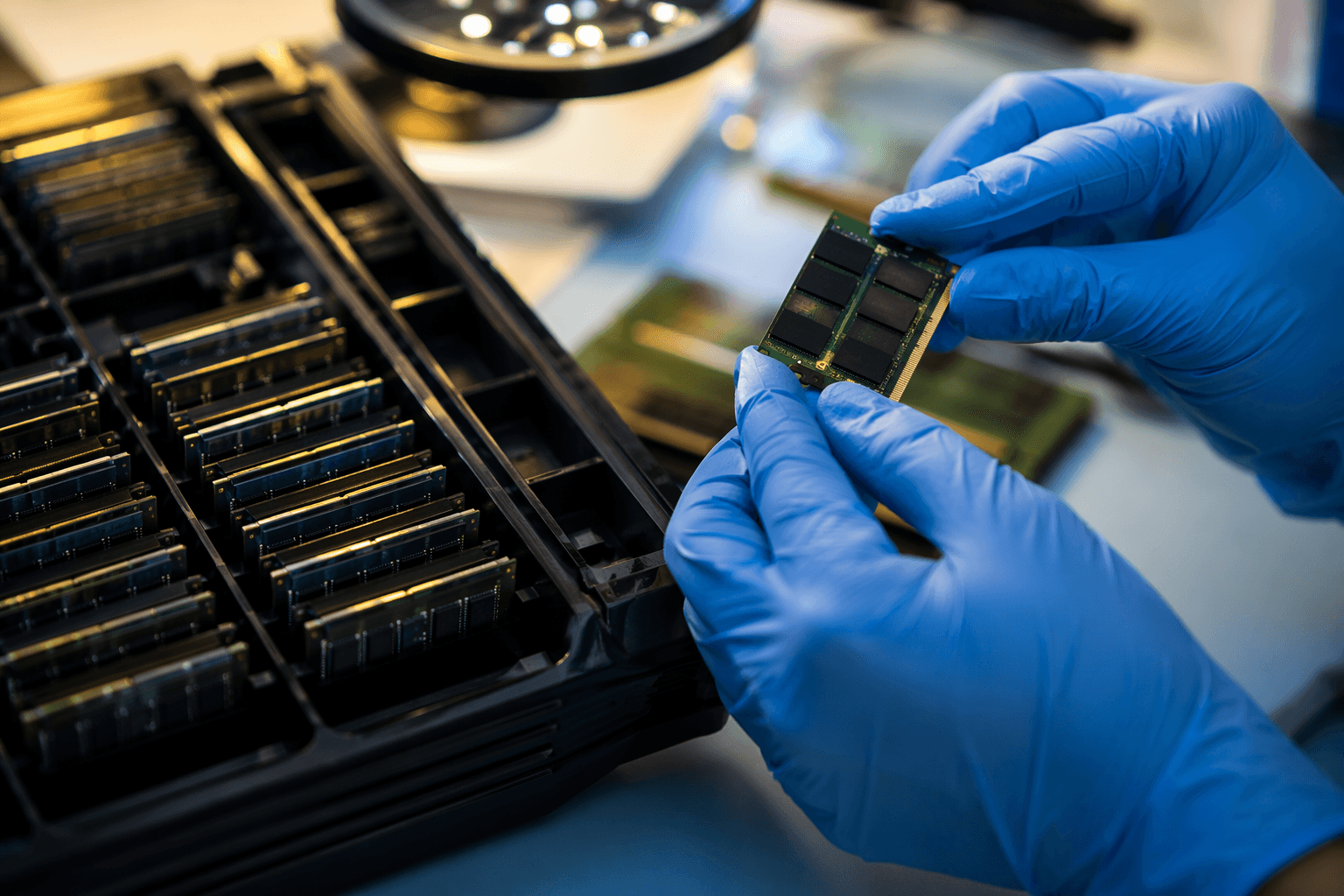
The core explanation is mechanical: U.S. GDP measures domestic production, and imports are subtracted from the calculation. A large share of AI infrastructure spending flows to hardware manufactured in Asia. "A lot of the AI investment that we're seeing in the U.S. adds to Taiwanese GDP, and it adds to Korean GDP but not really that much to U.S. GDP," Hatzius said. According to TechRadar, roughly 75% of the cost of building a data center comes from imported components, though the underlying methodology for that figure has not been independently specified in available reporting.
The scale of the spending makes the near-zero GDP impact all the more striking. An original summary of Goldman's findings cited $450 billion in AI spending in 2025, a figure that has not been independently corroborated by named methodology across other outlets. Tech companies including Meta, Amazon, Google, Microsoft, and OpenAI are projected to spend roughly $700 billion this year on new data centers, according to Gizmodo.
Goldman Sachs analyst Joseph Briggs, speaking to The Washington Post, suggested the mismatch between perception and reality was partly a product of how convincing the underlying story felt. "It was a very intuitive story," Briggs said. "That maybe prevented or limited the need to actually dig deeper into what was happening."
The narrative Briggs described had real institutional backing. Jason Furman, a Harvard economics professor, posted on X that "investment in information processing equipment and software accounted for 92% of GDP growth in the first half of the year." Economists at the Federal Reserve Bank of St. Louis separately estimated that AI-related investments made up 39% of GDP growth in the third quarter of 2025. Neither figure has been accompanied by detailed methodology in publicly available reporting, and both likely capture a broader class of information-processing investment rather than AI-specific capital spending — which would explain why they diverge so sharply from Hatzius' import-adjusted conclusion.
The political stakes around the narrative have been high. President Trump posted on Truth Social in November that "investment in AI is helping to make the U.S. Economy the 'HOTTEST' in the World" and used that framing to argue against state-level AI regulation, calling instead for a single federal standard.
What AI investment did drive, Hatzius acknowledged, was stock market optimism. The "Magnificent 7" tech firms have made up a substantial portion of U.S. stock market gains over the past year — but equity performance and GDP growth are measuring different things. Investor enthusiasm about AI's future productivity potential has not yet translated into measurable output in the present.
The implication for businesses spending on AI is not necessarily to pull back, but to recognize that hardware purchases alone do not produce productivity gains. Near-term returns, according to analysis from Goldman and industry commentary, are more likely to come from how workers actually use the technology than from the capital expenditure itself.
This article was produced by Prism’s automated news system from verified source data, official records, and press releases, then run through automated quality and moderation checks before publishing. The system is built and supervised by the people who set the standards it runs under. Read our full AI policy.
Know something we missed? Have a correction or additional information?
Submit a Tip