Goldman Sachs Employees' Key Rights and Steps for Union Organizing Under the NLRA
Goldman Sachs employees have stronger union organizing protections under the NLRA than many realize, and recent rule changes have shifted the landscape significantly.
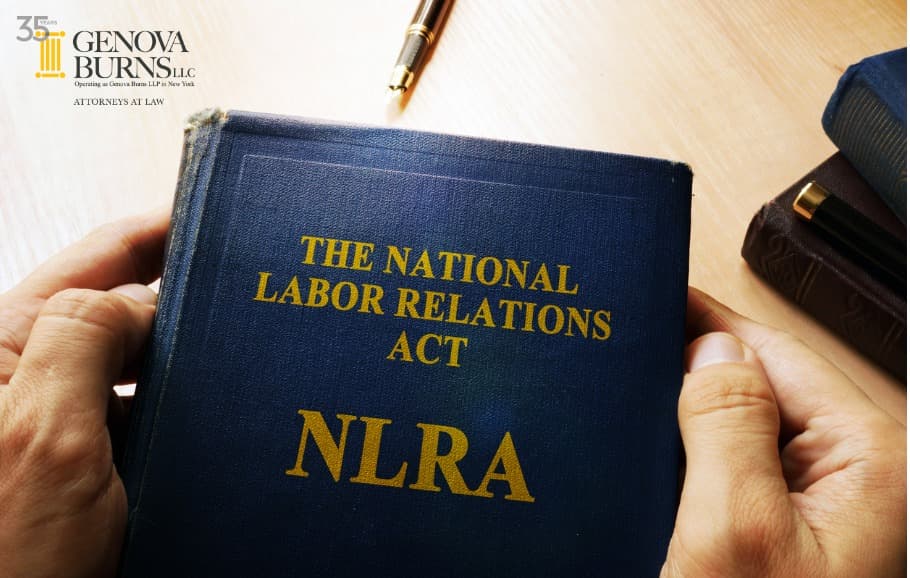
Few topics carry more weight inside a bulge-bracket bank than the question of collective power. Goldman Sachs employees, like all private-sector workers in the United States, are covered by the National Labor Relations Act, a federal law that grants sweeping protections to workers who want to organize, discuss wages, or take collective action, regardless of their title, compensation level, or the prestige of their employer.
Understanding exactly what those rights look like in practice, and what recent regulatory shifts mean for finance workers specifically, is the starting point for any informed conversation about organizing at Goldman Sachs.
What the NLRA actually protects
The NLRA protects "concerted activity," a legal term that covers far more ground than most employees expect. You do not need to be in a formal union to invoke these protections. Discussing your salary with a colleague, circulating a petition about working conditions, or joining with even one other coworker to raise a concern with management all qualify as protected concerted activity under federal law.
Goldman Sachs, like any private-sector employer, is legally prohibited from retaliating against employees for engaging in these activities. That means terminations, demotions, schedule changes, or any adverse action taken because an employee discussed pay or organizing can constitute an unfair labor practice under the NLRA. The body that enforces these rules is the National Labor Relations Board, the independent federal agency with jurisdiction over private-sector labor disputes.
Critically, the NLRA's protections extend to workers at every rung of a financial institution. While certain "supervisors" as defined by the Act can be excluded from coverage, the legal definition of supervisor is narrower than the title itself suggests. An analyst with the word "manager" in a job description does not automatically lose NLRA protections; the question is whether that person has genuine authority to hire, fire, or discipline others using independent judgment.
The right to organize: practical steps
If Goldman Sachs employees decide they want to pursue formal union representation, the process follows a defined sequence under federal law.
1. Build a showing of interest.
Before any election can be held, workers must demonstrate that at least 30 percent of the proposed bargaining unit support the idea of an election. This is typically done through authorization cards, signed documents indicating that an employee wants a union election. Labor organizers generally aim for 50 to 65 percent support before filing, because early momentum matters and card counts often decline between filing and voting.
2. File a petition with the NLRB.
Once sufficient support exists, a petition is filed with the appropriate NLRB regional office. At this point, the campaign becomes public, and the employer is formally notified. Goldman Sachs would then have the opportunity to make its case to employees before any vote takes place.
3. Agree on the bargaining unit.
One of the most consequential early decisions is defining exactly which employees would be covered by a potential union contract. The composition of the bargaining unit affects negotiating leverage, election outcomes, and the scope of any eventual collective bargaining agreement.
4. Participate in the election.
The NLRB conducts a secret-ballot election, typically held within a matter of weeks after a petition is filed under current procedural rules. A simple majority of votes cast determines whether the union is certified.

5. Bargain in good faith.
If the union wins, the employer is legally required to bargain in good faith over wages, hours, and working conditions. This does not guarantee any particular outcome, but it does create a legally enforceable obligation to negotiate seriously.
What employers can and cannot do
Once an organizing effort becomes visible, management will typically respond. Understanding the legal boundaries of that response is essential. Employers may share their views on unionization, hold informational meetings, and make factual arguments against collective bargaining. What they cannot legally do is threaten workers with job loss, promise benefits specifically to discourage organizing, spy on union activity, or interrogate employees about their organizing involvement.
The acronym TIPS is commonly used in labor law contexts to summarize prohibited employer conduct: Threaten, Interrogate, Promise, or Spy. Any of these actions by Goldman Sachs management during an organizing campaign could constitute an unfair labor practice, triggering NLRB proceedings that might result in remedial orders or even a rerun election.
Recent rule changes and the joint-employer question
The regulatory landscape governing private-sector labor relations has shifted considerably in recent years, and the changes carry direct implications for finance workers, particularly those employed through staffing agencies, contractors, or other intermediary arrangements that are common in large institutional environments.
The joint-employer standard, which determines when two separate entities can be held jointly responsible as employers under the NLRA, has moved back and forth through multiple rulemakings. A broader joint-employer standard, which the NLRB pursued in recent years, would make it easier for workers placed by a staffing firm to hold the host company, potentially a Goldman Sachs entity, accountable as a co-employer for labor law purposes. A narrower standard, by contrast, limits that accountability.
For Goldman Sachs employees and contractors who may work alongside each other but under different formal employment relationships, the current state of the joint-employer rule determines whether those contractor workers could potentially be included in the same bargaining unit or whether Goldman Sachs would be considered their employer for NLRA purposes. Tracking the NLRB's current guidance on this question is not a technical exercise reserved for labor attorneys; it has practical consequences for who can organize together and what rights attach to which workers.
Why finance workers are watching this closely
The financial services sector has historically had low union density, but that context does not diminish the legal rights available to people who work there. Goldman Sachs employees operate in a high-pressure environment where compensation, hours, and promotion decisions carry enormous weight. The NLRA provides a legal framework for collective action around any of those issues, whether the goal is formal union certification or simply the ability to raise workplace concerns without fear of retaliation.
Knowing the rules, the protections, and the procedural steps is the precondition for exercising any of them. The law is on the books; what workers do with it is their decision to make.
Know something we missed? Have a correction or additional information?
Submit a Tip