Goldman Sachs keeps 2026 oil forecasts unchanged despite Middle East risks
Goldman left its 2026 Brent and WTI calls at $83 and $78, betting softer demand will offset Middle East shock risk.
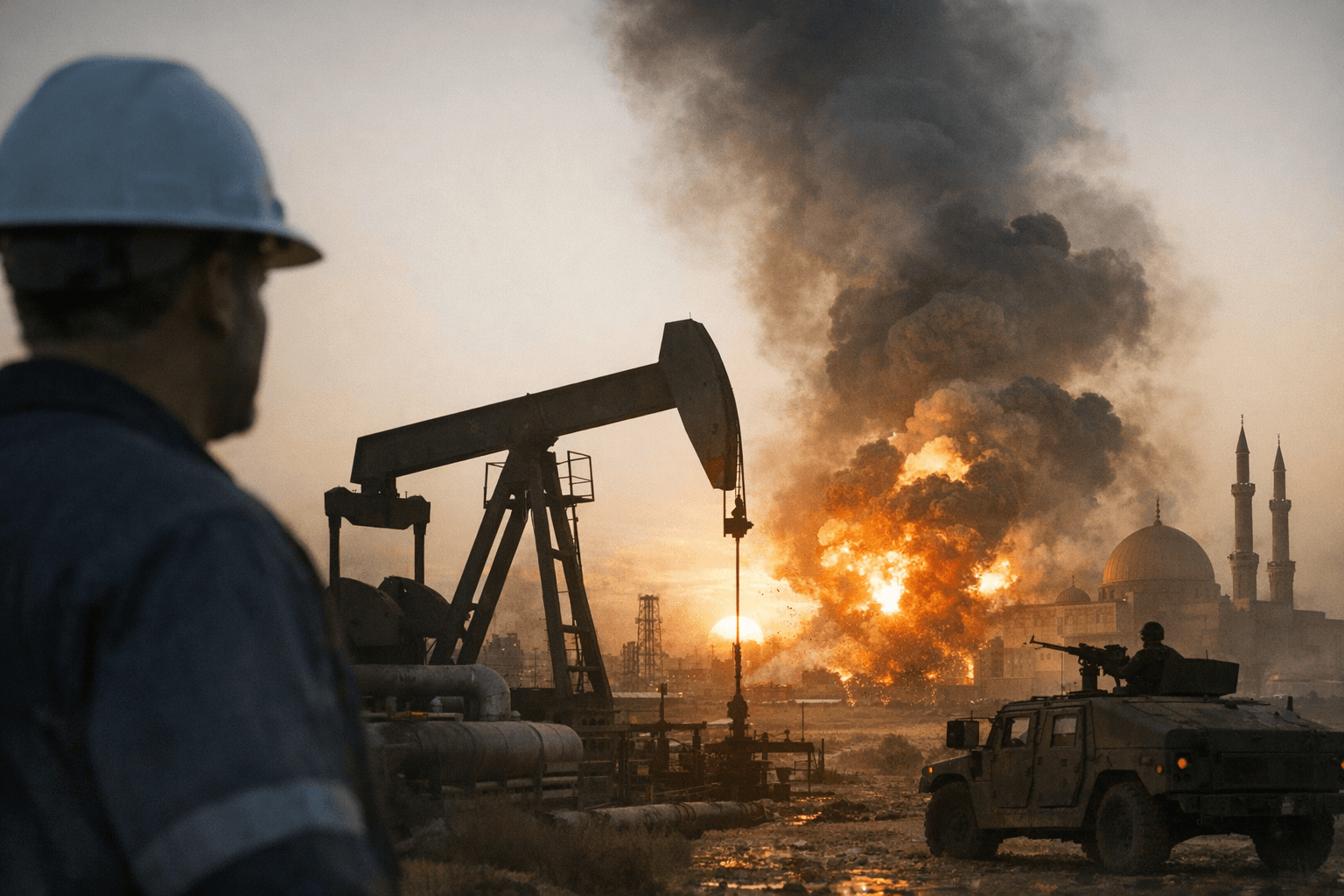
Goldman Sachs kept its full-year 2026 oil forecasts unchanged after a week of rapid recalibration, deciding that softer demand and easing supply disruptions were enough to balance the risks around the Middle East and the Strait of Hormuz. The bank now sees average Brent at $83 a barrel and WTI at $78, with flows through Hormuz still assumed to normalize by mid-May.
That matters inside Goldman well beyond the energy desk. For commodities traders, macro researchers and client coverage teams, the message is not that oil is headed in one direction, but that the bank wants clients thinking in ranges, scenarios and hedges rather than chasing every headline spike. In a market where shock headlines can hit trading books in minutes, that distinction shapes how sales teams talk to institutional accounts about inflation, gasoline and sector positioning.
Daan Struyven, Goldman’s co-head of global commodities research and head of oil research, has been the public face of the firm’s war-driven oil calls through March and April. The bank raised its 2026 Brent forecast to an average of $85 from $77 in March, then trimmed its second-quarter 2026 Brent and WTI forecasts to $90 and $87 after the U.S.-Iran ceasefire, before settling back into the unchanged full-year view. The sequence shows a clear pivot from a one-sided bullish shock trade to a two-way risk framework.
Goldman’s internal stress tests help explain why. The Strait of Hormuz normally carries about one-fifth of global oil and LNG supplies. The bank estimated that a full four-week halt in those flows could add about $14 a barrel to prices, while smaller disruptions could lift oil by $1 to $12 depending on how much of the route closes and whether offsets such as spare pipeline capacity or strategic reserves are available. Brent closed at $77 on March 3, climbed into the low $80s after strikes on Iran, and then quickly retraced as markets became more confident that actual supply disruption would be limited.
The broader market backdrop has also started to pull against the shock narrative. The International Energy Agency said oil demand was expected to contract by 80,000 barrels a day in 2026 because of the Iran war, a sharp downgrade from its prior estimate. The U.S. Energy Information Administration said Iraq, Saudi Arabia, Kuwait, the UAE, Qatar and Bahrain collectively shut in 7.5 million barrels a day in March, with shut-ins seen rising to 9.1 million barrels a day in April. OPEC also cut its second-quarter 2026 demand forecast by 500,000 barrels a day.
For Goldman staff, the unchanged forecast is a reminder that risk discipline matters as much as directional conviction. The bank is telling clients to model what happens if Middle East disruptions fade, demand softens and inventories hold, because that is the kind of framework that can survive the next swing in oil, inflation and gas prices.
This article was produced by Prism’s automated news system from verified source data, official records, and press releases, then run through automated quality and moderation checks before publishing. The system is built and supervised by the people who set the standards it runs under. Read our full AI policy.
Did this article answer your question?