Goldman Sachs passes Fed stress test, plans higher dividend
Goldman cleared the Fed's 2026 stress test and will lift its dividend to $5, keeping a 3.4% capital buffer and more room for payouts.
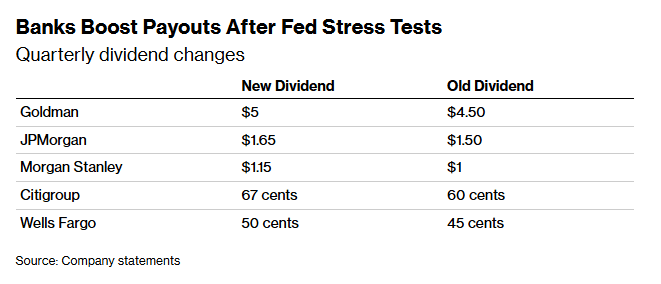
Goldman Sachs said it will raise its common dividend to $5 a share beginning July 1, 2026, subject to board approval, after the Federal Reserve's 2026 stress test showed the bank could absorb a severe downturn and still remain well capitalized. The new payout is up from $4.50, an 11% increase from current levels and 25% more than a year earlier. For employees, the message is that management has room to keep returning cash while preserving flexibility on compensation, hiring and investment.
In its June 24 statement, Goldman said its stress capital buffer requirement will stay at 3.4% through September 30, 2027, and its standardized common equity tier 1 requirement will remain 11.4%. The Fed said all 32 large banks in this year’s test stayed above minimum capital requirements, even after projected industry losses topped $708 billion in a hypothetical recession. Aggregate capital across the industry fell only 1.6 percentage points. The Fed’s scenario assumed a severe global recession, a 39% drop in commercial real estate prices, a 30% drop in house prices and unemployment peaking at 10%, with roughly $200 billion in losses from credit cards, about $160 billion from commercial and industrial loans and about $75 billion from commercial real estate.

That capital cushion matters inside Goldman, where staffing, pay and business spending are all tied to how much capital the firm has to deploy. The Federal Reserve finalized the 2026 scenarios in February and said current stress-capital-buffer requirements would remain in place until 2027, so Goldman’s 3.4% buffer and 11.4% CET1 requirement were not a surprise. They were a confirmation that the firm had enough room to keep supporting shareholder returns without running close to a regulatory edge.
Goldman was already moving in this direction a year ago. In July 2025, the firm said its 2025 stress-test results implied a 3.4% SCB and a 10.9% CET1 requirement effective October 1, 2025, and it raised its dividend from $3 to $4 a share beginning July 1, 2025. The latest increase extends that pattern and signals that Goldman is comfortable keeping more capital flowing back to shareholders while maintaining a healthy cushion for the next downturn.
Wall Street’s other big banks read the test the same way. JPMorgan Chase announced a new $50 billion share repurchase program, Morgan Stanley raised its quarterly dividend to $1.15, and Wells Fargo said it expected to lift its dividend to 50 cents a share. For Goldman, the practical takeaway is not just that the bank passed. It is that balance-sheet strength is still giving management room to make bigger capital-allocation choices while the cycle remains uncertain.
This article was produced by Prism’s automated news system from verified source data, official records, and press releases, then run through automated quality and moderation checks before publishing. The system is built and supervised by the people who set the standards it runs under. Read our full AI policy.
Know something we missed? Have a correction or additional information?
Submit a Tip