Goldman Sachs says Brexit has cost UK economy more than expected
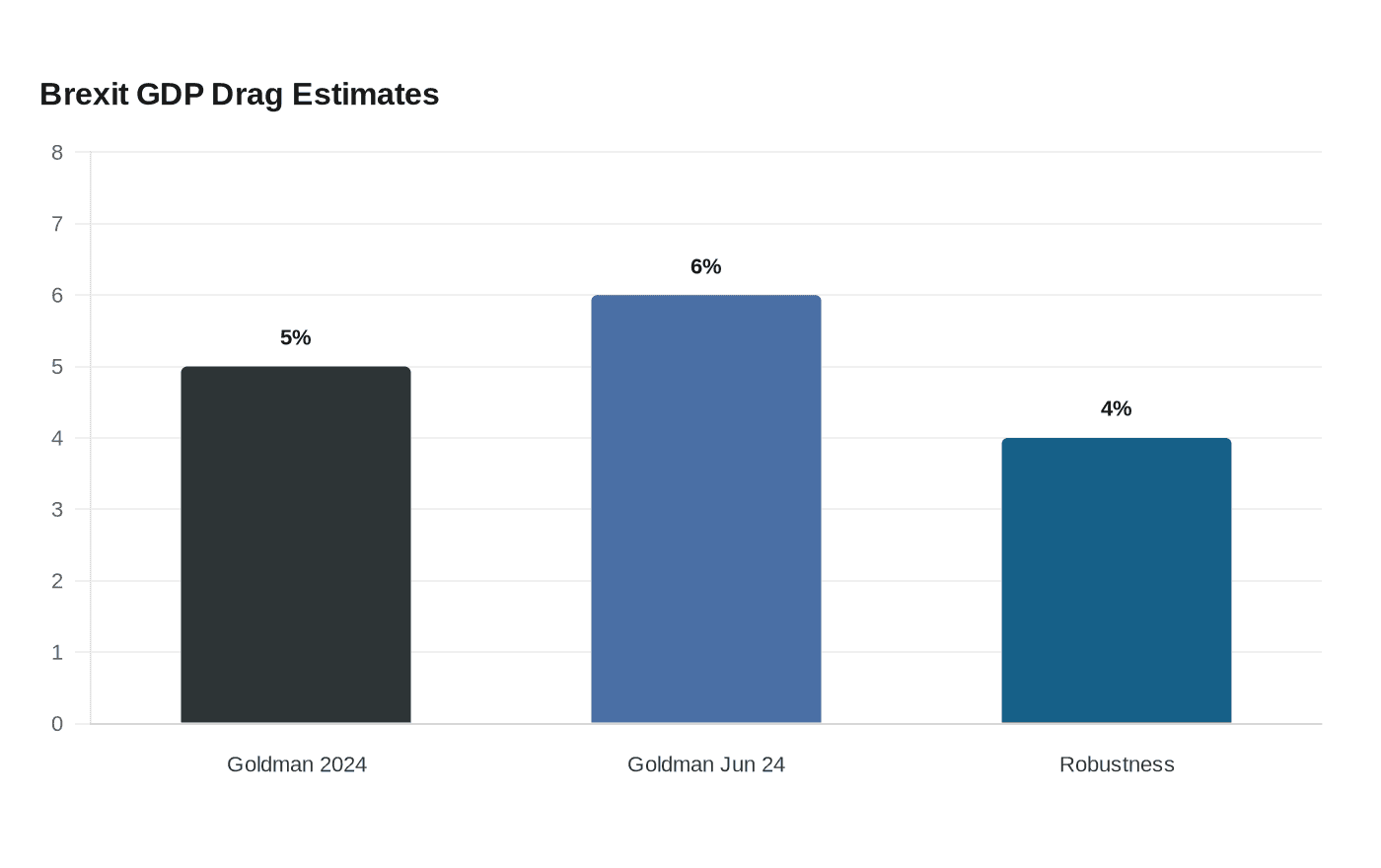
Goldman now puts Brexit’s hit to UK GDP at 6%, not 5%, a sharper drag for London bankers, clients and hiring plans tied to the UK.
Goldman Sachs Research puts the UK economy about 6% below its counterfactual path because of Brexit, widening its own 2024 estimate of a 5% shortfall and underscoring a weaker backdrop for London dealmakers and clients with UK exposure. The bank’s June 24 report, UK-The Economic Cost of Brexit, Ten Years On, says robustness checks still imply at least a 4% hit.
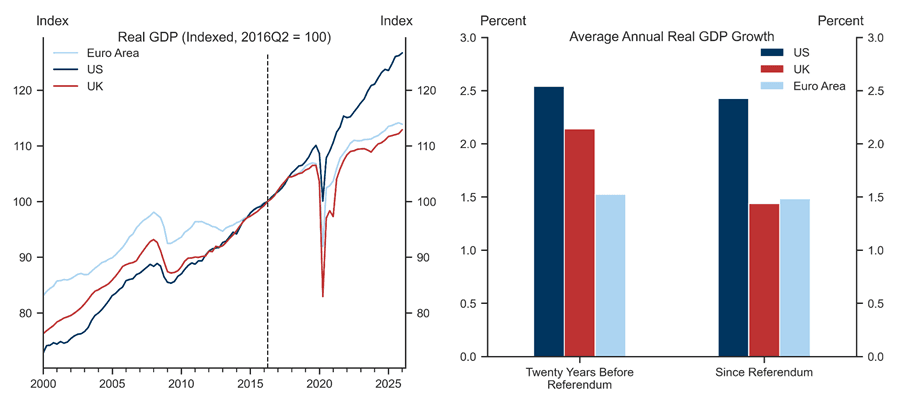
The estimate feeds assumptions behind UK hiring, capital spending and cross-border activity. The drag comes from weaker goods trade, lower productivity, reduced business investment and migration-related labor-supply effects, all of which feed directly into the kind of demand that drives corporate finance, lending, FX and portfolio strategy work across London and EMEA. Britain’s growth profile has moved from looking closer to the United States to looking more like the euro area.

Goldman’s own economists now expect average UK growth to rise from 1.2% since 2016 to 1.5% in coming years, but that still leaves the country running below the pre-Brexit path rather than recovering it. In the bank’s broader 2026 UK outlook, Goldman forecast 1.4% year-on-year fourth-quarter growth and three more Bank Rate cuts to 3%, and the outlook points to a softer labor market and a more cautious lending and deal environment.
Goldman’s revised estimate is now close to the National Bureau of Economic Research’s 2025 paper, which put the GDP drag at 6% to 8% by the end of 2025 and estimated Brexit had cut investment by 12% to 13%, employment by 3% to 4% and productivity by 3% to 4%. The National Institute of Economic and Social Research has separately said the negative impact could reach 5% to 6% of GDP, or about £2,300 per person, by 2035.
The report lands almost exactly 10 years after the June 23, 2016 referendum and more than six years after the UK formally left the European Union on January 31, 2020. A June 2026 Greater London Authority briefing put recent studies at 5% to 10% below where it would have been without Brexit.
This article was produced by Prism’s automated news system from verified source data, official records, and press releases, then run through automated quality and moderation checks before publishing. The system is built and supervised by the people who set the standards it runs under. Read our full AI policy.
Know something we missed? Have a correction or additional information?
Submit a Tip