Goldman Sachs puts engineers at the center of its business model
Goldman’s engineers are now inside the profit engine, and AI is changing which skills get rewarded, promoted, and trusted across the firm.
At Goldman Sachs, engineering is no longer a back-office support function. The firm says engineers sit at the critical center of its businesses, working on real problems alongside bankers, traders, and portfolio managers, which means technical talent is shaping how the franchise moves, prices, and protects itself. For employees, that shifts engineering from a specialist track into a core operating role with direct consequences for speed, control, and career mobility.
What Goldman engineers actually own
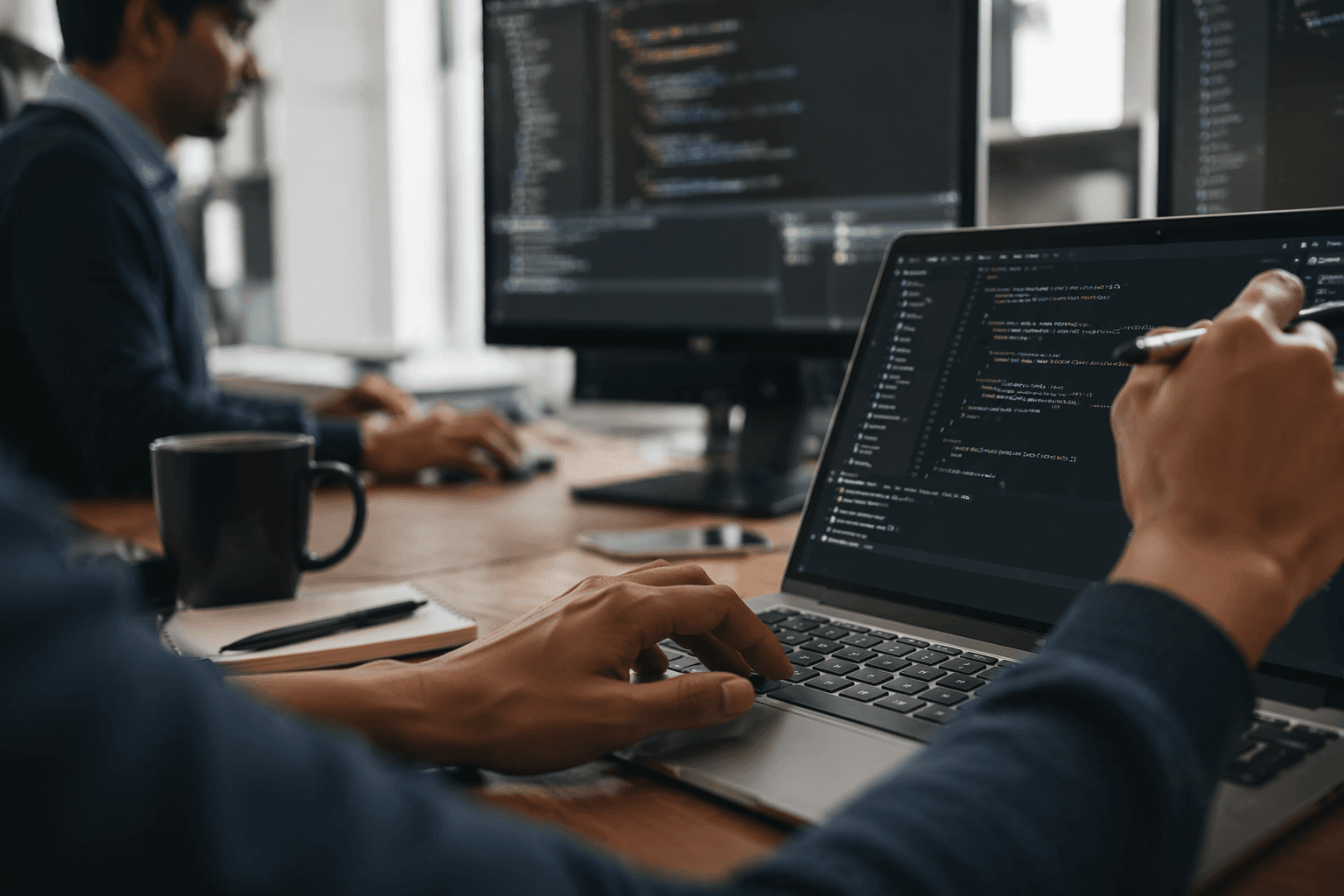
Goldman’s engineering footprint is broader than many outsiders assume. The firm describes the role mix as spanning quantitative strategy, cybersecurity, software engineering, and systems engineering, with teams building massively scalable software, architecting low-latency infrastructure, guarding against cyber threats, and using machine learning to turn data into action. Goldman’s India engineering page goes even further, saying engineers are at the critical center of the business and financial markets worldwide, a statement that underscores how closely technology is tied to market-making and client service.
That framing matters because it tells you where engineers are most valuable inside a large investment bank. They are not just writing code in isolation; they are building the systems that keep trading responsive, risk data usable, and platform reliability intact when markets move fast. In practical terms, that makes engineering a platform function with direct exposure to revenue teams, which usually carries more internal currency than work that stays hidden behind a single product or support layer.
AI is automating routine work, not removing the need for judgment
Goldman’s own AI research helps explain why the role is changing now. In March 2026, Goldman Sachs Research estimated that 300 million jobs globally are exposed to automation by AI, and it has separately said AI could expose the equivalent of 6% to 7% of the US workforce if widely adopted. Those are broad economy-wide figures, but inside Goldman they point to a narrower reality: repetitive, rules-based work is being compressed, while tasks that require judgment, controls, and context become more valuable.
The firm’s AI work also makes clear that enterprise adoption, not just model capability, will determine whether the economics work. Goldman says data must be properly structured for agentic AI and workflows need to be orchestrated efficiently to control costs, which means the bottleneck is often operational discipline rather than raw model power. That is one reason human oversight remains indispensable in places like trading, risk, cybersecurity, and controls, where a model can accelerate analysis but cannot be left to define the decision boundary on its own. That is an inference from Goldman’s research and engineering model, but it fits the firm’s emphasis on scaled systems, cyber defense, and close collaboration with front-office teams.
The career ladder is becoming more technical and more managerial at the same time
The most important career implication is that technical skill is gaining managerial weight, while managerial skill is becoming more technical. Engineers who can understand workflows, business objectives, and control points are likely to stand out because Goldman’s model prizes people who can ship securely inside a heavily regulated environment, not just people who can build quickly. At the same time, analysts and associates outside engineering are under more pressure to understand what AI can automate, what still needs human review, and where model risk or cyber risk might appear.
That shifts what has internal currency. Coding literacy matters, but so do data fluency, domain expertise, and the ability to translate between a business need and a system constraint. In a firm where a third of the workforce is engineers, those skills are no longer niche, and proximity to bankers, traders, and portfolio managers becomes a career accelerant because it teaches engineers how revenue teams actually work and gives non-engineers a better sense of how technology changes their own output.
What this means for analysts, associates, and VPs
For junior bankers and markets professionals, the near-term opportunity is simple: use AI to move faster, but keep the work auditable. Goldman’s AI research suggests the firms that win with enterprise adoption will be the ones that clean up data, wire workflows correctly, and control costs, which means employees who can use automation without breaking controls will become more useful to the people around them. In a place where bonus cycles still reward visible contribution and dependable execution, that can translate into stronger reviews, more trusted staffing, and a sharper exit narrative later on.
For engineers, the message is even more direct. The best internal profiles are likely to combine product judgment with technical depth, especially in areas that touch latency, reliability, security, and market structure. Goldman’s careers pages reinforce that apprenticeship, early exposure to leaders and clients, and hands-on work remain central to its talent model, so engineers who can learn quickly and operate close to the business are positioned to benefit most from the firm’s current direction.
The pipeline still matters
Goldman is also signaling that this is not a one-off hiring message. Its Engineering Academy page lists a June 21, 2026 application deadline, which shows the firm is still actively feeding its technical pipeline even as AI changes the shape of the work. For anyone trying to build a career there, the lesson is clear: Goldman does not appear to be treating engineering as a separate tech tower. It is treating engineering as part of how the whole institution competes, and that makes technical fluency a career hedge rather than just a specialization.
This article was produced by Prism’s automated news system from verified source data, official records, and press releases, then run through automated quality and moderation checks before publishing. The system is built and supervised by the people who set the standards it runs under. Read our full AI policy.
Know something we missed? Have a correction or additional information?
Submit a Tip