Goldman Sachs says AI boom could keep lifting heavy-asset stocks
Goldman says AI demand is lifting HALO stocks, with capital-intensive emerging-market names up 115% since late 2025 versus 7% for capital-light peers.
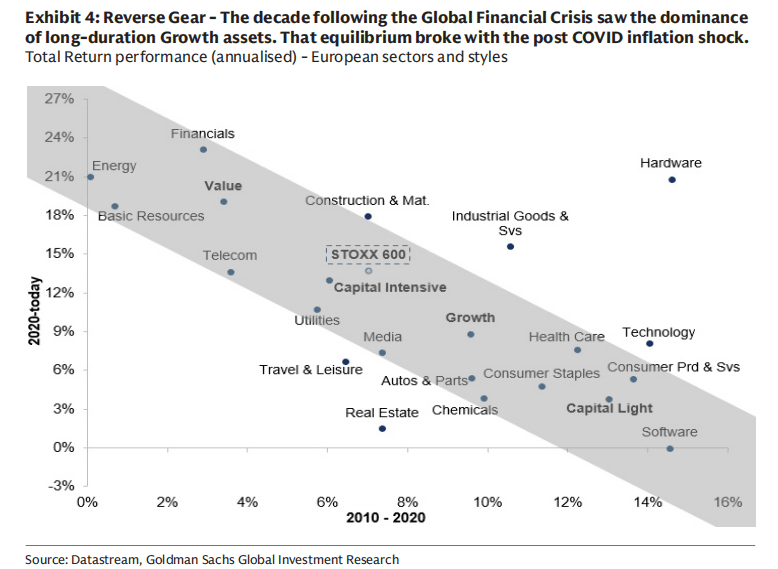
Goldman Sachs has put a name to the part of the AI trade it thinks still has room to run: HALO, or heavy assets and low obsolescence. In its June 26 note, the firm said emerging-market companies in capital-intensive industries are benefiting as AI infrastructure demand lifts electricity grids, utilities, manufactured goods and other hard-asset businesses, with a basket of those stocks up 115% since late 2025 versus 7% for capital-light names as of June 5.
The striking part for Goldman’s own ranks is that the rally has not erased the valuation gap. The capital-intensive basket still trades at a 20% discount to capital-light equities even though Goldman says it has stronger earnings momentum and is expected to keep that edge in 2026 and 2027. The researchers behind the note, Sunil Koul and Tarun Lalwani, argued that strategic investment, geopolitical risk, energy-security concerns and AI build-out demand can keep the trade moving.

Inside Goldman, that matters because it changes what counts as smart AI coverage. The HALO lens gives investment bankers a way to explain why utilities, industrials and infrastructure names are pulling more attention from investors and sponsors. It also gives equity research a framework for separating software businesses that may be more exposed to AI disruption from heavy-asset companies that could still win a rerating. Wealth and asset-management teams can use the same setup with clients looking to diversify away from a crowded mega-cap technology trade without dropping the AI theme altogether.
That broader framing is where Goldman’s June note lands hardest. The firm introduced HALO in March as a way to identify companies less exposed to technological obsolescence after years of underinvestment, geopolitical fragmentation and supply-chain rewiring had already started pushing equity leadership back toward tangible productive assets. The new emerging-markets work extends that argument into power, grids, construction and manufacturing, which means the next phase of the AI boom may be judged as much by capital intensity as by code.
This article was produced by Prism’s automated news system from verified source data, official records, and press releases, then run through automated quality and moderation checks before publishing. The system is built and supervised by the people who set the standards it runs under. Read our full AI policy.
Know something we missed? Have a correction or additional information?
Submit a Tip