Micron’s AI surge shows memory chips remain a key bottleneck
Micron’s blowout forecast pushed its value past Meta and Tesla, giving Goldman’s chip analysts fresh proof that memory, not just GPUs, still drives AI spend.

Micron Technology’s forecast sent its shares up 12% after hours and briefly pushed its market value past Meta Platforms and Tesla, a sign that memory chips are still one of the tightest constraints in the AI build-out. The move gave the stock a market capitalization of about $1.398 trillion at last count, after a year in which Micron’s shares had already climbed roughly 700%.
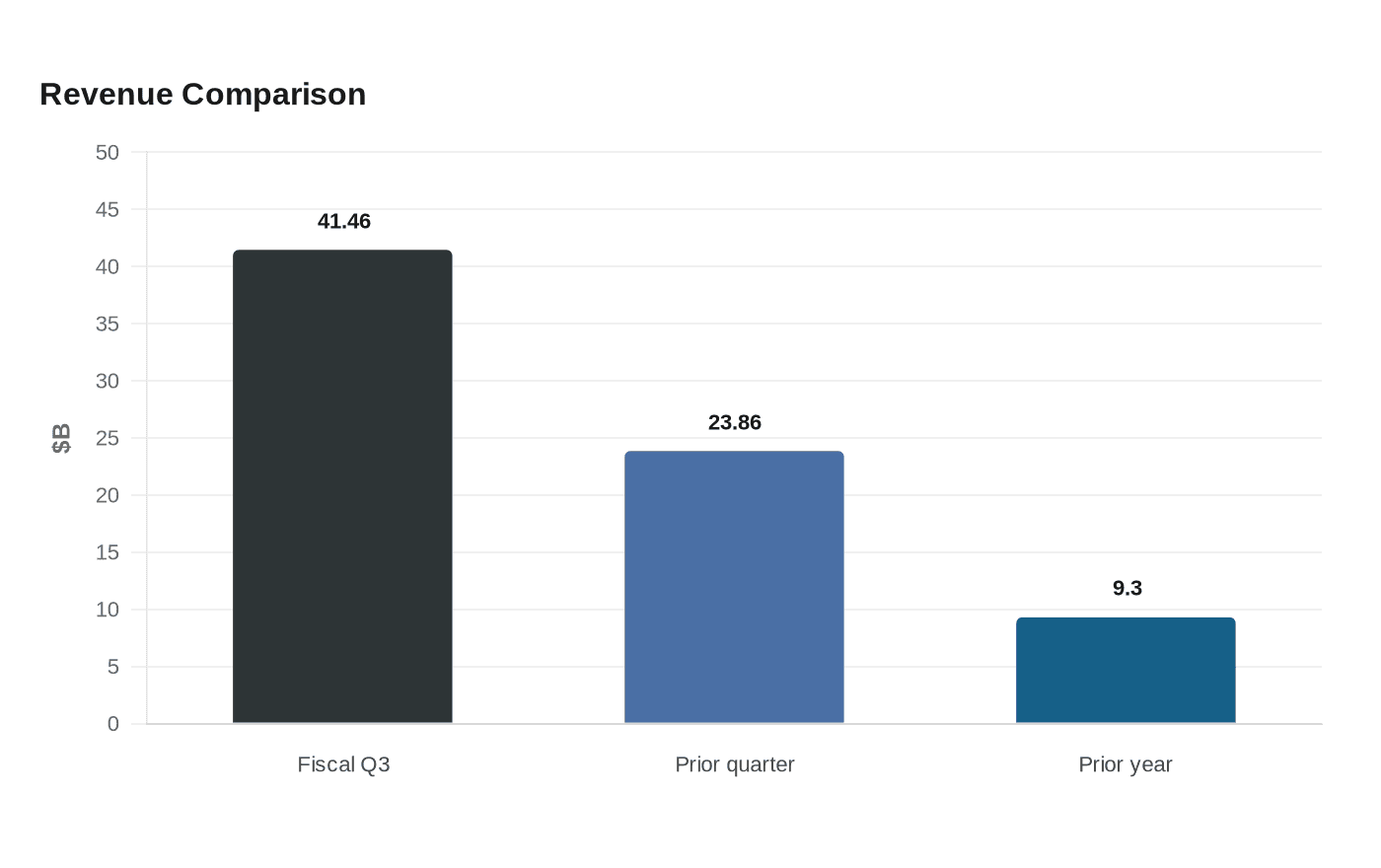
The catalyst was a quarter that looked far stronger than Wall Street expected. Micron said fiscal third-quarter revenue reached $41.46 billion, up from $23.86 billion in the prior quarter and $9.30 billion a year earlier. GAAP net income came to $28.24 billion, while non-GAAP net income was $28.86 billion. Operating cash flow rose to $25.39 billion from $11.90 billion in the prior quarter and $4.61 billion a year earlier.
Micron also said customers had committed $22 billion to secure supplies of memory chips, with 16 customer deals in place. Fourteen of those arrangements represented about $100 billion of minimum contracted revenue over the remaining term, backed by $22 billion of cash deposits and related commitments. Sanjay Mehrotra said the results and outlook reflect “the strategic value of memory in the AI era.”
For Goldman Sachs, the message goes beyond one stock popping on a hot print. Semiconductor coverage at the firm carries internal weight when it identifies where AI capital spending is actually landing, and Micron’s surge is the kind of call that can strengthen a research seat’s standing across the franchise. A strong read on memory demand can feed equity research, support sales and trading coverage, and give bankers a cleaner story for clients trying to finance data centers, storage systems and the wider infrastructure chain.
The market reaction also showed how far the AI trade has broadened past the best-known names. Chipmakers added more than $400 billion in market value in a single session after strong forecasts from Micron and Qualcomm revived a rally that had started to cool. That matters for Goldman employees because the next phase of the trade is less about whether AI spending exists and more about which suppliers have locked in capacity, customer commitments and long-dated visibility.
Memory makers have spent years fighting a boom-bust cycle in which new capacity often arrived just as demand weakened. This time, take-or-pay style commitments and large cash deposits suggest buyers are treating memory as a strategic bottleneck rather than a commodity afterthought. Goldman raised its Micron target after the report, underscoring that the stock’s move is being read as evidence of a sturdier AI investment cycle, not just a one-day squeeze.
This article was produced by Prism’s automated news system from verified source data, official records, and press releases, then run through automated quality and moderation checks before publishing. The system is built and supervised by the people who set the standards it runs under. Read our full AI policy.
Know something we missed? Have a correction or additional information?
Submit a Tip