Goldman Sachs sees enterprise AI spending hinging on productivity gains
Goldman’s message is clear: AI budgets will go to teams that can prove productivity gains fast, while pilots without measurable ROI face tighter scrutiny.
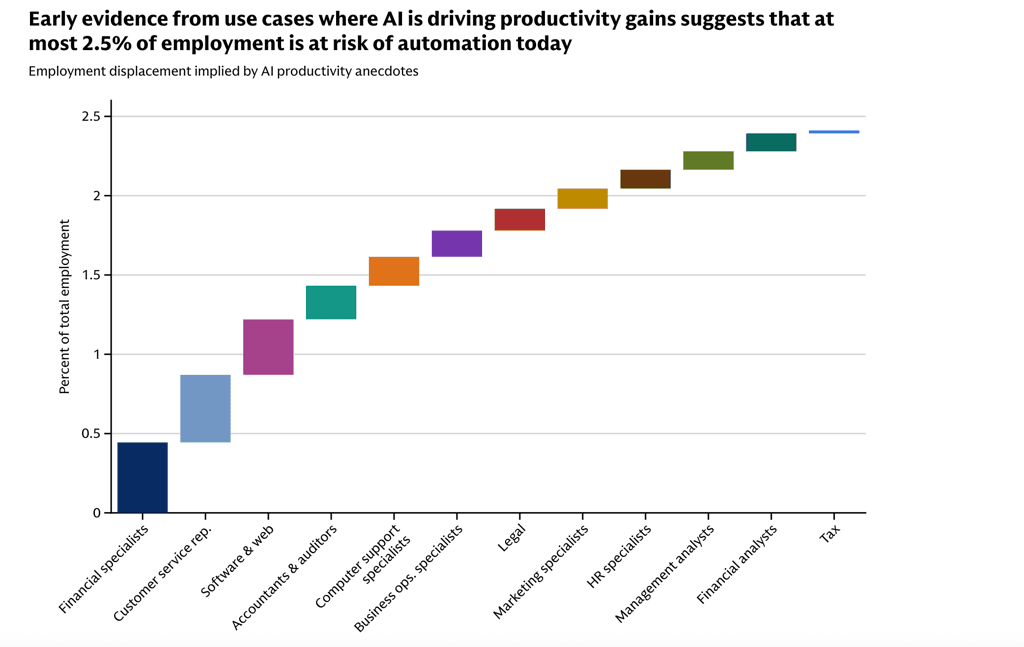
ROI is now the gatekeeper
Inside a large bank like Goldman Sachs, the AI conversation is shifting from curiosity to proof. The teams that can show revenue lift, cost savings, or faster workflows will keep getting funded; the teams that cannot will have a harder time defending their budgets, especially when every technology line item is competing with hiring plans, bonus pools, and other forms of capital deployment. That is the practical message running through Goldman Sachs Research’s latest view of corporate AI spending: the winners will be the groups that can operationalize AI quickly and measure the payoff.

That has direct implications for technology, product, coverage, and strategy teams at Goldman. It is no longer enough to say a tool is impressive or that a model can answer questions well. The real question is whether it changes how work gets done, whether it reduces expensive manual effort, and whether it can survive the scrutiny that comes with enterprise-scale spending.
The bottleneck is no longer model quality
Goldman’s core argument is that consumer AI adoption has been spectacular, but most consumers are still using free versions. That means the economics of the AI boom cannot be sustained by hype alone. The decisive issue is enterprise adoption, because corporate buyers are the ones most likely to pay enough to support the full stack of spending behind models, infrastructure, and applications.
The firm says the key bottleneck is now data structure and workflow design. Enterprises need properly organized data for agentic AI and efficient orchestration across workflows if they want to control costs. In plain English, the model can be smart and still fail as a business tool if it is dropped into a messy process with broken data and no clear control points. That is why the next phase of AI spending will reward operational discipline more than novelty.
For Goldman employees, that means AI diligence is becoming a full-stack exercise. Coverage teams need to ask how AI affects margins and operating leverage. ECM and M&A teams need to assess whether a company’s AI spending is turning into durable returns or just a bigger bill. Engineering and operations teams need to think about data readiness, process redesign, and controls, not just model selection.
The money will follow the fastest proof points
The clearest funding candidates are the projects that can show a visible productivity gain in a short period of time. That usually means workflow automation, internal copilots tied to specific tasks, and tools that reduce turnaround time in functions with heavy manual review. In a bank, that can translate into faster research production, quicker client prep, better information retrieval, or less repetitive work in operational processes.
By contrast, large AI programs that sit in pilot mode without a measurable business case are likely to face more scrutiny. A shiny demo is not the same as a line item that improves a quarterly result. If a project cannot show how it changes headcount needs, lifts revenue per employee, improves client response time, or cuts outside spend, it will be harder to defend when capital gets tighter.
That is especially relevant for employees who live close to the bonus cycle. At a firm where total compensation is tied to performance and contribution, AI projects that create visible leverage can strengthen a team’s case for resources and relevance. Projects that do not produce measurable impact risk being treated as overhead rather than strategic investment.
Why semis are still winning, but not forever
Goldman’s research also warns that the current AI ecosystem is not balanced. Semiconductors have already captured the clearest gains, with record revenue and profits, while many model builders and infrastructure players still have not made money from the technology. Goldman calls that dynamic “unprecedented and unsustainable,” and the phrase captures the tension at the heart of the AI boom.
The bank expects hyperscalers to outperform semiconductor companies from here, which signals a broader shift in where value can accrue as enterprise adoption matures. If AI stays limited to pilots and isolated copilots, the value pool remains concentrated in chips and infrastructure. If AI gets embedded into operating processes, the upside expands further up the stack, where cloud platforms and large enterprise software ecosystems can capture more of the economics.
That is a crucial distinction for anyone covering clients or competing for mandates. It changes which companies deserve a premium, which ones are still relying on spend rather than monetization, and which business models are most exposed if the capital cycle cools.
The market is getting more selective
The broader market is already acting as if the easy stage of the trade is over. Goldman said Wall Street analysts had raised the consensus estimate for 2026 hyperscaler capex to $527 billion from $465 billion at the start of earnings season, a huge sum even by current standards. At the same time, investors have become more selective about which AI stocks deserve a premium.
Goldman also noted that the average stock-price correlation across large public AI hyperscalers fell from 80% to 20% since June. That matters because it suggests investors are no longer treating the entire AI complex as one trade. The market is beginning to discriminate between companies that can tie AI spending to revenue and those that cannot.
That selectivity should feel familiar to anyone who has watched how compensation and staffing decisions work inside major financial firms. Capital does not disappear, but it gets allocated with much more discipline once the easy narrative gives way to proof.
The adoption data says usage is real, but monetization is still the fight
Goldman points to Stanford HAI data showing generative AI reached about 53% adoption within three years of the first widely available product, a pace that compares favorably with the PC and internet curves. McKinsey’s 2025 State of AI survey adds that 88% of respondents report regular AI use in at least one business function, yet most organizations are still experimenting or piloting, and only about one-third have begun scaling AI programs. McKinsey also says 39% report EBIT impact at the enterprise level.
The NBER research sharpens the same point from the labor side. By late 2024, nearly 40% of U.S. adults ages 18 to 64 had used generative AI, 23% of employed respondents had used it for work in the previous week, and 9% used it every workday. The researchers estimated that between 1% and 5% of work hours were being assisted by generative AI, with time savings equal to 1.4% of total work hours.
That is enough to prove the technology is spreading. It is not yet enough to prove every enterprise is capturing the value.
What this means for Goldman teams
For people inside Goldman, the message is blunt. AI diligence is no longer a side conversation for technologists. It is now central to how the bank evaluates companies, structures deals, and decides where innovation deserves capital.
The firms and internal teams that win will be the ones that can show measurable gains fastest. The rest will face tougher questions, tighter budgets, and more pressure to justify every dollar of AI spend with real productivity, not promise.
This article was produced by Prism’s automated news system from verified source data, official records, and press releases, then run through automated quality and moderation checks before publishing. The system is built and supervised by the people who set the standards it runs under. Read our full AI policy.
Did this article answer your question?