Goldman Sachs Shareholder Letter Outlines AI Overhaul, Cites Talent and Model Risks
Goldman's 2025 shareholder letter named six operations "ripe for disruption" by AI, while warning that model errors, talent gaps, and bad actors could derail the push.
Goldman Sachs used its 2025 shareholder letter, released Friday, to reframe artificial intelligence not as a toolkit but as the structural foundation of how the firm intends to operate, describing "One Goldman Sachs" as a "new operating model propelled by AI" and identifying six specific areas where it expects the technology to reshape workflows: client onboarding and KYC, vendor management, regulatory reporting, lending, enterprise risk management, and sales enablement.
The letter made clear that the ambition runs deeper than software upgrades. "This doesn't just mean retooling our platforms," the bank said. "It means taking a front-to-back view of how we organize our people, make decisions, and think about productivity, efficiency, and resilience." That framing carries direct implications for anyone inside the firm: the reorganization Goldman is describing is not confined to a tech team or a skunkworks unit. It reaches into staffing structures, decision hierarchies, and how productivity itself gets measured.
For analysts and associates already navigating demanding hours, the six targeted areas span functions that currently require significant manual labor and compliance oversight. KYC processes and regulatory reporting alone consume enormous associate bandwidth at any major bank; Goldman is signaling those workflows are candidates for fundamental redesign.
The letter was also unusually candid about what could go wrong. The firm acknowledged that "the legal and regulatory environment relating to AI is uncertain and rapidly evolving," a hedge that will matter to any desk operating in heavily regulated business lines. On the technical side, the bank warned that generative AI models are "prone to making mistakes" and flagged a worst-case scenario where errors could "result in the release of private, confidential or proprietary information, that reflect biases included in the data" used to train those models. Goldman also disclosed its reliance on outside vendors, noting it uses "AI models developed by third parties," which makes the firm "dependent" on how those providers build their models. Bad actors, the letter added, could exploit AI capabilities "to commit fraud and misappropriate funds and to facilitate cyber attacks."
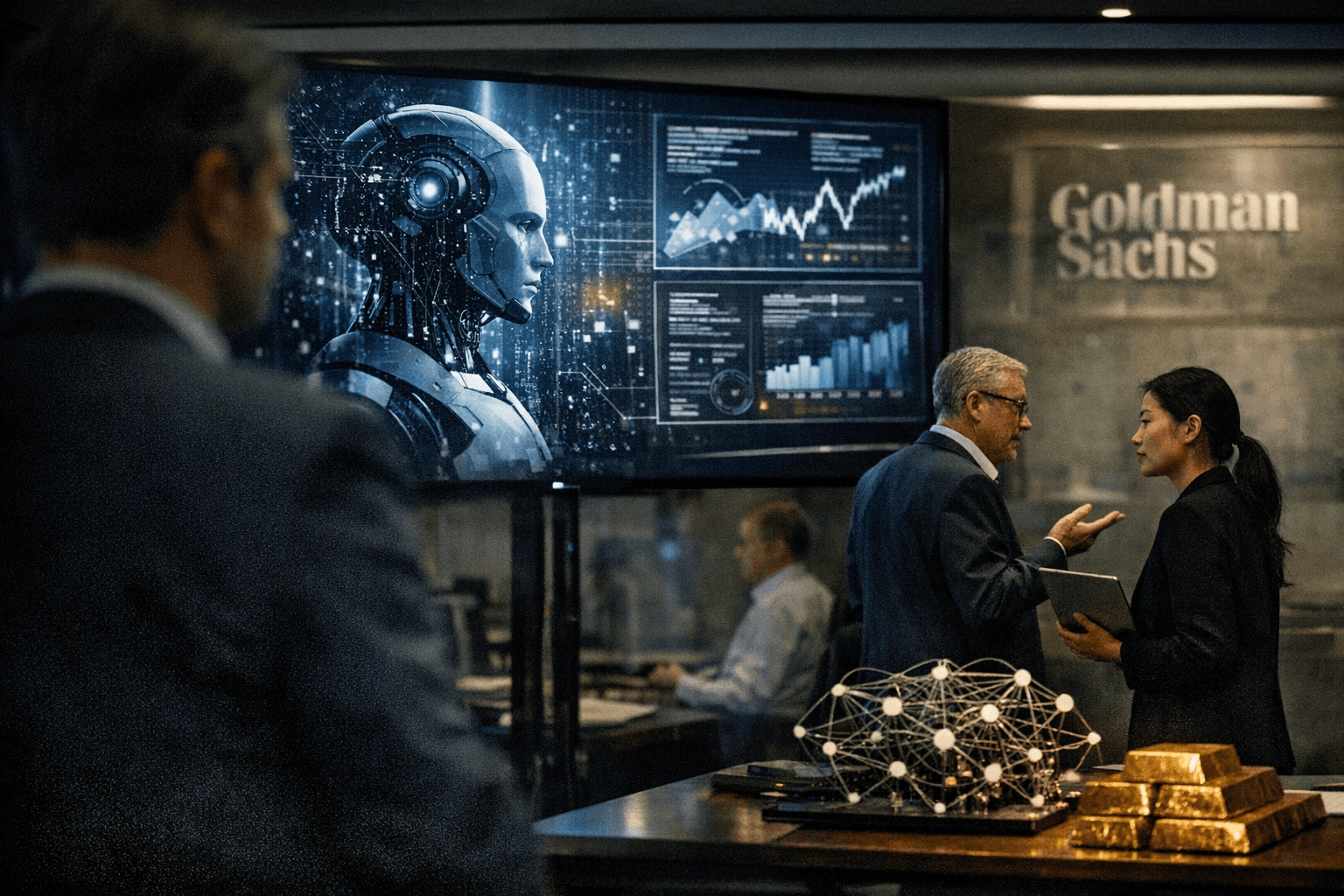
Talent sits alongside model risk as a central concern. Goldman signaled that executing its AI ambitions will depend heavily on attracting and keeping the right people, at a moment when competition for technically sophisticated finance professionals across Wall Street is intensifying. The firm did not disclose headcount targets, specific vendor names, deployment timelines, or the governance frameworks it plans to use to audit third-party models.
The "One Goldman Sachs" initiative has been part of the firm's internal vocabulary for years, but the shareholder letter represents the clearest public articulation yet of AI as the engine driving its next operating refresh. Whether the six named areas get prioritized in sequence or in parallel, and which business divisions bear the implementation burden first, remains unspecified. What the letter does establish is that Goldman's leadership views the transformation as organizational as much as technological, a distinction that should register with anyone whose role touches the workflows now on the firm's disruption list.
Know something we missed? Have a correction or additional information?
Submit a Tip