Goldman Sachs warns global fuel stockpiles near eight-year lows amid Hormuz blockade
Jet fuel, naphtha and LPG stocks have already shrunk to about 45 days of demand, putting airlines, shipping and import-heavy businesses under pressure first.
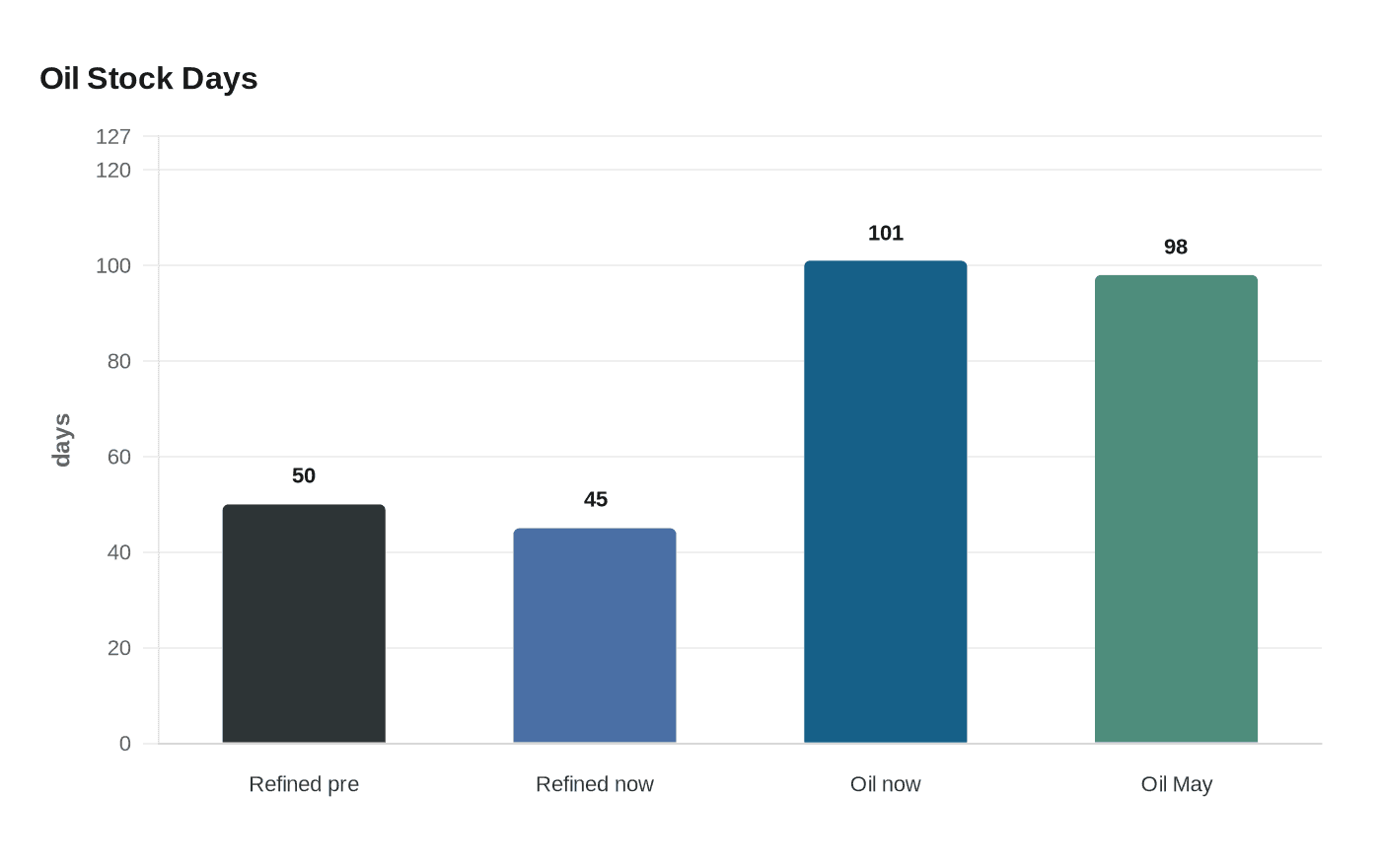
Goldman Sachs said the most immediate strain from the Strait of Hormuz disruption is not yet at the gas pump, but in the supply chains that keep airlines flying, cargo moving and factories running. Global commercial refined products stocks have fallen from about 50 days of demand before the U.S.-Israeli war on Iran to about 45 days now, while total global oil stocks stand at about 101 days of global demand and could slip to 98 days by the end of May.
That puts global oil inventories near their lowest level in eight years, with the tightest buffers showing up first in jet fuel, naphtha and LPG. Goldman said the speed of depletion is becoming a concern, and that the easiest-to-access refined products stocks are fast approaching very low levels. For airline operators, that means fuel hedging, route planning and capacity decisions get harder quickly. Goldman said airlines were already cutting millions of seats amid extreme tightness, a sign that corporate travel, freight bookings and business planning can feel the squeeze before consumers understand the broader supply story.

The bank said the risk is especially acute in import-dependent regions, particularly Asia, where naphtha and LPG shortages are already critically low across multiple countries. The United Kingdom also faces a higher rationing risk because of low stocks and heavy import reliance. In workplaces across logistics, chemicals and manufacturing, that kind of imbalance can translate into higher operating costs, altered shipment schedules and more conservative budgeting long before any broad economic slowdown is visible.
Goldman’s April 26 research note, written by Daan Struyven, Yulia Zhestkova Grigsby, Alexandra Paulus and Filippo Cuscito, upgraded its fourth-quarter 2026 Brent forecast to $90 a barrel from $80. The bank said it now assumes Gulf exports normalize by the end of June, not mid-May, and estimated that 14.5 million barrels a day of Persian Gulf crude production losses are driving inventories down at a record 11 million to 12 million barrels a day pace in April.
The market has moved sharply in Goldman’s view, from a 1.8 million barrel-a-day surplus in 2025 to a 9.6 million barrel-a-day deficit in the second quarter of 2026. Goldman said global oil demand could fall by 1.7 million barrels a day year over year in the second quarter and by 0.1 million barrels a day for full-year 2026 because of the jump in refined-product prices. In a more severe case, Brent could average just over $100 in the fourth quarter of 2026 if Gulf exports normalize only by late July; in the harshest scenario, it could near $120 if a 2.5 million barrel-a-day reduction in Gulf capacity persists. After attacks in the Strait of Hormuz and damage to a UAE oil port, oil prices jumped about 6% on May 4, a reminder that the next pressure point for global business may be aviation and logistics, not the filling station.
Know something we missed? Have a correction or additional information?
Submit a Tip