Goldman sees Gulf oil recovery taking months as production stays slashed
Goldman says Gulf crude output has fallen 57%, and even a full Hormuz reopening would leave supply gummed up for months as tanker capacity and well flow rates lag.

Goldman Sachs is telling clients that the real oil story is not simply whether the Strait of Hormuz reopens, but how long it would take for barrels to move normally again. The bank estimated Gulf crude output was down 14.5 million barrels per day, or 57% from pre-war levels, and said recovery would likely take “a few months” even after a full and safe reopening of the waterway.
That warning puts Daan Struyven’s desk in the middle of every risk conversation Goldman is having with oil traders, corporate clients and macro investors. The bank said the key bottlenecks are transport capacity and well flow rates, not just the political question of access through Hormuz. Goldman estimated available empty tanker capacity in the Gulf had already fallen by about 50%, or roughly 130 million barrels, since the war began, which means a reopening would not instantly restore normal export flows.
The scale of the shock has already pushed other institutions into emergency mode. The International Energy Agency said on March 12 that the war created “the largest supply disruption in the history of the global oil market,” after flows through the Strait of Hormuz plunged from around 20 million barrels per day before the war to a trickle. The agency said Gulf countries had cut total oil production by at least 10 million barrels per day, more than 3 million barrels per day of regional refining capacity had already shut because of attacks and the lack of viable export outlets, and member countries unanimously agreed on March 11 to make 400 million barrels from emergency reserves available to the market.
Goldman’s own March 2 discussion on oil market impacts from Iran underscored how fast the damage spread through the physical market. Struyven said flows through Hormuz, which normally accounts for about one-fifth of global oil supply, were down very sharply, with only some Chinese ships reportedly going through, and that insurance premia had skyrocketed after reports of damaged ships. That is the kind of disruption that can force refiners, shippers and trading desks to reprice risk before a single extra barrel reaches market.
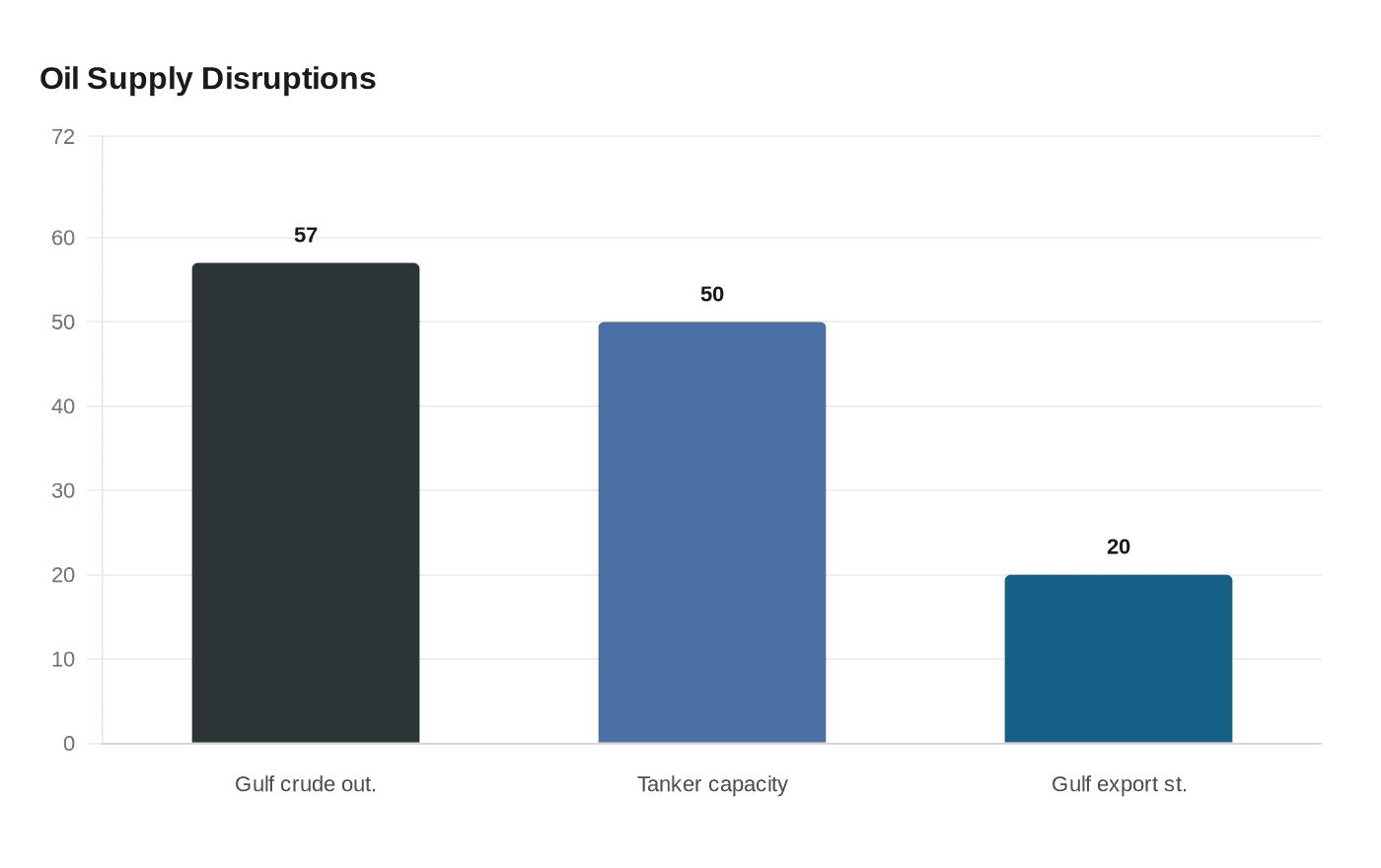
The Dallas Fed added another layer of pressure on March 20, saying the closure of the Strait of Hormuz after conflict started on Feb. 28 had already forced Iraq and Kuwait to curtail production in early March because storage filled up. It said a complete Gulf export stoppage would remove close to 20% of global oil supplies from the market, about 80% of it headed to Asia, and that the shock was three to five times larger than the major geopolitical oil shortfalls of 1973, 1979, 1980 and 1990. For Goldman, that leaves a clear message for clients: even if the route reopens, the recovery will be measured in months, not days.
Know something we missed? Have a correction or additional information?
Submit a Tip