Goldman warns of panic in AI debt markets as Oracle risk rises
Goldman’s trading desk saw “signs of panic” in AI lending, with Oracle the clearest stress point after S&P cut it to BBB-/A-3.
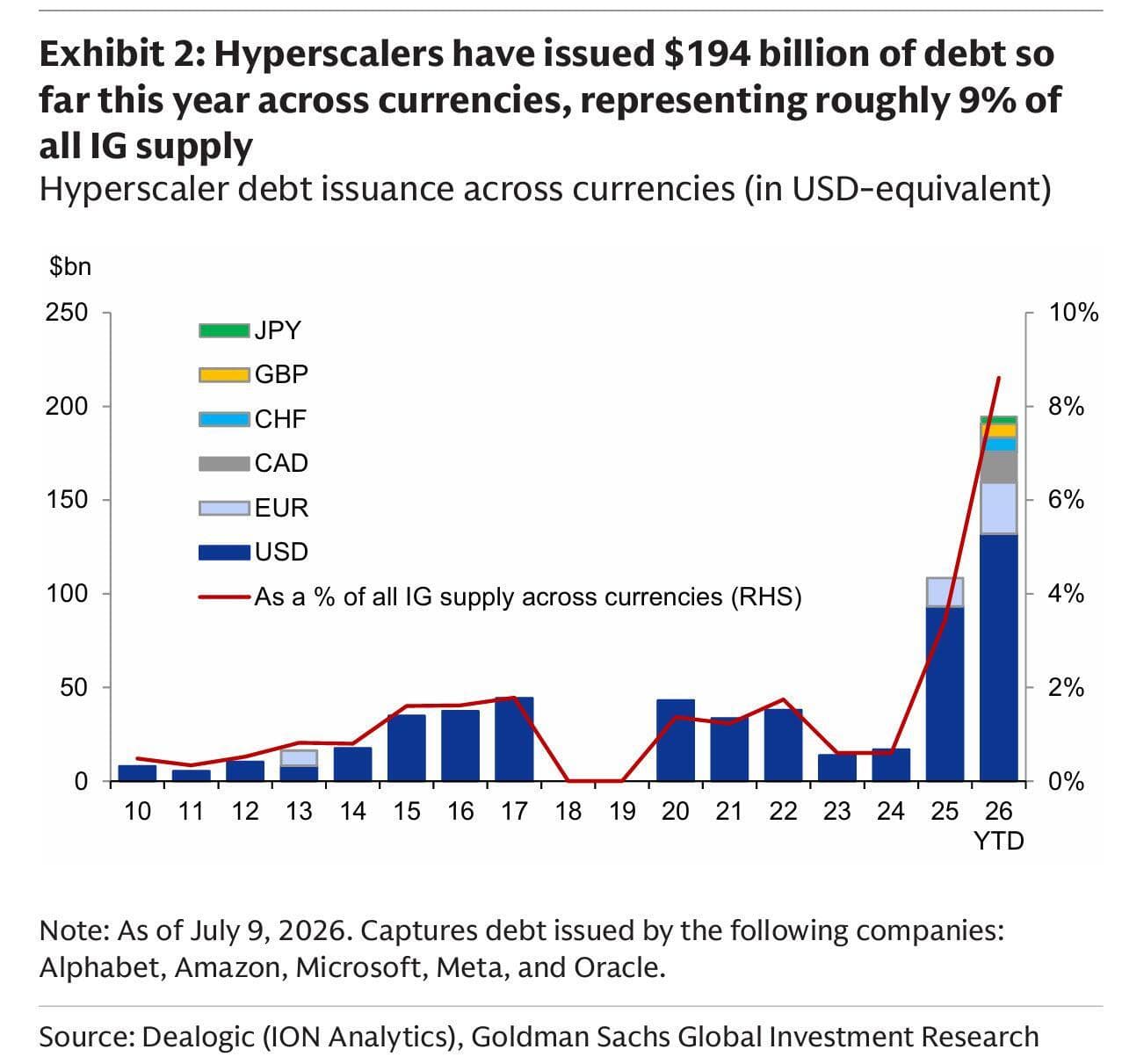
Goldman Sachs traders said investors lending to AI companies are showing “signs of panic,” with Oracle emerging as the clearest example of the strain building in the market for AI debt.
S&P Global Ratings cut Oracle’s long-term issuer credit rating on July 9, 2026, lowering it to BBB-/A-3 from BBB/A-2 and leaving the company just one notch above junk. S&P said Oracle’s rapidly expanding AI infrastructure business is increasing overall credit risk as capital spending rises and cash flow weakens, a combination that has sharpened concern about whether the biggest AI buildouts can support the debt used to finance them.

The pressure had already been visible in the bond market. Oracle bonds sold off in November 2025 as AI investment fueled investor concern, and the company was looking to raise $18 billion in debt in September 2025. Oracle shares later touched a 52-week low of $121.50 and were about 63% below their high, a sharp reset for one of the market’s most closely watched AI beneficiaries. Another Reuters report said Oracle was burning cash faster than it could generate revenue amid a roughly $250 billion data-center expansion.
Goldman’s own research has been flagging the same pattern. In an October 22, 2025 note on the AI trade, Goldman said bubble concerns were back amid rising valuations, massive AI spending and increasing circularity in the AI ecosystem. That language has echoed across Wall Street as investors reassess whether the AI boom is being financed with too much debt and too little proven return. Commentators including Gary Marcus have also argued that OpenAI poses a risk to Oracle, adding another layer of skepticism around the company’s role in the infrastructure buildout.
For Goldman, the shift matters because it is the kind of stress signal that can move from one issuer to a broader financing story. Wider risk premiums in AI-exposed credit can hit debt syndication, cloud and hardware names, and eventually equity valuations, making Oracle a test case for how much leverage the AI economy can absorb before lenders pull back further.
This article was produced by Prism’s automated news system from verified source data, official records, and press releases, then run through automated quality and moderation checks before publishing. The system is built and supervised by the people who set the standards it runs under. Read our full AI policy.
Did this article answer your question?