Goldman's Roman Spotlights Top Health Care Opportunities at Inaugural Conference
Goldman's health care co-head David Roman signaled deal momentum at the firm's inaugural conference, with AI in medtech emerging as the sector's defining near-term opportunity.
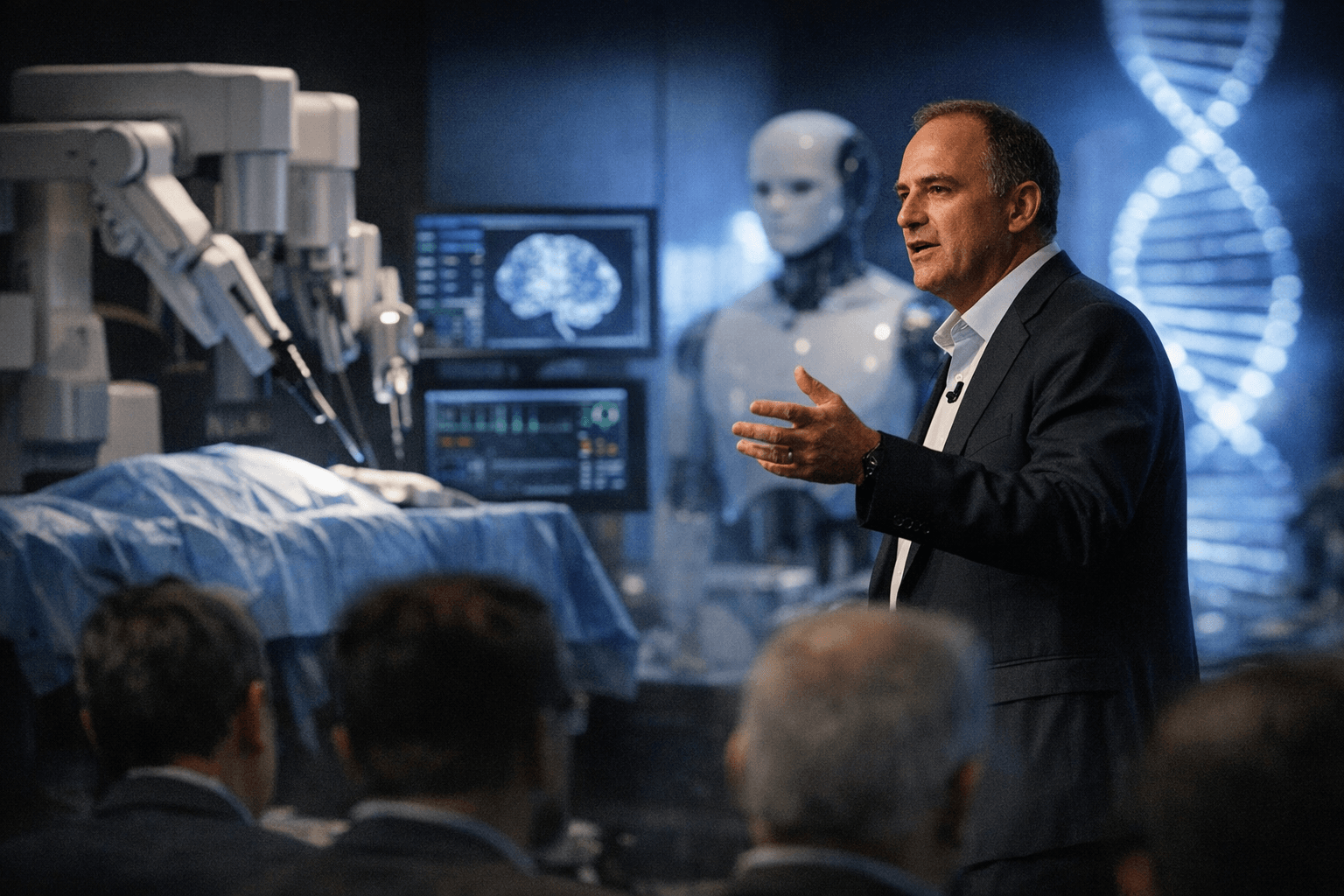
David Roman used a Bloomberg appearance last week to send a clear signal about where Goldman Sachs's health care team intends to compete: at the point of creation for the next generation of medical technology companies, not just their exits.
Roman, co-head of Goldman's Health Care business unit, appeared to discuss the bank's inaugural health care conference and map out the sector's biggest near-term opportunities. His answer centered on the collision of artificial intelligence with medtech, digital health, and life sciences, arguing that convergence is driving both strategic acquisitions and a new wave of high-growth financing activity.
He described his team's posture as being "present at the inception of new technologies" and scaling companies through public markets and private capital solutions. That framing is meaningful. It positions Goldman not merely as an IPO underwriter harvesting mature companies, but as an early-stage capital partner in businesses reshaping clinical diagnostics, imaging, and automation. The advisory and capital-raising combination, working both sides of the deal ledger, is exactly the cross-platform pitch Goldman's senior leadership has been reinforcing publicly heading into 2026.
For coverage bankers and origination-focused VPs and MDs, the subtext of Roman's remarks is resource allocation. Public optimism about a sector's deal pipeline, delivered by a co-head at an inaugural conference, is the kind of signal that precedes internal moves: secondments between research and banking, expanded coverage mandates, and specialist hiring in regulatory affairs and clinical strategy advisory roles that support complex health care diligence. The conference launch itself reinforces that commitment. Proprietary conference franchises at major banks are institutional statements, designed to attract company management and investors and raise the profile of the coverage team within the firm.
For junior bankers and analysts, the more immediate calculus is workload. An accelerating sector means more live processes: due diligence assignments, financial models, bridge financing work, and fairness opinions. That deal exposure can compress years of technical learning into months, but it tends to arrive with the hours to match. Analysts and associates who build genuine domain expertise now, specifically in reimbursement models, FDA regulatory pathways, and clinical data interpretation, will have a measurable edge on live processes and in internal conversations about deal team composition.
The cross-team implications extend beyond traditional banking coverage. Roman's emphasis on private capital solutions alongside public markets suggests Goldman's asset and wealth management units are expected to participate in health care structures alongside the investment bank. Research analysts covering the sector should anticipate being pulled more frequently into client pitches.
Roman's remarks sit alongside a broader pattern of Goldman executives expressing confidence in 2026 deal activity, citing M&A tailwinds and sustained private capital availability. For anyone weighing internal mobility, health care is looking like one of the more strategically prioritized verticals at the firm right now. The signals worth watching are the internal ones: coverage memos on pipeline prioritization, secondment notices, and specialist job postings on the health care desk.
This article was produced by Prism’s automated news system from verified source data, official records, and press releases, then run through automated quality and moderation checks before publishing. The system is built and supervised by the people who set the standards it runs under. Read our full AI policy.
Did this article answer your question?