NLRB Guidance Clarifies Goldman Sachs Employees' Rights Under NLRA
NLRB guidance lays out workers’ rights under the NLRA and specific employer prohibitions, clarifying how Goldman Sachs employees can raise pay, benefits, and working-conditions concerns.
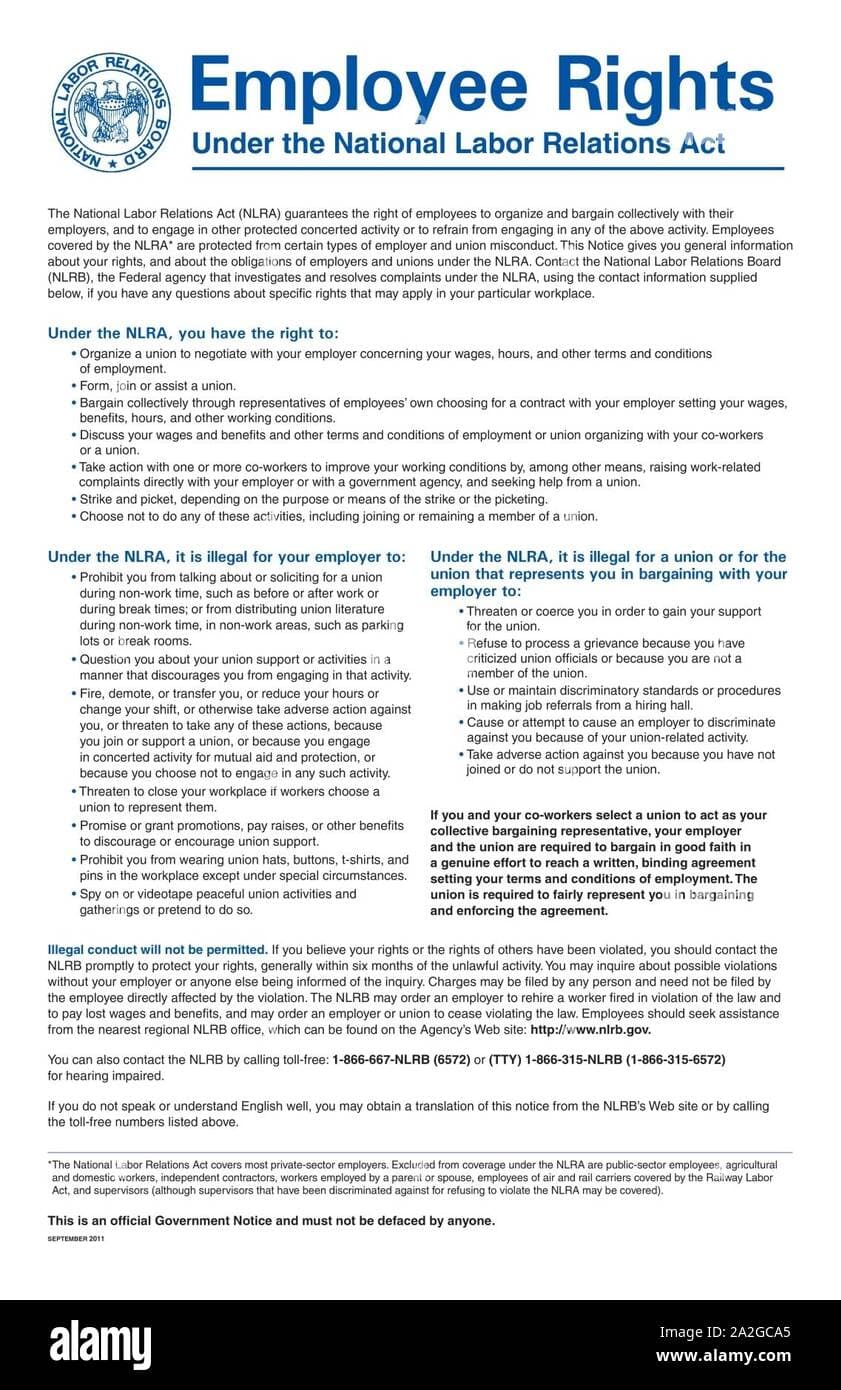
The National Labor Relations Board has reiterated the core protections that cover most private-sector finance workers, spelling out the activities employees may engage in and the employer conduct that is unlawful in response to organizing or concerted action.
Section 7 of the National Labor Relations Act guarantees employees "the right to self-organization, to form, join, or assist labor organizations, to bargain collectively through representatives of their own choosing, and to engage in other concerted activities for the purpose of collective bargaining or other mutual aid or protection," and the right "to refrain from any or all such activities." The board’s guidance underscores that Section 8(a)(1) makes it an unfair labor practice for an employer "to interfere with, restrain, or coerce employees in the exercise of the rights guaranteed in Section 7." The guidance adds: "Employees have the right to unionize, to join together to advance their interests as employees, and to refrain from such activity. It is unlawful for an employer to interfere with, restrain, or coerce employees in the exercise of their rights."

The NLRB and union guidance materials list concrete examples of prohibited employer responses during organizing. Employers may not "Fire, demote, or transfer employees for expressing pro-union views or reward employees for expressing anti-union views." Employers may not "Reduce pay, hours, or benefits." Employers may not "Impose new paperwork requirements to maintain employment." Employers may not "Contact law enforcement, including ICE." Employers may not "Make work more difficult or less desirable, like changing work schedules, denying overtime, or separating employees." Employers may not "Tell employees that it's pointless to choose a union. [...] Tell employees that it's pointless to choose a union."
Employees who believe their rights have been violated can file an unfair labor practice charge with the NLRB. Find your local NLRB office online or call 1-844-762-6572. We have interpretors available. The board also maintains outreach channels including NLRB Facebook, NLRB Twitter, NLRB Instagram, Linkedin, NLRB News, and an RSS feed for updates.
Case law and recent decisions show how rules and policies are scrutinized in context. The administrative law judge in Bemis applied the Boeing analytical framework to find unlawful social-media policy language that included: "Employees are expected to be respectful and professional when using social media tools . . . We expect our employees to exercise judgment in their communications relating to Bemis so as to effectively safeguard the reputation and interests of Bemis. Employees should: [c]ommunicate in a respectful and professional manner . . . ; [e]ach employee is responsible for respecting the rights of their" and thus triggered the Bemis Co., 2019 NLRB LEXIS 379 (N.L.R.B. July 1, 2019) citation. Another example found that "a worker would be prohibited from soliciting on behalf of a union ‘ ‘during a paid break time in a break room,’ ’ and the employer did not have a ‘ ‘sufficient justification to prohibit protected activity during non-working time, even if that time is paid time.’ ’
The Department of Labor emphasizes employer-facing steps as well, advising employers to "Make sure your employees are aware of their rights to organize and bargain collectively – for example, by circulating the poster developed under E.O. 13496." The DOL restates that "The NLRA is a federal law giving most private sector employees the right to form or join unions; engage in protected, concerted activities to address or improve working conditions (like protesting low pay, unsafe working conditions, or discrimination); and refrain from engaging in these activities." The DOL notes coverage limits: the NLRA does not cover "other government employees, agricultural laborers, most domestic workers, independent contractors, or supervisors (although supervisors that have been discriminated against for refusing to violate the NLRA may be covered)." It also notes that railroad and airline workers are governed by the Railway Labor Act.
For Goldman Sachs employees and other finance professionals, the guidance matters practically. Compensation and bonus conversations, staffing and schedules, and efforts to organize for improved terms are protected when they constitute concerted activity. Employers should review policies that touch on solicitation, social media, confidentiality, and solicitation of coworkers; "No-distribution and no-solicitation policies should continue to be carefully drafted in accor-dance with longstanding Board standards." Workers who face discipline or coercive measures retain the option to file charges and to seek remedies through the NLRB. The next steps for both employees and managers are procedural: employees can contact NLRB offices or follow the board’s outreach channels for assistance, while employers should reassess handbook language and bargaining readiness, including FMCS support for initial contract talks.
This article was produced by Prism’s automated news system from verified source data, official records, and press releases, then run through automated quality and moderation checks before publishing. The system is built and supervised by the people who set the standards it runs under. Read our full AI policy.
Did this article answer your question?