Solomon’s Pay Climbs 20.5% to $47 Million, Surpassing Dimon
David Solomon's total pay rose 20.5% to $47 million for 2025, reflecting strong dealmaking and trading and highlighting pay and retention priorities for Goldman Sachs employees.
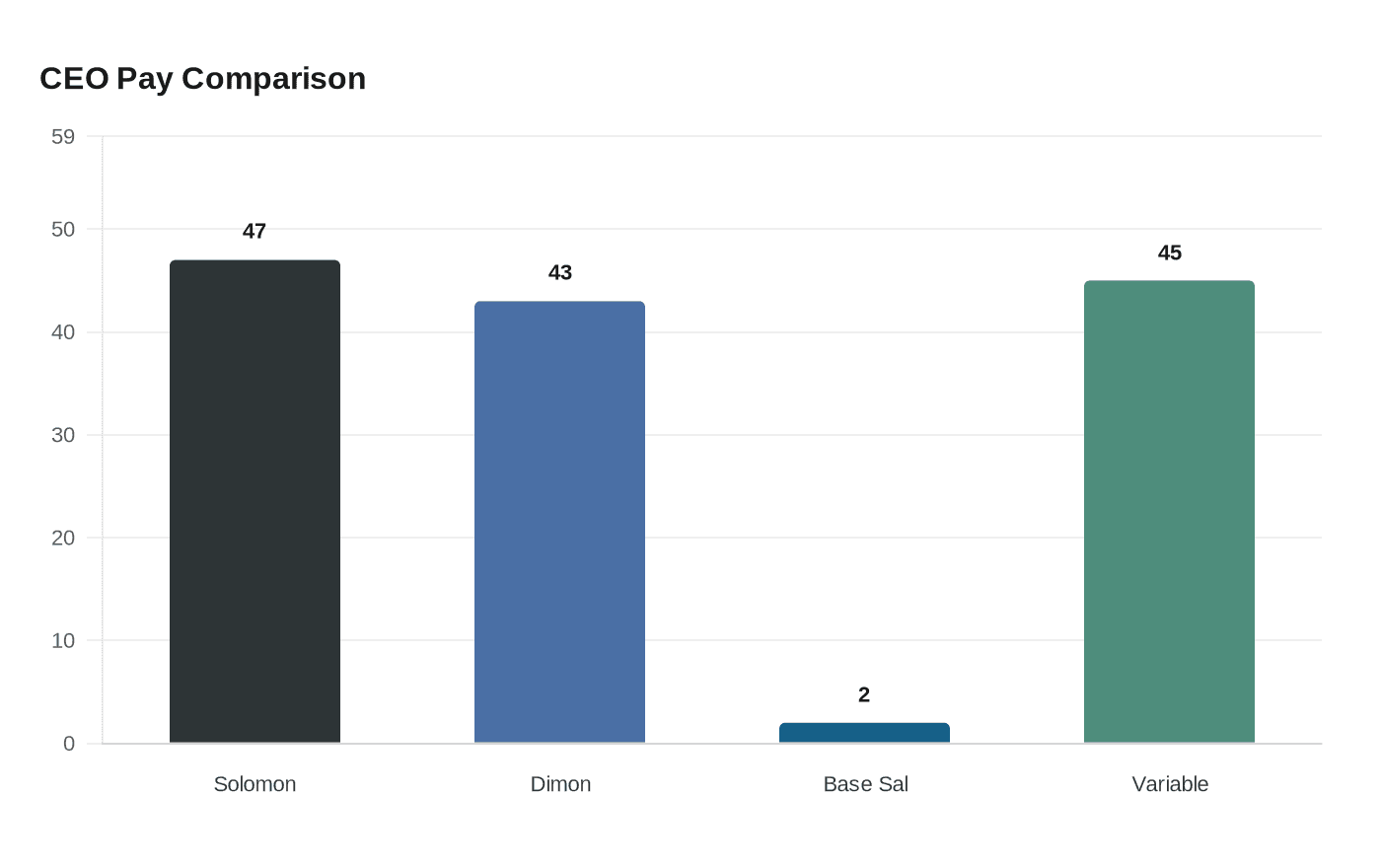
Goldman Sachs reported that chief executive David Solomon’s total compensation for 2025 increased 20.5% to $47 million, a package that eclipsed JPMorgan CEO Jamie Dimon’s reported $43 million for the year. The firm’s filing shows Solomon received a $2 million base salary and roughly $45 million in variable compensation composed of cash, stock and carried interest, a mix aimed at rewarding short-term results and longer-term performance.
The board framed the pay decision around firm performance, citing both absolute results and performance relative to peers. Goldman finished the year as a top advisor on global M&A activity and posted strong banking and markets revenue, with deal flow and trading gains driving the firm’s profitability. Those metrics fed into the bonus pools and executive awards that produced Solomon’s larger payout.
The pay announcement follows prior retention moves at the firm, including roughly $80 million in retention restricted stock units granted to senior leaders that vest over five years. Those awards indicate an ongoing emphasis on locking in senior talent as competition for rainmakers and trading talent accelerates across Wall Street.
For rank-and-file Goldman employees the increase in Solomon’s compensation is likely to sharpen conversations about distribution of the year’s gains. Investment banking and markets divisions that generated strong revenue may see continued support for generous variable pay, while the heavy allocation to stock and carried interest signals a tilt toward longer-duration retention. At the same time, retention RSUs targeted at senior leaders may widen the gap between the pay experience of senior bankers and junior or midlevel staff, exacerbating internal equity tensions during bonus season.
The decision also has consequences for workplace dynamics. Managers may face higher expectations to justify compensation decisions to teams, and talent retention strategies may prioritize high producers with long vesting packages. Shareholders and proxy advisors, already attentive to executive pay ratios and governance, will likely scrutinize how variable compensation links to sustained performance across cycles.
What comes next for employees is clarity on how bonus pools and equity grants will be allocated across business lines and levels. Workers should watch upcoming proxy disclosures, internal guidance on compensation philosophy, and how the bank balances immediate cash payouts with multi-year retention vehicles. Solomon’s pay package underscores Goldman’s current priority: rewarding dealmakers and traders while using longer-term awards to keep senior leaders in place.
Know something we missed? Have a correction or additional information?
Submit a Tip