Home Depot backs Father’s Day gifts with tools, lawn and grill picks
Home Depot’s Father’s Day play is really a selling tool: give shoppers a useful project, then make it easy for associates to steer them to the right gift and add-ons.
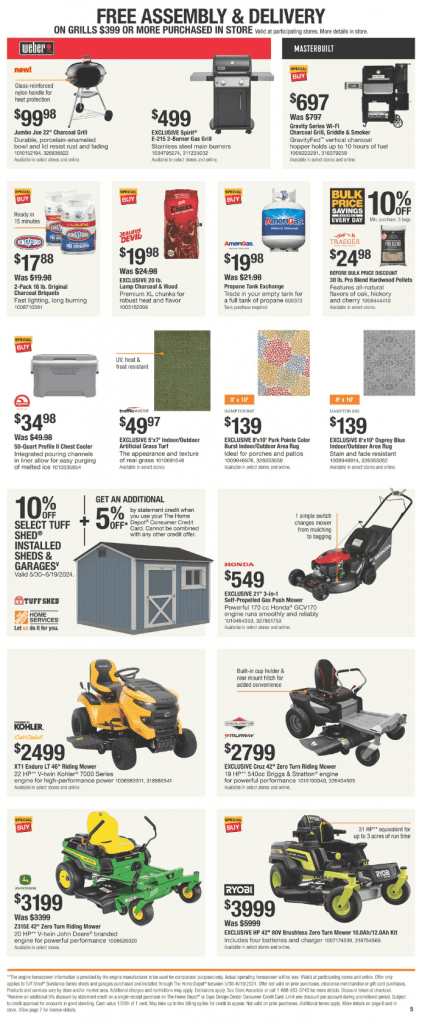
Home Depot is treating Father’s Day like a floor-ready selling moment, not a grab bag of novelty gifts. The company’s June 11 guide centers on practical, project-driven buys in home improvement, lawn care, and outdoor cooking, with savings running through June 24. For associates, the point is simple: a clearer gift story makes the conversation easier, faster, and more useful for the customer standing in the aisle.
A cleaner pitch for the sales floor
The strongest part of the assortment is how neatly it breaks into three customer types that store teams can actually work with: the DIY dad, the lawn-care enthusiast, and the grill master. Those are not abstract marketing labels. They are conversation starters that let associates narrow a broad holiday question, “What should I get him?”, into a specific project and a specific department.
That matters because Father’s Day shoppers often come in with a deadline and only a rough sense of what they need. A gift that is framed as a project, not just a product, is easier to explain, easier to compare, and easier to ring up without a long back-and-forth. The merchandising logic helps the associate do the part of the job that wins trust: translate a vague gift request into something useful.
The brands and products do the heavy lifting
Home Depot’s featured brands, Ryobi, Milwaukee, Husky, and Weber, reinforce that this is meant to feel practical, not sentimental. Those names already signal trade know-how, backyard work, and equipment that gets used long after the holiday card is gone. That makes the guide especially useful for associates who sell to customers looking for something sturdy, recognizable, and easy to justify.
Two highlighted items show the strategy clearly. The Husky 280-piece mechanics set gives the store a straightforward answer for the customer who wants a big, visibly useful present. The Ryobi ONE+ two-tool combo kit does something different: it gives associates a way to talk about entry-level power tool ownership without making the conversation feel intimidating. One gift speaks to the shopper who wants volume and value. The other speaks to the shopper who wants a practical start in a battery-powered system.
What customers are really asking about
The guide also hints at the kinds of questions store teams are likely to hear. Father’s Day customers are not just shopping for “a tool” or “a grill.” They are asking about battery ecosystems, tool compatibility, mower power, grill accessories, and whether the gift fits a beginner or someone who already knows their way around a workshop.
That is where product knowledge becomes a real selling advantage. A customer in outdoor power equipment may need help deciding whether a battery platform can grow with them. Someone in garden or seasonal outdoor living may need a steer on mower power or the right add-on accessories. And a shopper buying in the grill aisle may be looking for more than the grill itself, including thermometers, fuel, or the parts that make the gift usable on day one.

For associates, this is a reminder that Father’s Day shopping crosses departments fast. Tools, garden, outdoor power equipment, seasonal outdoor living, and backyard cooking are all part of the same basket once the conversation starts.
Why the add-on sale feels natural here
One of the biggest takeaways for department leads is the attachment opportunity built into this kind of assortment. The guide naturally opens the door to blades, bits, batteries, fuel, thermometers, and accessories. That matters because these are not random impulse items. They are the pieces that make the core gift work better, last longer, or feel more complete.
Managers can coach that sale without sounding pushy because the merchandising story already creates the need. If a shopper buys a drill combo, the right bits are not a hard sell. If the gift is a mower or outdoor power item, the battery or fuel conversation makes sense. If the purchase is a grill, accessories and temperature tools feel like part of the same project, not an upsell tacked on at the register.
That is the subtle strength of the guide: it gives associates a reason to recommend the extra item that sounds like help, not pressure. In retail terms, that is how a seasonal promotion turns into a bigger basket.
What Home Depot seems to think shoppers want right now
The overall read from this Father’s Day assortment is that shoppers still want gifts they can explain in one sentence. Not vague, decorative, or overly personal gifts, but useful things tied to a real task: fix something, mow something, cook something, build something. That preference is a clue about how customers are thinking under time pressure. They want to know the gift will get used, and they want to leave the store confident they picked the right version.
For Home Depot, that is a smart fit with its strongest advantage: associates who can connect products to projects. A branded gift guide can do some of that work, but the real value shows up when a store team member can turn “Father’s Day gift” into “this is the right battery platform,” “this kit is a good starter set,” or “this grill needs these accessories to be complete.”
That is what makes this more than a holiday display. It is a playbook for selling like a helpful expert, which is still one of the most effective ways to move merchandise in a store built around projects, not just products.
This article was produced by Prism’s automated news system from verified source data, official records, and press releases, then run through automated quality and moderation checks before publishing. The system is built and supervised by the people who set the standards it runs under. Read our full AI policy.
Did this article answer your question?