Home Depot explains how retail technology reshaped shopping and work
Home Depot's tech stack now shapes the shift, from 2-hour pickup to task apps that steer associates. The result is faster service, but tighter coordination on the floor.
Home Depot recorded its first online sale in 2000. Since then, the store is no longer just a place where customers buy product; it is also the engine that powers online orders, pickup promises, and task management for associates. Store, web, and mobile work have moved closer together. For associates, that means more questions about stock, order status, and timing, and less room for silos between the sales floor, the back room, and the service desk.
How the store became the hub
The technology shift did not begin with apps. The first two Home Depot stores opened in Atlanta, Georgia, on June 22, 1979, and the company went public on Nasdaq on September 22, 1981. The chain was built as a high-volume physical retailer long before digital retail became standard, and the store has remained the center of the business even as systems around it changed. Home Depot began using UPC scanning systems in 1987, a milestone that pushed checkout, inventory checks, and replenishment toward a more standardized routine.
For store teams, UPC scanning solved a basic operational problem: faster, cleaner transactions with better inventory visibility. It also created a new burden, because every associate touching product, whether at the register, in receiving, or on the floor, had to rely on accurate barcodes and scan discipline. Customers notice the difference most at checkout and when they ask whether an item is actually in stock, because the answer now depends on how well store systems match what is on the shelf.
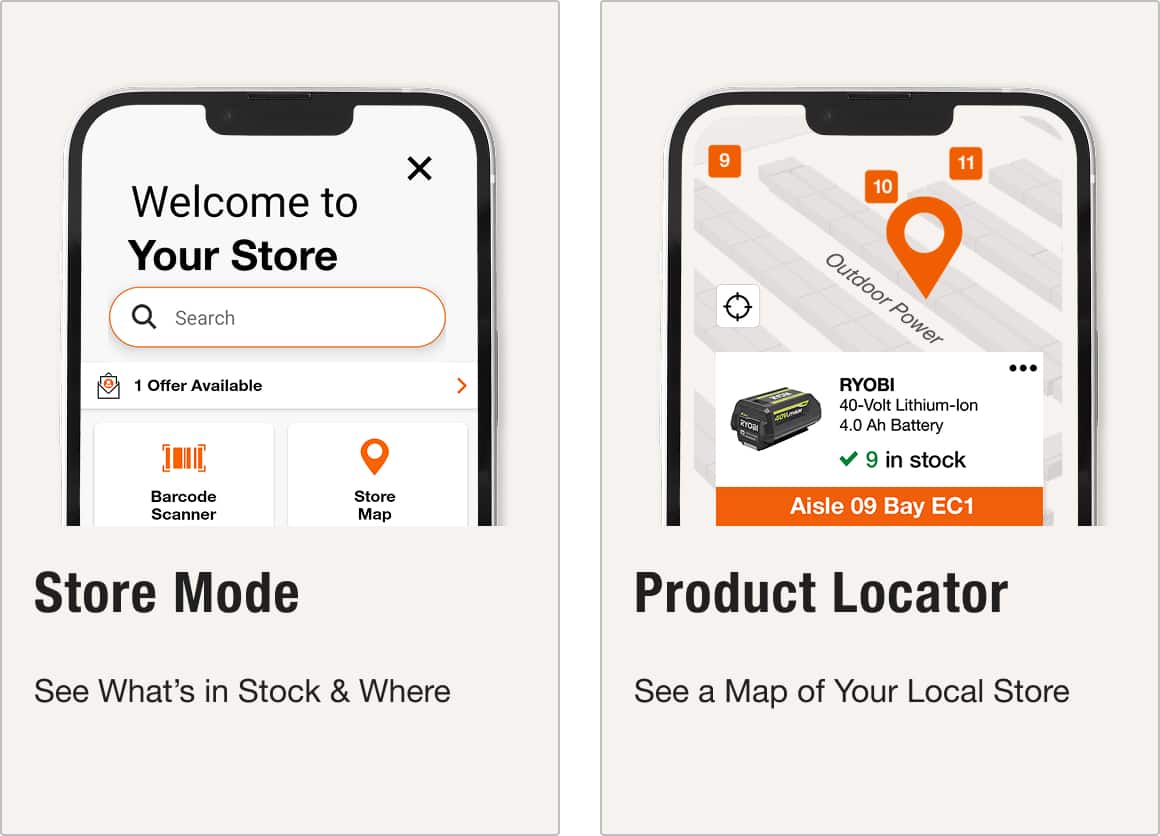
That same logic carried into e-commerce. Home-improvement shopping has been built around the idea that a customer might research online, then finish the job in store. Physical stores play a key role in conveniences such as buy online, pick up in store, along with mobile integrations, a point Adobe made in its profile of the company. In practice, that means a shopper may walk in already knowing the SKU, the aisle, and the price, which changes the conversation at the floor, the desk, and the register. Associates are not just helping someone choose a product; they are often confirming a decision that was made online and checking whether the store can deliver it on time.
Pickup is now part of the labor plan
Home Depot offers free in-store pickup in 2 hours for thousands of eligible items, and most orders are ready within a few hours. That solves a real customer problem, especially for pro customers and DIY shoppers working around a narrow project window. A plumbing repair, deck build, or paint job does not wait for a slow fulfillment cycle, so faster pickup has become part of the retailer’s promise.
For workers, that promise creates a different kind of pressure. Associates and fulfillment teams have to locate inventory quickly, verify that the order has been picked, stage it correctly, and hand it off without creating extra friction at the service desk. The work is not only about speed, either. It also depends on communication between departments, because a delay on the floor can show up as a missed pickup, a long line, or a customer who arrives expecting a ready order and instead needs a replacement path.
What shoppers see is usually more visible than the backstage choreography. They notice shorter waits when pickup runs smoothly, fewer surprises at checkout, and a store that can function as both a warehouse and a service point. They also see the downside when the process slips, because a “ready in a few hours” promise raises expectations across the whole store.
The app layer changes how associates spend the shift
A major labor change in the digital era is less visible than pickup lockers or mobile checkout. In 2019, the company rolled out a machine-learning-based employee app called Sidekick to help store associates prioritize tasks more effectively. Home Depot later launched a new in-store application for the same purpose, tying the software directly to better customer experience.
That tool solves a familiar store problem: too many tasks hitting associates at once. Recovery, stocking, order staging, customer questions, and aisle maintenance all compete for attention, and a task-priority app is meant to tell workers what to handle first. The new burden is training and discipline. Associates have to learn the app, trust the sequence it gives them, and use it while still responding to customers standing in front of them.
The customer-facing change is easier to spot on the floor than on a dashboard. When tasking works, aisles stay cleaner, shelves recover faster, and associates are easier to find because they are not buried in avoidable follow-up work. When it does not, the store feels busy but uncoordinated, with workers pulled in several directions at once. For department leads, the app changes the rhythm of coaching too, because it gives management a more structured way to push priorities without relying only on verbal walkthroughs.
At Home Depot’s scale
Google Cloud has collaborated with Home Depot since 2015 on retail technology aimed at improving the associate and customer experience whether shoppers are in store, online, or using a mix of both.
Home Depot’s 2024 annual report put fiscal 2024 sales at $159.5 billion, up 4.5 percent from fiscal 2023, with total sales increasing by $6.8 billion year over year.
This article was produced by Prism’s automated news system from verified source data, official records, and press releases, then run through automated quality and moderation checks before publishing. The system is built and supervised by the people who set the standards it runs under. Read our full AI policy.
Did this article answer your question?