Home Depot faces steady wage pressure as labor costs keep rising
Labor costs rose 3.4% over the year, while inflation-adjusted wages barely budged. For Home Depot’s 470,000 associates, that keeps pressure on pay, staffing, and benefits.
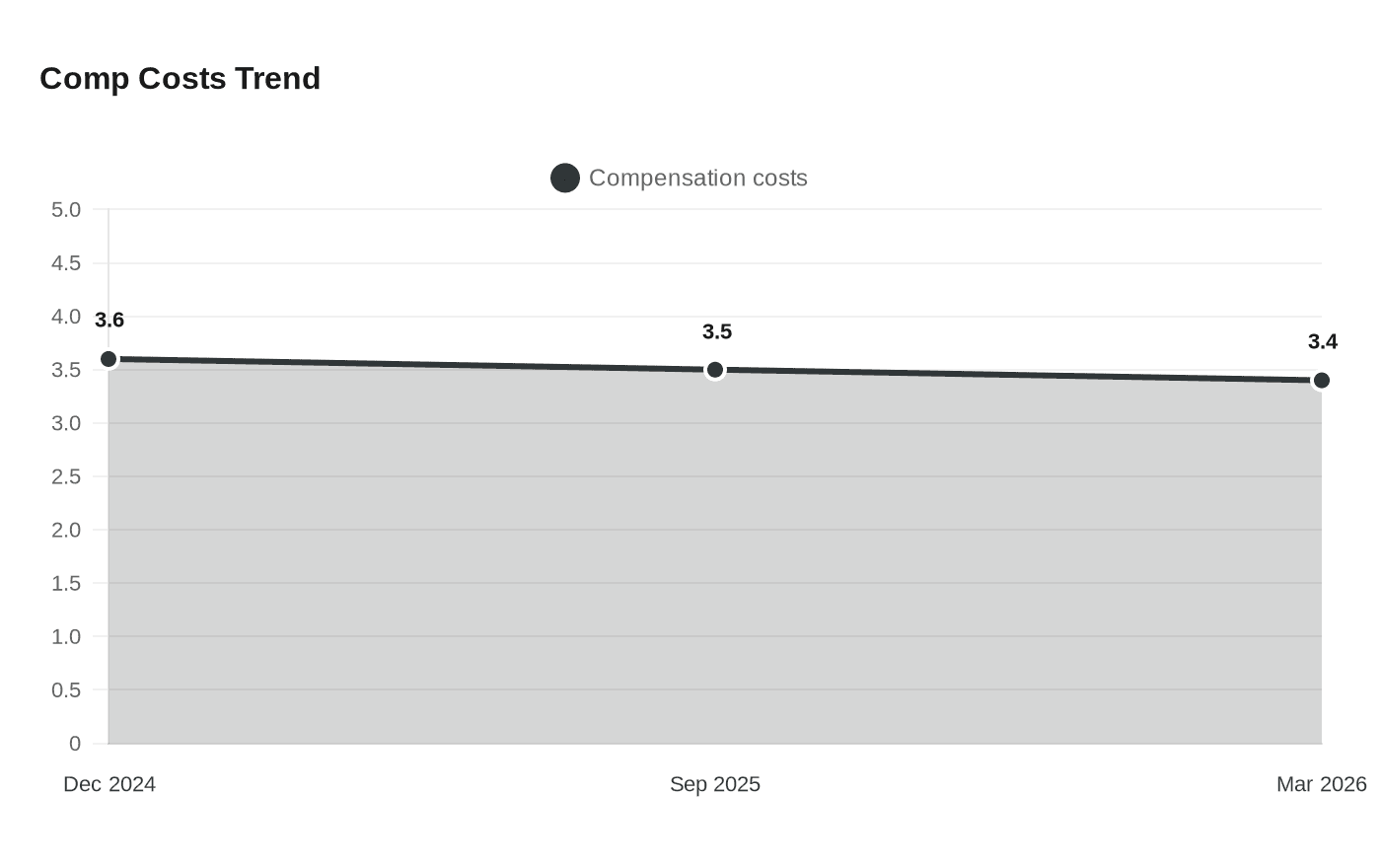
The labor market is still pressing against employers, and the latest federal reading shows that pressure is spreading across both paychecks and benefits. The U.S. Bureau of Labor Statistics said private-industry compensation costs rose 0.9% in the quarter ending March 2026, with wages and salaries up 0.7% and benefit costs up 1.3%. Over 12 months, compensation costs climbed 3.4%, wages and salaries rose 3.4%, benefit costs rose 3.6%, and inflation-adjusted wages and salaries increased just 0.1%.
For a retailer built on large hourly crews, that matters in practical ways. Stores competing for cashiers, lot associates, freight teams, pro service workers and warehouse staff are not just bidding on base pay. They are also fighting over scheduling flexibility, internal promotion paths, training access and the clarity of the benefits package. When benefit costs are rising faster than real wages, employers often feel pressure to explain total rewards more clearly, while also protecting labor budgets that cover headcount, coverage and retention.
The scale at The Home Depot makes those trade-offs bigger. In its fiscal 2025 annual report, filed in March 2026, the company said it employed more than 470,000 associates and operated more than 2,300 retail stores in the United States, Canada and Mexico. The company reported fiscal 2025 sales of $164.7 billion. Fourth-quarter sales came in at $38.2 billion, down 3.8% from the prior year because the quarter had 13 weeks instead of 14. Comparable sales for fiscal 2025 rose 0.3%, and U.S. comparable sales rose 0.5%.
Chief executive Ted Decker said the results reflected consumer uncertainty and pressure in housing, a reminder that labor spending is being weighed against a cautious demand backdrop. Home Depot’s proxy statement says the company is continuously investing in associates through competitive wages and benefits, culture, tools, training and development opportunities. In a 2024 investor factsheet, the company said it had invested about $1 billion of incremental annualized compensation for front-line associates beginning in fiscal 2023.
The broader pattern has not eased. BLS said private-industry compensation costs rose 3.6% over the year ending December 2024 and 3.5% over the year ending September 2025, so the March 2026 reading shows the pressure is persistent, not fading. For Home Depot managers, that keeps labor planning tied to staffing, succession and cross-training decisions. For associates, it reinforces a simple point: in a market where labor still costs more, the full value of pay, benefits and advancement matters just as much as the hourly rate.
Know something we missed? Have a correction or additional information?
Submit a Tip