Home Depot grants up to $10,000 for skilled-trades training programs
Home Depot’s grants are building the trades pipeline behind the pro desk, funding schools and nonprofits that train the electricians, plumbers and carpenters customers need.
Home Depot’s Path to Pro Education Grants are less about charity and more about supply. The program sends up to $10,000 in Home Depot gift cards to schools and nonprofits that already train people for construction careers, putting tools, equipment and training spaces directly into programs that produce the next wave of trades workers. For store teams, that matters because every stronger training program is another link in the chain between your aisle, your pro customers and the labor force that keeps projects moving.
What the grants actually fund
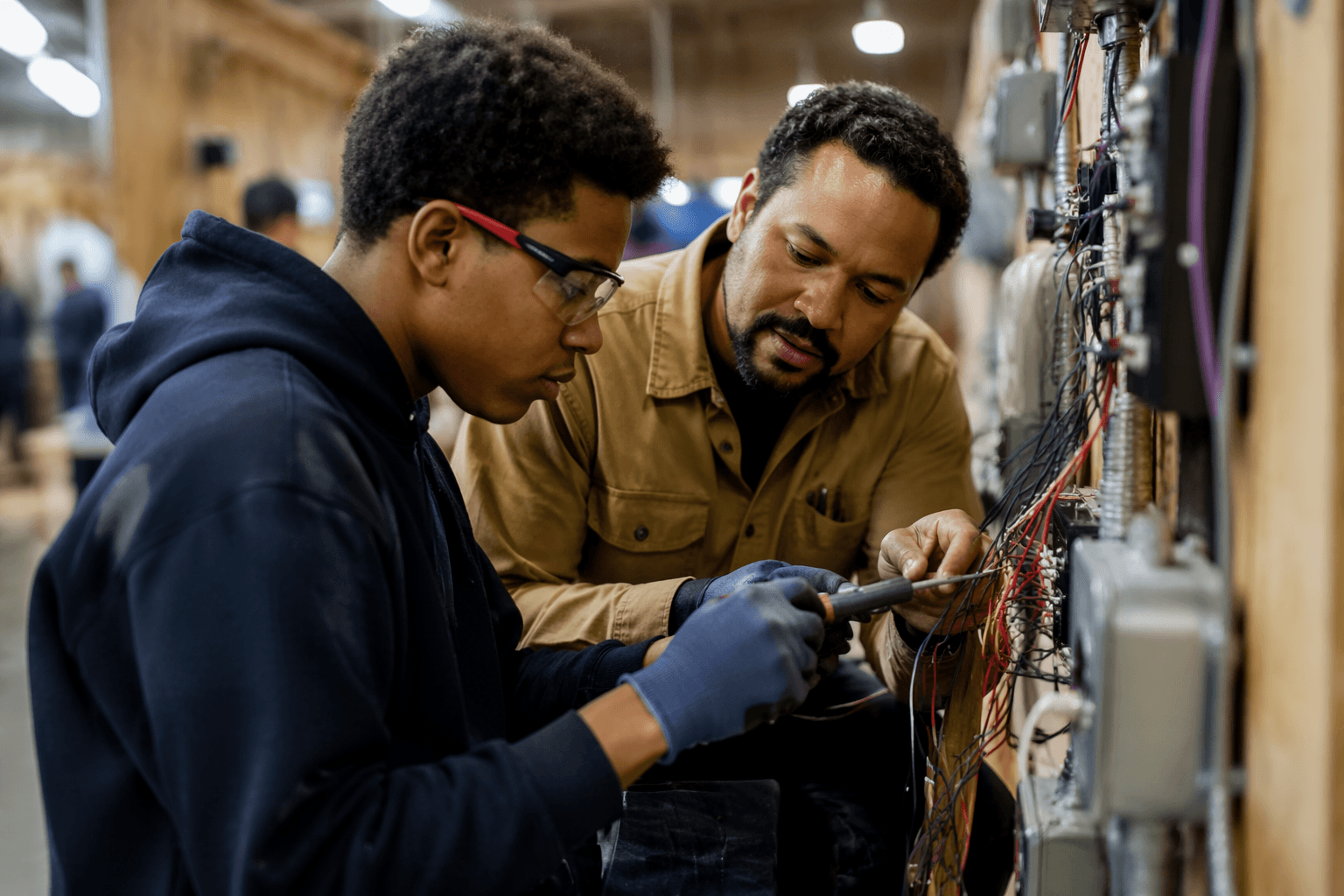
The Education Grants program is open to accredited K-12 schools, accredited post-secondary institutions such as community and technical colleges, and 501(c)(3) nonprofit organizations with existing construction skilled-trades training programs. The money is meant for practical use: tools, products, equipment, and new or remodeled training spaces. That design keeps the program focused on institutions that can scale training capacity, rather than on one-off personal aid.
Home Depot’s priority areas make the workforce strategy explicit. The company names carpentry, electrical, plumbing, HVAC and construction management as the trades it wants to support. In a store setting, those are the exact skill sets that show up in pro conversations every day, from a contractor restocking for a remodel to a homeowner who suddenly needs a licensed electrician or plumber to finish a project the right way.
The grant structure also says something about how Home Depot thinks about impact. Scholarships and individual tuition needs are handled elsewhere in the company’s broader Path to Pro effort. This program is built to strengthen institutions that already have a trades mission, which means the goal is scale, not symbolic goodwill. If a school can add better tools or a more realistic training bay, more students can learn on equipment that resembles the jobsite, not just a classroom demo.
Why this is a workforce story, not a philanthropy story
The clearest way to read the grants is as pipeline maintenance. Home Depot is helping expand the places where future workers learn to wire, plumb, frame and manage projects, and that has a direct downstream effect on the customers who depend on skilled labor. When a store serves pros in a tight labor market, better training capacity can mean more qualified electricians, plumbers and carpenters entering the field, which can translate into more jobs completed, more materials sold and fewer projects stalled by labor shortages.
That linkage matters on the sales floor and at the service desk. Associates who understand the program can explain to contractors and community partners that Home Depot’s support is practical: the company is helping put tools and training spaces where future workers are being taught. For department leads and store managers, it is a concrete example of how the brand’s trades push extends beyond the four walls of the store and into the institutions that produce the workers customers need.
The company has also positioned the Education Grants program as a nationwide expansion of a Southern California pilot tied to rebuilding efforts after wildfires. That history gives the program a local-to-national arc: it started in a recovery setting and grew into a broader effort to strengthen shop class and trades training across the United States.
How Path to Pro fits around the grants
The grants sit inside a much larger Path to Pro strategy. The Home Depot Foundation describes Path to Pro as a $50 million initiative aimed at helping fill the construction skilled labor gap. The broader effort includes training, hands-on experience, scholarships and entrepreneurship programming for youth, high school students, underserved communities and separating service members.
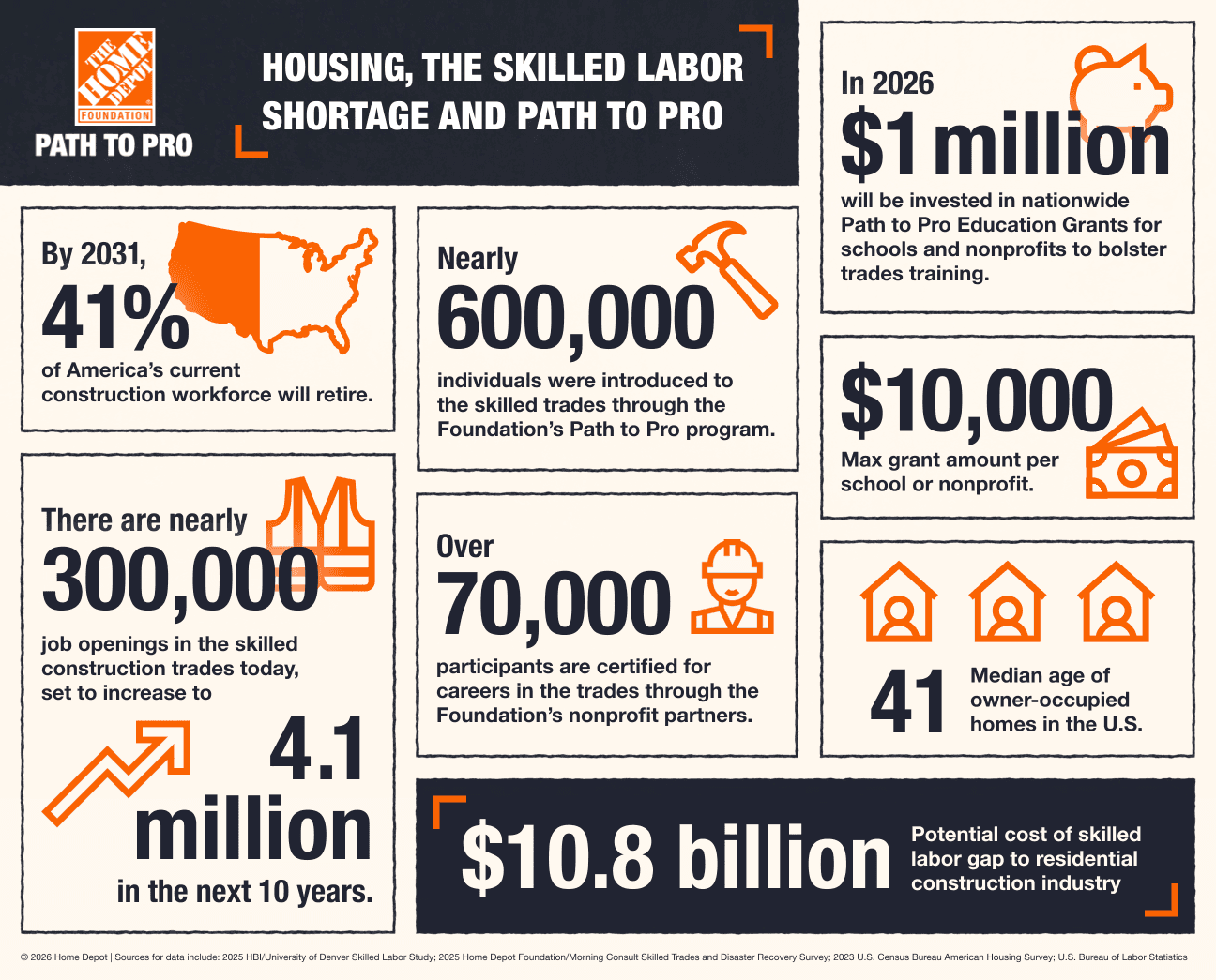
Home Depot says Path to Pro has introduced more than 600,000 people to the skilled trades, certified more than 70,000 participants nationwide and awarded nearly 1,000 scholarships nationwide. Those numbers show a program that has moved well beyond a pilot phase. They also help explain why the Education Grants piece matters: training only works at scale if schools, colleges and nonprofits have the equipment and space to absorb more students.
The company has been building this in stages. In August 2022, Home Depot said Path to Pro and related partnerships had trained more than 29,000 participants and introduced more than 126,000 people to the trades, surpassing its initial goal of training 20,000 people six years ahead of schedule. In August 2023, it announced an incremental investment of more than $6 million in skilled trades training. In August 2025, the Home Depot Foundation said it was investing $10 million in skilled trades training and adding a $1 million partnership with Boys & Girls Clubs of America to bring more young people into construction trades.
For store leaders, that timeline shows a steady expansion rather than a one-time campaign. It also helps frame the company’s community work in a way that fits retail reality: this is about building the labor pool that supports pros during seasonal rushes, renovation spikes and the constant churn of jobsite demand.
The labor-market pressure behind the program
The numbers behind the trades shortage help explain why Home Depot is pushing so hard on training. The Home Depot Foundation says there are about 300,000 available construction jobs today and projects a deficit of 4.1 million workers over the next decade. It also says that for every 5 tradespeople who retire, only 2 qualified workers are entering the field. That gap is the backdrop for every grant, scholarship and training initiative the company has built around Path to Pro.
Federal labor data point in the same direction. The U.S. Bureau of Labor Statistics projects about 649,300 openings a year, on average, in construction and extraction occupations from 2024 to 2034. Within that total, electricians are projected to see about 81,000 openings a year, plumbers, pipefitters and steamfitters about 44,000, and heating, air conditioning and refrigeration mechanics and installers are projected to grow 8 percent over the same period. The BLS also pegs the median annual wage for construction and extraction occupations at $58,360 in May 2024.
Associated Builders and Contractors has been even more blunt about the shortage. The trade group estimated the construction industry needed to attract 439,000 net new workers in 2025 and 499,000 in 2026, after earlier saying the shortage stood near 650,000 in 2022 and 500,000 in 2024. Put together, those figures show why a grant program aimed at shops, labs and training classrooms is not a side project. It is an attempt to widen the funnel before the labor shortage becomes even more expensive for contractors, suppliers and customers.
What store teams should take from it
For associates, the value of knowing this program is simple: it gives you a real answer when a customer asks why Home Depot cares about trade schools, shop class or local training nonprofits. For department leads and managers, it offers a way to talk about the company’s role in the trades without falling back on marketing language. The grants are not abstract support. They are a way to get tools into classrooms, keep training spaces current and help institutions produce workers who can wire a house, install a water heater or manage a build.
That is the ripple effect that matters. Stronger training programs create more capable workers, more capable workers support more jobs, and more jobs feed the contractor and pro business that so much of Home Depot’s retail model depends on. The Education Grants program turns workforce development into something tangible, measurable and repeatable, and that makes it one of the clearest expressions of Path to Pro’s purpose.
This article was produced by Prism’s automated news system from verified source data, official records, and press releases, then run through automated quality and moderation checks before publishing. The system is built and supervised by the people who set the standards it runs under. Read our full AI policy.
Did this article answer your question?