Home Depot pay and benefits stay under pressure as labor costs rise
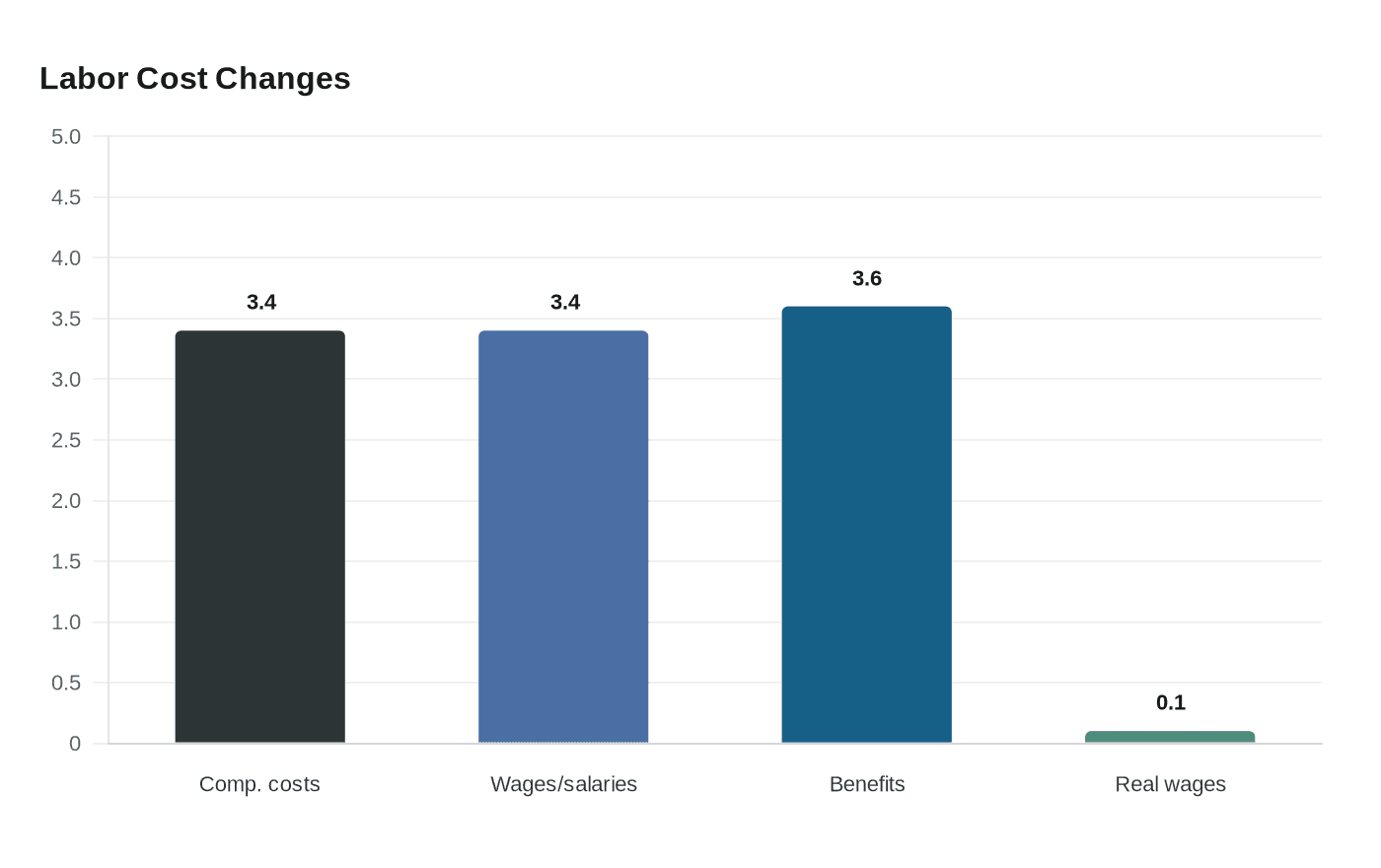
Benefit costs climbed 3.6% while inflation-adjusted wages rose just 0.1%, keeping Home Depot’s total pay package under pressure.
The latest federal labor gauge shows why Home Depot associates still care as much about benefits as hourly pay: compensation costs in private industry rose 3.4% over the 12 months ending in March 2026, but inflation-adjusted wages and salaries climbed only 0.1%. For workers on the sales floor, in the lot, or leading a department, that means the value of health coverage, retirement matches, and leave can matter as much as the next raise.
The Bureau of Labor Statistics’ Employment Cost Index measures changes in employers’ hourly labor costs using a fixed basket of labor, which helps strip out job-mix changes and show underlying compensation pressure. In the March 2026 reading, private-industry wages and salaries rose 3.4% and benefit costs rose 3.6% over the year. From December 2025 to March 2026, compensation costs still rose 0.9% on a seasonally adjusted basis, with wages up 0.7% and benefits up 1.3%. The numbers do not tell Home Depot associates that a wage change is coming, but they do show the environment in which store-level pay conversations are happening.

That matters at a company like The Home Depot, which said in a February 2026 filing that it employed over 470,000 associates. Its annual report says associates can use healthcare and wellness programs, vacation and leave benefits, parental leave, paid sick and personal time off, a 401(k) match, employee stock purchase plans, personal finance education and advisory services, and work-life assistance programs. The company has also said it offers tuition reimbursement, paid family leave, back-up dependent care, a 401(k) savings plan with company match, a discounted company stock purchase program, and a performance-based cash bonus program. Those programs are part of the pay equation, not add-ons.
Rising benefit costs can put pressure on how much value those programs deliver in practice. If healthcare expenses keep climbing faster than paychecks, the real take-home value of coverage can feel thinner even when the company keeps the same menu of benefits. The same pressure can show up in retirement contributions, bonus expectations, and how much room managers have for retention and staffing during seasonal rushes, when stores depend on steady associate coverage and product knowledge.
The Home Depot board committee that oversees human capital management reviews associate compensation and benefits, development and training, diversity and inclusion, and pay equity. That is the right lens for this moment. The ECI suggests the cost of keeping retail labor is still moving upward, and for Home Depot workers that usually shows up first in how far pay, health benefits, and long-term savings can stretch inside the store.
Home Depot’s own history shows why the issue keeps resurfacing. The company said associates received more than $1 billion in Success Sharing awards over the prior three years in 2021, and fiscal 2022 materials put that figure at more than $1.88 billion over the prior three years. In a labor market where wages are still rising and benefits are getting more expensive, those kinds of incentives remain a key part of what associates compare from one retail employer to the next.
This article was produced by Prism’s automated news system from verified source data, official records, and press releases, then run through automated quality and moderation checks before publishing. The system is built and supervised by the people who set the standards it runs under. Read our full AI policy.
Did this article answer your question?