Home Depot sees weather, not demand, driving second-half sales
Weather is shaping Home Depot’s second half, with management pointing to storm activity, not a broad demand rebound, as the key sales swing factor.
Home Depot is treating weather as the biggest variable in the back half of the year, and that changes the job at store level. Ted Decker tied stronger second-half performance to a return of normal storm activity, not to a broad consumer-demand rebound, after weather weighed on comparable sales in the final two weeks of April before May normalized. For associates and department leads, that means storm season is not just a sales story. It affects staffing, freight flow, safety checks, and how fast teams can put high-velocity product in customers’ hands when local urgency spikes.
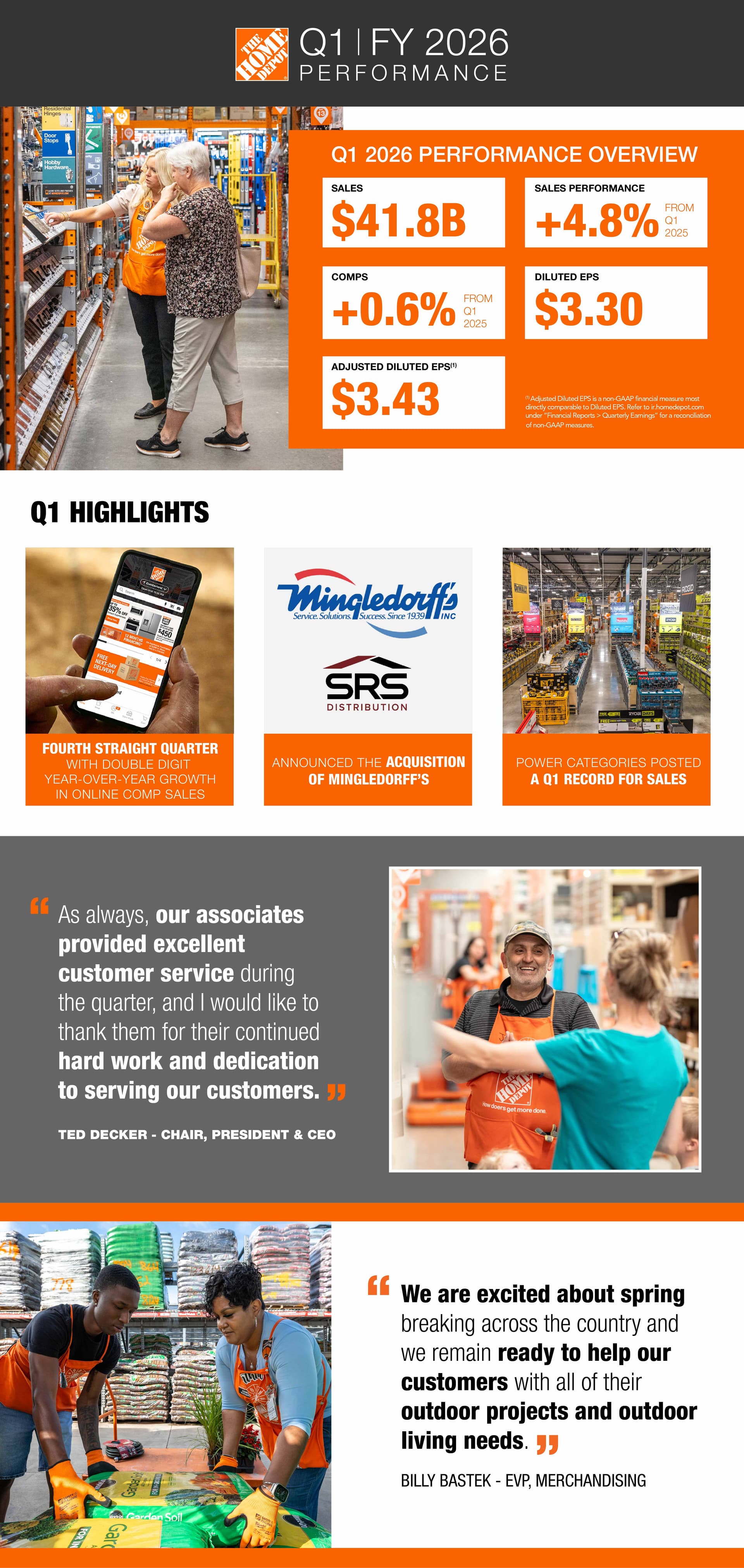
The company’s first-quarter fiscal 2026 results showed the business was still growing before the weather turn. Sales reached $41.8 billion, up 4.8% from a year earlier, while comparable sales rose 0.6% overall and 0.4% in the U.S. Adjusted diluted earnings per share came in at $3.43. Home Depot also reaffirmed full-year 2026 guidance for total sales growth of about 2.5% to 4.5%, comparable sales growth of flat to 2.0%, and roughly 15 new stores. Decker said underlying demand was “relatively similar” to fiscal 2025 despite greater consumer uncertainty and housing affordability pressure.

At quarter end, Home Depot operated 2,361 retail stores and more than 1,280 SRS locations across the U.S., Canada, Mexico and U.S. territories, a scale that makes weather planning a network issue as much as a store issue. Foreign exchange rates also lifted total company comparable sales by about 55 basis points in the quarter, a reminder that the topline is being shaped by more than foot traffic alone. But inside the building, the practical takeaway is simpler: when storms hit, the pressure falls on the same places every time, lumber, outdoor repair, batteries, generators, roofing supplies, cleanup items, and the associates who have to keep those bays ready.

That is why Home Depot’s merchandising execution teams being active in more than 1,000 stores matters. The company is not just forecasting weather as an external factor; it is using it as an operating signal. Home Depot is also partnering with The Weather Company on hyperlocal predictive weather intelligence, and a weather-triggered messaging pilot reportedly drove 6x higher conversions and 7% sales growth. In other words, the company is trying to turn storm timing into a scheduling and replenishment advantage, not just a reactive scramble.
The Home Depot Foundation added another layer to that approach on May 21, 2026, announcing more than $5.5 million in grants for disaster preparedness and community resilience ahead of storm season. The company said it activates a Disaster Response Command Center for significant disasters, organizing more than 100 expert associates in real time ahead of a storm. For Home Depot workers, the message is clear: in a weather-driven year, readiness is part of the business model, and the stores that recover fastest will matter most.
This article was produced by Prism’s automated news system from verified source data, official records, and press releases, then run through automated quality and moderation checks before publishing. The system is built and supervised by the people who set the standards it runs under. Read our full AI policy.
Did this article answer your question?