Home Depot showcases real career paths across stores, supply chain, tech
Home Depot's career hub shows how a store job can turn into supply chain or tech work, with Angelica’s path making the mobility promise concrete.
Home Depot is putting real titles on a promise workers hear all the time. The Career Growth Stories hub shows associates that advancement can move through retail, supply chain, outside sales, technology, or beyond, and it does so with named examples rather than broad slogans. That matters in a company the size of The Home Depot because a career path is easier to believe when you can see Leslie, Christy, Josue, Angelica, Chadd, Sonia, Amy, and James moving through specific roles instead of generic opportunity.
What the hub actually signals to associates
The hub organizes stories by Corporate, Store, and Supply Chain Field, which is more revealing than it may first appear. It tells workers that lateral moves are not a detour from the “real” career ladder, but part of it. The shop-jobs page points in the same direction by grouping opportunities into Retail, Field, Corporate, and other categories, so the company is not just saying mobility exists, it is mapping where that mobility can go.
That framing matters because workers tend to trust concrete examples more than corporate language. Home Depot says 90% of its U.S. store leaders began as hourly associates, and its culture page says many executives started in the aisles too. Crystal Hanlon, now senior vice president and Culture & Values Officer, is presented as a former cashier who started part-time 38 years ago. For associates and department leads, those details make internal mobility look like a staffing model, not a poster.
Angelica’s path shows how the ladder can cross buildings
Angelica’s story is the clearest example of what that mobility can look like in practice. She began her Home Depot career in 2019 as a Department Supervisor after her husband, a MET Supervisor, suggested she apply for an opening at his store. She was hired the day before her birthday, moved up to Specialty Assistant Store Manager, then in 2022 transferred into supply chain as an Area Supervisor at a new Distribution Fulfillment Center.
Her path did not stop at a single warehouse. The story says she traveled to different DFCs around the country for training and support, then in 2024 relocated across the country to become a Distribution Center Operations Manager. That is a meaningful detail for workers because it shows Home Depot is willing to let store experience count in a different part of the business, and that mobility can involve both relocation and cross-training.
For associates who are trying to figure out whether a sales-floor role can lead to a steadier long-term career, Angelica’s example is useful in a practical way. It suggests that the company values people who can learn operations, adapt to different buildings, and take on responsibility outside their original department. In a large retailer, that kind of move can be the difference between waiting on the next store opening and building a career that keeps growing even when the work environment changes.
The store floor is still the starting line
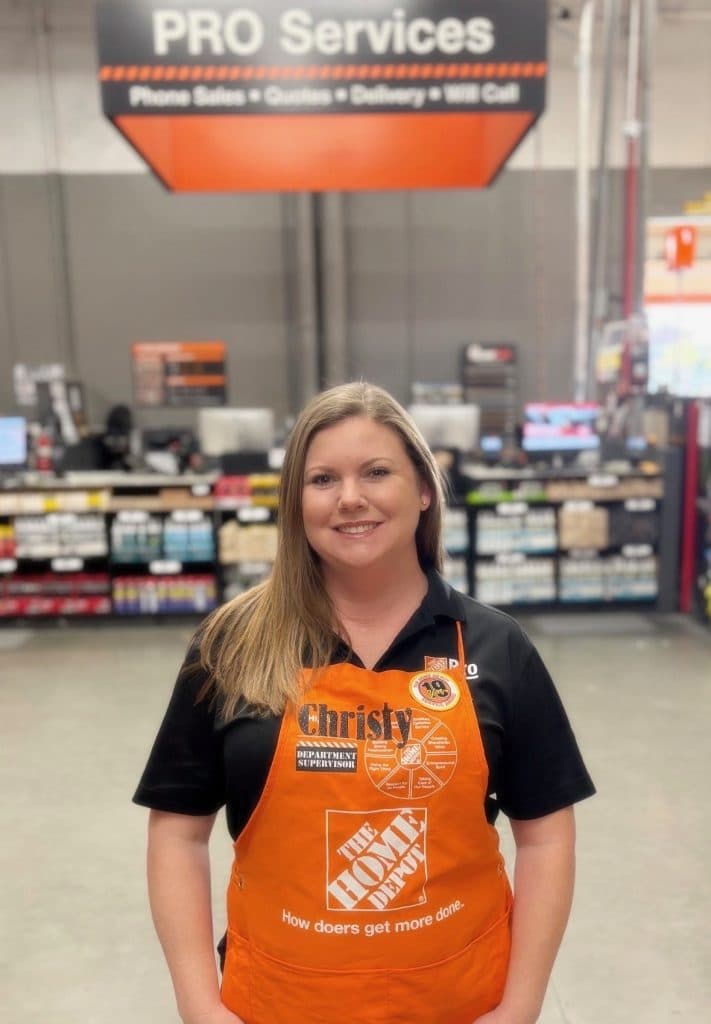
The hub’s store-side stories give the other half of the picture. Leslie is listed as an Associate Support Department Supervisor, Christy as a Pro Department Supervisor, Josue as an Area Supervisor, Chadd as a Store Manager, and Sonia and James as Kitchen/Bath Designers. Those are not random titles. They show the range of jobs that can open up once an associate learns the business well enough to move from pure frontline work into leadership, specialty sales, and customer-guided design.
That spread matters in a Home Depot store because the company serves both walk-in shoppers and professional customers who expect product knowledge, speed, and reliability. Kitchen and bath design roles, in particular, depend on more than basic retail skill. They reward associates who can talk through specs, project timelines, and installation needs, which is where trade knowledge and customer trust start to pay off.
The message for department leads is straightforward: development conversations should not stop at the next in-department promotion. The hub shows a cleaner path when leaders connect hourly work, pro-side expertise, and store management into one internal talent pipeline.
Supply chain is not a side quest
Home Depot’s warehouse operations pages make the back end of the business look like a serious career track, not a hidden support function. The company says its distribution network includes DFCs, RDCs, SDCs, BDCs, MDOs, FDCs, and Crown Bolt operations. That breadth matters because it gives associates a sense of how many different environments exist beyond the sales floor, from fulfillment to replenishment to specialty logistics.
The warehouse operations manager role adds another layer of clarity. Home Depot says OMs oversee multiple areas of a distribution center and are responsible for efficiency and safety. That is the kind of responsibility that often comes with more structured hours, bigger operational scope, and a different kind of job security than a floor role tied to customer traffic and seasonal demand.
Angelica’s move from store leadership into a Distribution Fulfillment Center shows how those roles can connect. It also shows that a new building opening nearby can create internal opportunity fast. For workers watching the company expand, that is worth noticing.
Tech is part of the same story
Home Depot’s technology page broadens the career map even further. The company says most of its code is written by its own associates, and that its technology organization supports more than 400,000 associates and millions of customers worldwide. It also says the tech group includes 3,500-plus technologists, which is a reminder that internal mobility can lead into a large, specialized function rather than only store operations.
That matters because it changes the usual retail script. Associates who learn systems, process improvement, or digital tools are not being pushed into a side department. They are entering a core business function that helps shape how stores operate, how inventory moves, and how customers interact with the company. The tech team’s use of agile methods and paired programming suggests a more collaborative environment than many workers may expect from a home improvement chain.
For workers, the takeaway is simple: the company’s mobility story is not limited to floor promotions. It runs from hourly associate to store leader, from department supervisor to distribution center management, and from retail experience into technology work that supports the entire chain.
Why the numbers matter now
The broader business context makes that mobility pitch more important. Home Depot reported fiscal 2025 sales of $164.7 billion, net earnings of $14.2 billion, and comparable sales growth of 0.3%. It also said stores remain the core of the business, while it invests in associates through training, product knowledge, process simplification, and technology.
Expansion is part of the reason internal development matters so much. The company said it plans to complete about 80 new stores in 2027 and then expects to build 15 to 20 stores per year after that. More stores mean more supervisors, managers, pro-facing specialists, distribution leaders, and support staff will be needed, and the company will have to keep promoting from within if it wants to fill those jobs with people who already understand the culture.
That is the real worker takeaway from the hub: Home Depot is not just telling associates there are opportunities. It is showing the routes, the job titles, and the kinds of moves that can turn a first shift in the aisles into a long career across the company’s stores, supply chain, and tech operations. The test now is not whether the paths exist on paper. It is whether enough workers can actually reach them.
This article was produced by Prism’s automated news system from verified source data, official records, and press releases, then run through automated quality and moderation checks before publishing. The system is built and supervised by the people who set the standards it runs under. Read our full AI policy.
Did this article answer your question?