Home Depot stores serve as command centers during disaster response
When storms hit, Home Depot stores become more than retail aisles: they turn into logistics hubs, relief centers and customer lifelines backed by associates, supplies and partner networks.
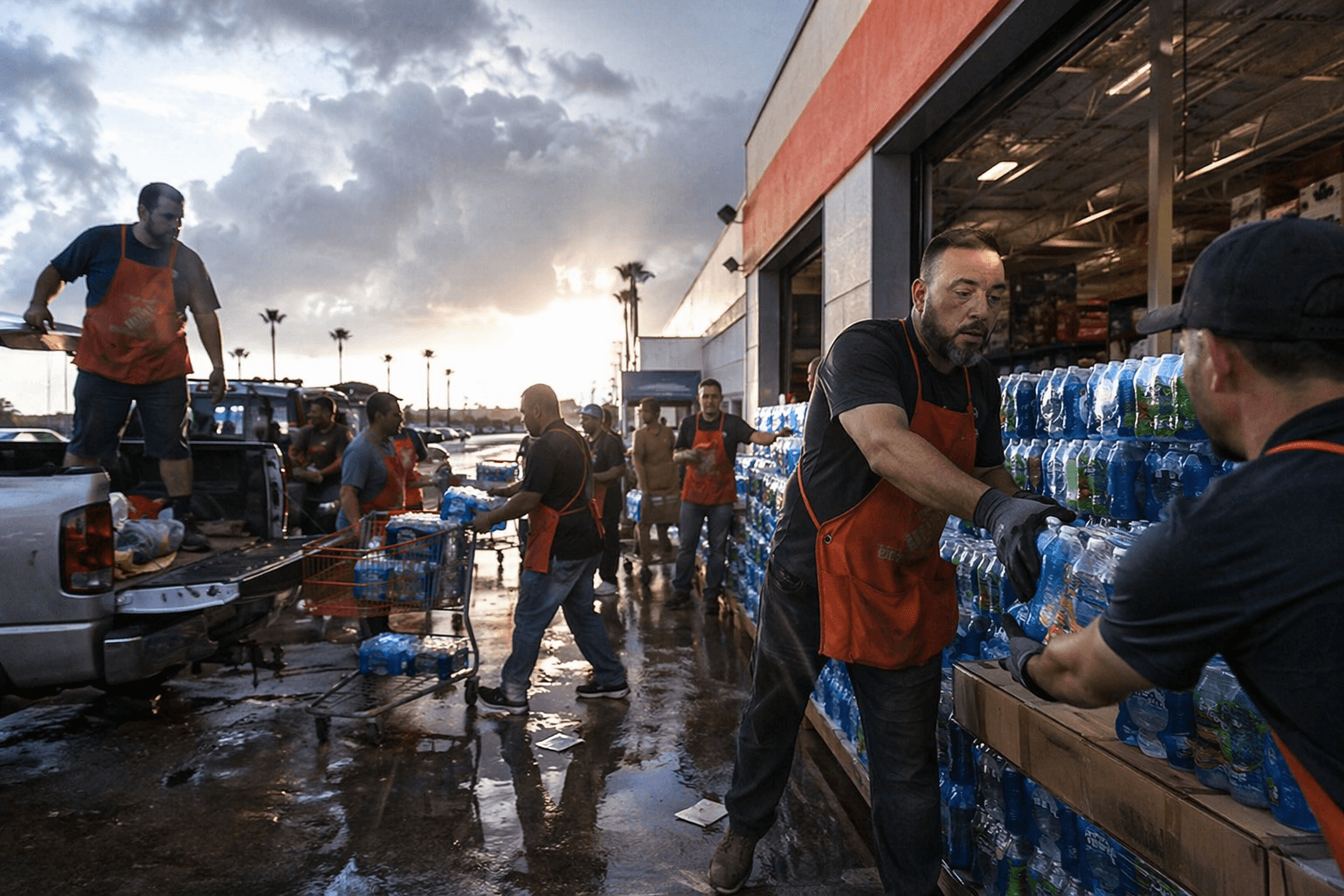
During disasters, Home Depot stores often serve as command centers for first responders and relief agencies. The parking lot, backroom, distribution network and associate bench can start working like one system long before the first customer walks in looking for plywood or a generator.
A store becomes part of the response map
That operational shift is not a one-off gesture. Disaster response has been part of the company’s work for more than 30 years, and the Home Depot Foundation’s mission includes preparedness, short-term response and long-term recovery. The company’s Disaster Response Command Center activates for significant disasters and stays in daily contact with impacted stores and suppliers, which is why a weather event can quickly turn into a live operations problem for store leadership.
In 2024, the United States experienced more than 27 natural disasters that caused at least $1 billion each in losses, a backdrop for disaster planning inside the normal operating rhythm of the business. For store managers and department leads, when the weather turns severe, the store may be asked to do more than sell product.
How the company prepares before the storm
Home Depot’s preparedness model starts well before landfall, wildfire season or a winter emergency. It pre-stocks nonprofit partner warehouses and Home Depot distribution centers with relief supplies so they can be moved quickly when a storm hits. It also moves necessary product and equipment to stores in strike zones through corporate merchandising, supply chain and operations teams.
In a 2026 company story, more than 100 expert associates across merchandising, operations, supply chain and technology were organized in real time ahead of a storm. On the floor, that translates into tighter inventory control for items customers need immediately, including generators, tarps, plywood, batteries, fuel, cleanup products, flashlights, gas cans, trash bags, cleaning supplies and chainsaws.
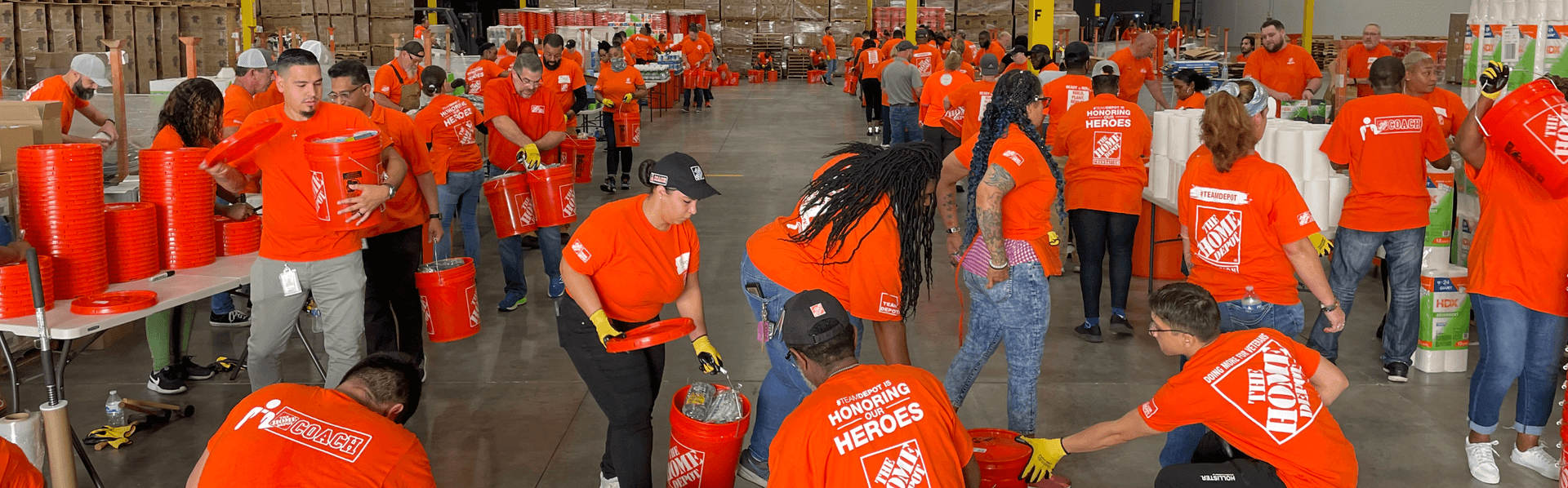
The company’s associate volunteer force, Team Depot, is part of that readiness work as well. In one preparedness effort, 400 Team Depot volunteers assembled nearly 4,000 disaster clean-up kits with Convoy of Hope, and those kits were stored in Convoy of Hope distribution centers for rapid deployment.
The partner network behind the orange apron
The Home Depot Foundation works with Team Depot and partners including Team Rubicon, Convoy of Hope, Operation Blessing, the American Red Cross and World Central Kitchen.
For store leaders, this network changes the job of coordination. A store’s role can include helping relief partners access product, staging supplies and managing a fast-moving flow of people who are not there for a normal shopping trip. The company’s disaster-relief model ties philanthropy to operations, which means stores need the same discipline they use during seasonal rushes, only under much more pressure and with fewer margins for error.
What recovery can look like on the ground
Home Depot’s response after Hurricane Helene shows how quickly a store can become a community hub. The company activated its disaster response partner Operation Blessing within hours, and its Asheville parking lot became a relief center with meals, charging stations, internet access and orange buckets filled with cleaning and hygiene kits. Home Depot said those efforts served thousands of residents, including 250 veterans living at Veterans Restoration Quarters.
Recovery work is not limited to selling recovery product. It can include directing traffic, helping relief workers move through the site, managing limited quantities of essentials and understanding which items have the highest immediate value to a household without power, water or a safe roof overhead.
Home Depot also said that after Helene, Team Depot had packed more than 6,500 disaster relief kits. After Helene, the store, the parking lot, the distribution center and the nonprofit warehouse were all part of the response system.
Why the money signal matters
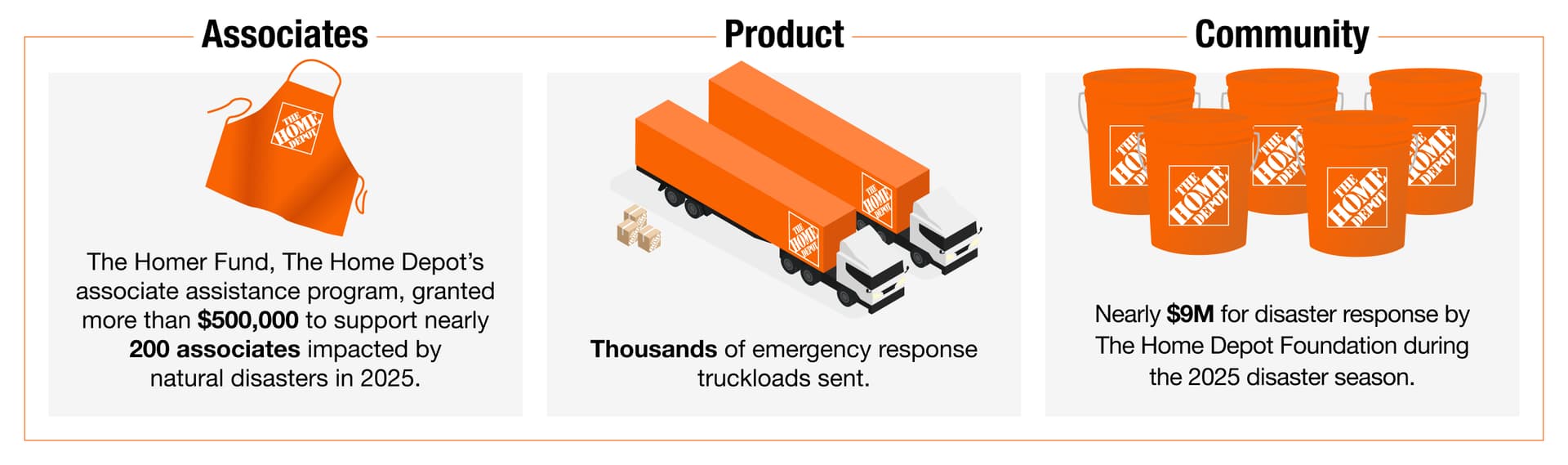
Earlier in 2025, the Foundation said it had invested more than $5.5 million in grants for disaster preparedness, response and rebuilding, plus $3 million for wildfire response in Southern California, bringing support to $8.5 million before later commitments. A later announcement added $250,000 for Central Texas flood relief, bringing total 2025 disaster-response commitments to nearly $9 million.
For associates in regions exposed to hurricanes, tornadoes, floods, heat, wildfire or winter storms, disaster prep recurs year after year, with the same pressure on inventory, staffing and customer service every time a system moves toward their market.
What store teams should take from it
For associates, the practical reality is that disaster recovery can expand the job in a matter of hours. A normal day of serving contractors, pros and DIY customers can shift into a demand spike for generators, tarps, batteries, fuel and cleanup supplies, while teams also help relief partners move product and keep traffic flowing.
For department leads and managers, the company’s model offers a clear operating lesson: be ready to shift from sales mode to community-support mode without losing control of the floor.
This article was produced by Prism’s automated news system from verified source data, official records, and press releases, then run through automated quality and moderation checks before publishing. The system is built and supervised by the people who set the standards it runs under. Read our full AI policy.
Did this article answer your question?