Home Depot targets HVAC acquisitions to expand contractor business
Home Depot's HVAC push added a $100 billion market and gave SRS 42 more locations in five states, widening the contractor business it sells to Pro customers.
Home Depot’s latest acquisition push widened the technical reach of its Pro business, adding HVAC distribution as a new vertical and giving store-side and supply chain teams a bigger play in a highly fragmented market.
SRS Distribution, which Home Depot bought in 2024, completed its acquisition of Mingledorff’s on May 11, 2026. Mingledorff’s served residential and commercial customers through 42 locations in five states, adding wholesale HVAC equipment, parts and supplies to a platform that already covered roofing, building products, interior and construction products, landscape and pool distribution.
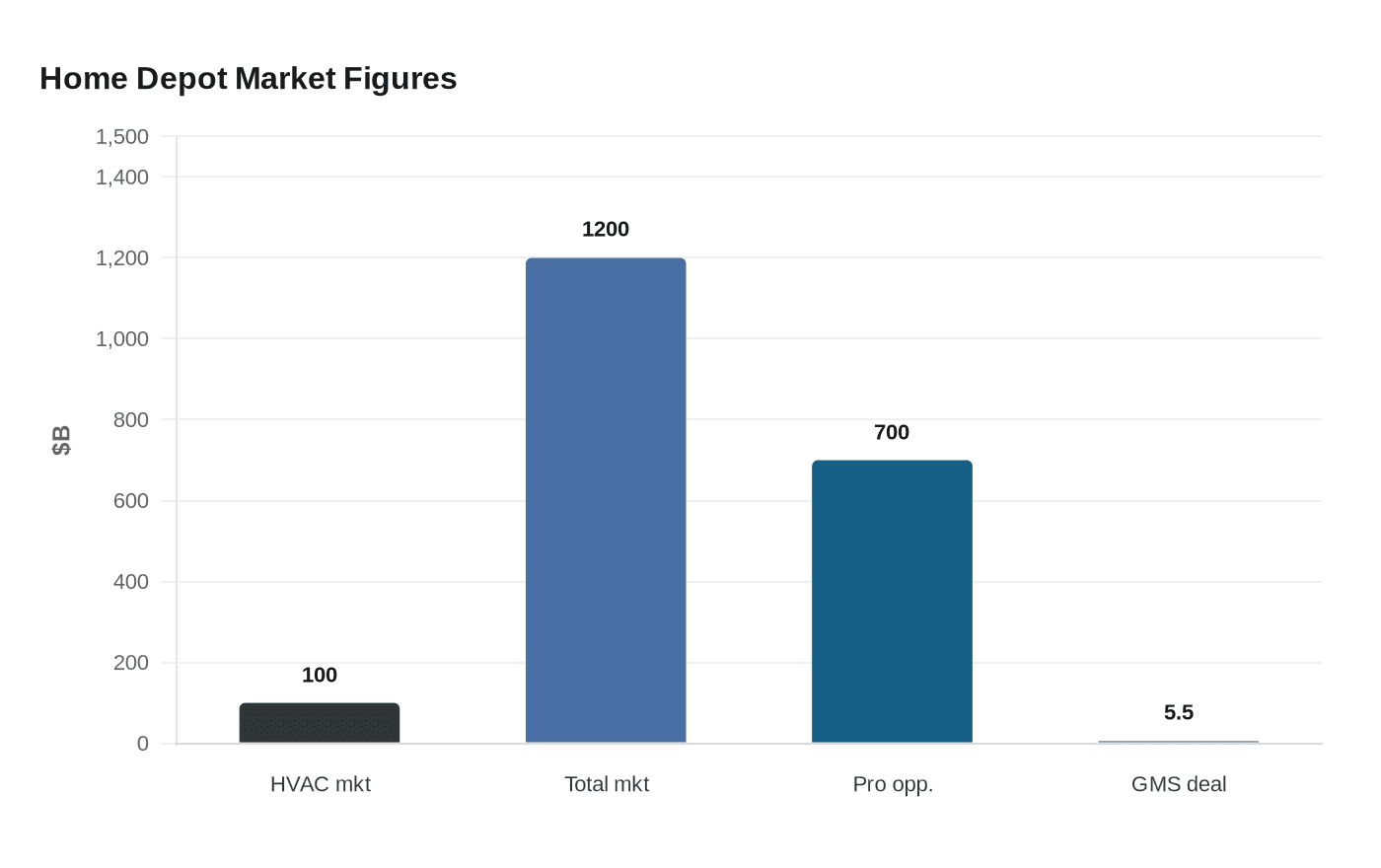
The move matters because Home Depot said HVAC distribution represented an addressable market of about $100 billion and raised its total addressable market to $1.2 trillion. The company has also said its Pro market opportunity is about $700 billion, and it has framed growth around taking more share of wallet from professional contractors on jobs that range from large, complex projects to smaller renovations and repairs.

That strategy points to a more technical selling environment for associates tied to Pro sales and specialty channels. HVAC is not the same as moving lumber or basic repair supplies. It requires deeper product knowledge, tighter coordination with contractors and a better grasp of the parts and equipment Pros need to keep jobs moving. As Home Depot broadens its offering through SRS, the company is effectively asking more of the people who support contractor customers, from matching product to job type to understanding how one sale can lead to the next.
The acquisition of GMS through SRS for about $5.5 billion on September 4, 2025 underscored how active that specialty distribution strategy has become. Together with Mingledorff’s, it shows Home Depot building a contractor-facing network that reaches deeper into specialty trades instead of relying only on the retail store model.
For store teams and distribution workers, that can mean more cross-selling opportunities, more specialized inventory and more pressure to know the language of the trade. For managers, it can also mean a sharper split between standard home-improvement service and the more precise expectations that come with Pro relationships, where product accuracy, speed and follow-through can determine whether a contractor comes back for the next phase of a job.
This article was produced by Prism’s automated news system from verified source data, official records, and press releases, then run through automated quality and moderation checks before publishing. The system is built and supervised by the people who set the standards it runs under. Read our full AI policy.
Did this article answer your question?