Inflation keeps Home Depot shoppers cautious, making value the key sell
Inflation is still pushing shoppers to trade down, delay projects, and demand proof of value. At Home Depot, that makes product knowledge, pricing clarity, and Pro tools central to the sale.
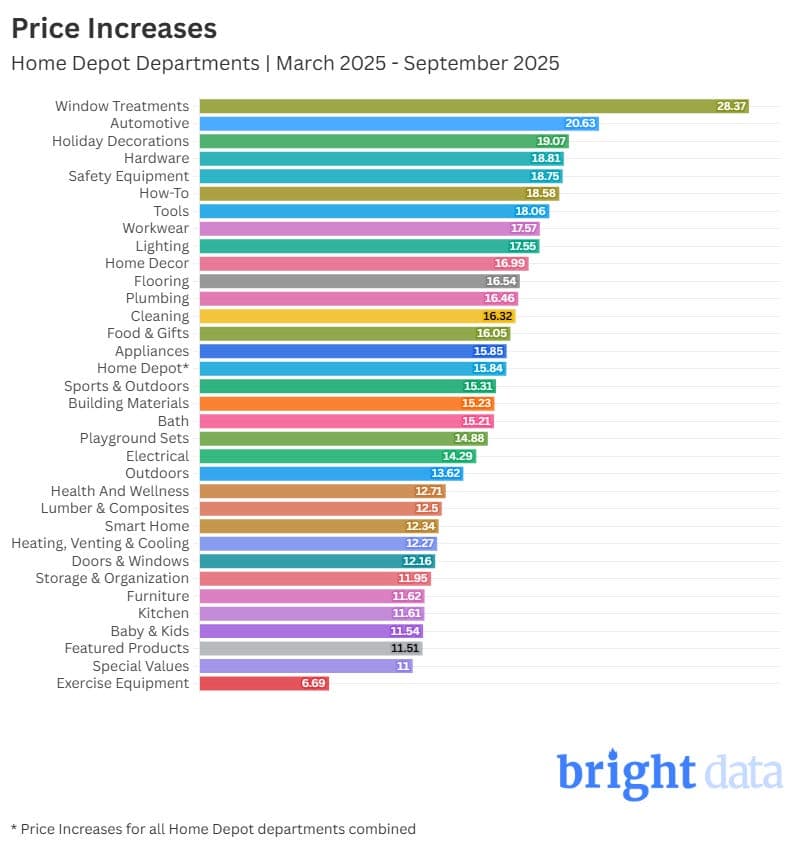
The latest inflation reading helps explain what associates are seeing on the floor: customers are still spending, but they are doing it with more hesitation and more questions. The U.S. Bureau of Labor Statistics said consumer prices rose 4.2% over the 12 months ended May 2026, and the all-items index climbed 0.5% in May alone. That pressure shows up in the aisle when shoppers compare two products, ask for a cheaper substitute, or decide to shrink a project instead of pushing ahead with the full plan.
What 4.2% inflation looks like at the shelf
For Home Depot teams, the practical effect is not simply that prices feel higher. It is that customers want a clearer reason to spend, especially when they are weighing repairs against replacements, or deciding whether to move forward now or wait. A shopper comparing two paints, two toilets, or two outdoor tools is not always looking for the lowest price tag; often, that shopper wants help understanding whether the upgrade is worth it and what problem the higher-priced item actually solves.
That is why value conversations matter more than ever on the sales floor. Inflation tends to make shoppers more deliberate about trade-offs, which can mean smaller project scopes, more interest in bundled savings, and a stronger pull toward private-label alternatives. It can also increase price objections, financing questions, and hesitation around discretionary upgrades, all of which put more weight on associates who can explain durability, performance, and long-term savings in plain language.
Why associates have to sell outcomes, not just SKUs
The BLS report also gives store leaders a clue about why some categories feel softer even when traffic is moving. The agency said energy accounted for more than 60% of the monthly increase in the all-items index in May, another reminder that household budgets are still being squeezed by essentials. When that happens, customers get more selective about where they spend the next dollar, and they expect the store to help them stretch it.
That is where product knowledge becomes a sales tool, not just a service skill. Home Depot’s own annual report said customers expect “everyday value” and that knowledgeable associates are critical to the store experience. For associates and department leads, that means the best answer is often the one that connects the product to the outcome: longer life, fewer replacements, less risk of rework, or a project that actually gets finished on budget.
What Home Depot is seeing in its own numbers
Home Depot’s first-quarter fiscal 2026 results line up with that cautious behavior. The company reported sales of $41.8 billion and said comparable sales rose just 0.6% overall and 0.4% in the United States. CEO Ted Decker said underlying demand was “relatively similar” to fiscal 2025 despite greater consumer uncertainty and housing affordability pressure, a comment that matches what many stores are hearing in real time.
The company also reaffirmed fiscal 2026 guidance for comparable sales growth of approximately flat to 2.0% and total sales growth of 2.5% to 4.5%. That outlook suggests Home Depot is still planning around a customer who is active but careful, with enough spending power to keep projects moving, yet enough caution to keep every transaction under scrutiny. For store managers, that makes consistent execution and strong aisle-level guidance especially important.
Housing affordability and interest rates keep the pressure on
Home Depot’s fiscal 2025 annual report adds the broader backdrop. The company said it continued to face elevated interest rates, pressured housing affordability, and general economic uncertainty. Those conditions matter inside the store because they shape whether customers renovate, repair, or wait, and they influence how much confidence they bring to the counter when they do decide to buy.
The annual report also pointed to the company’s strategy: driving the core business, delivering a frictionless interconnected experience, and winning with the Pro. That is a useful frame for the current moment because value is not just about low prices. It is about making sure customers feel they are getting the right product, the right guidance, and the right level of service for the money they are spending.
Why the Pro customer matters even more when value is tight
Home Depot has been especially focused on helping contractors and builders make faster, more efficient decisions. On March 18, 2026, the company said it expanded its Pro digital experience with project planning, preferred pricing, inventory visibility, real-time delivery tracking, complex order scheduling, and a Material List Builder AI tool. Those features are designed to save time and reduce job friction, which matters when every delay or wrong order can eat into a contractor’s margin.
That push fits with how Home Depot has described its Pro customer base for years. In January 2023, the company said Pros make up about 10% of its customer base and approximately half of sales. It also said Pro Xtra includes preferred pricing, exclusive support, account management services, and business tools for contractors and builders, reinforcing that the Pro business is not a side channel but a core part of the company’s value story.
For associates, that means the conversation with a Pro customer is often about return on time as much as return on dollars. A faster material list, better inventory visibility, or tighter delivery scheduling can matter as much as a lower sticker price if it helps a crew keep moving. In a cautious market, that efficiency is part of the sell.
The leadership takeaway on the floor
The real lesson for store managers is that inflation changes the shape of the customer interaction before it changes the final sale. Shoppers may still buy, but they often need more reassurance, more comparison, and more proof that the product they choose will last, save money, or prevent a problem later. That is why coaching associates to explain trade-offs, not just ring up items, is so important when the CPI is still running at 4.2%.
Home Depot’s own growth plans show confidence in the long game. The company has said it plans to continue building 15 to 20 stores per year after completing its roughly 80-store plan in 2027, a sign that it still sees room to expand even while consumers remain cautious. For the store floor right now, though, the immediate job is simpler: help every customer see value clearly enough to keep the project moving.
This article was produced by Prism’s automated news system from verified source data, official records, and press releases, then run through automated quality and moderation checks before publishing. The system is built and supervised by the people who set the standards it runs under. Read our full AI policy.
Did this article answer your question?