OSHA warns on ladder safety as Home Depot associates face daily risks
Managers have to verify the right ladder, the right setup, and a clear work zone before any climb. OSHA makes ladder checks a daily enforcement duty, not a reminder.
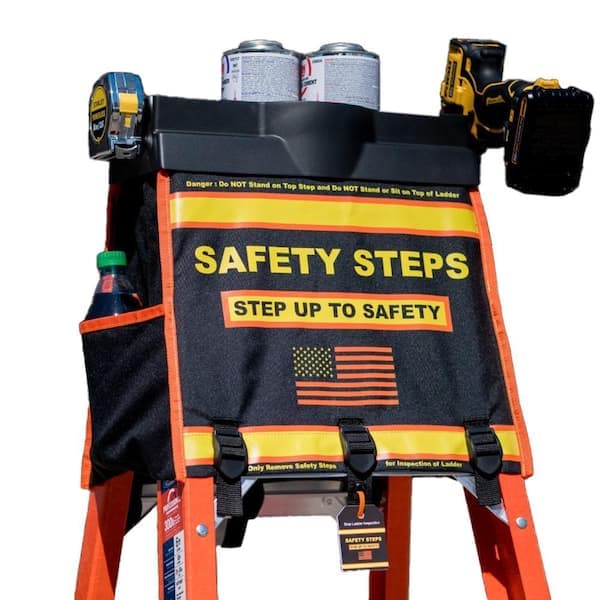
The first rule for any Home Depot manager is simple: no associate climbs until the ladder, the task, and the space around it have been checked. That means verifying the right ladder is on hand, the area is clear, the associate understands the job, and nobody is improvising to save time. In a store built around fast turns, crowded aisles, top-stock pulls, seasonal resets, and backroom movement, ladder use cannot be treated as routine paperwork. It has to be managed like any other preventable safety risk on the floor.
The non-negotiable checks before any climb
OSHA’s ladder materials make clear why this matters. Falls from portable ladders are one of the leading causes of occupational fatalities and injuries, and the agency says workers should read and follow all labels and markings, avoid electrical hazards, inspect ladders before use, and stay away from metal ladders near power lines or exposed energized electrical equipment. For Home Depot leaders, those instructions should be translated into a visible store-floor habit, not a one-time training point.
That starts with fit for purpose. OSHA’s general-industry ladder standard says employers must ensure each ladder used meets the requirements of 29 CFR 1910.23, and that ladders are inspected before initial use in each work shift and more frequently as necessary to identify visible defects. In practical terms, managers should be checking whether the ladder matches the task, whether the steps, rails, feet, and locking parts are in good shape, and whether the associate is using the right access equipment instead of the closest thing available.
The distinction matters because “a ladder” is not interchangeable with “the ladder.” OSHA’s ladder guidance covers different types, including extension ladders, stepladders, job-made wooden ladders, and mobile ladder stands, and each brings its own hazards. In a Home Depot store, where associates may move between overhead pulls, seasonal bays, and stockroom access, the manager’s job is to make sure the right equipment is selected before anyone leaves the floor.
When the task should stop or be reassigned
The strongest enforcement point is knowing when to stop the work. If the ladder is damaged, not inspected, or clearly wrong for the task, the climb should not happen. If the work area is cramped by customers, carts, or product handling, the task should be paused until the space is controlled. If the associate is reaching too far, climbing too fast, or trying to stretch the ladder’s use to finish a reset, the job should be stopped and reassigned or reset with the proper equipment.
That is especially important around electrical merchandise and overhead storage. OSHA specifically warns to avoid electrical hazards and to keep metal ladders away from power lines or exposed energized equipment. In a home improvement store, that translates into a manager’s obligation to look at the actual aisle, not just the task ticket: cords, fixtures, signs, overhead stock, and nearby electrical displays can turn a quick climb into a serious exposure if the setup is wrong.
Home Depot’s managers should treat that decision point as coaching, not just correction. If an associate is tempted to use the wrong ladder because the right one is not staged nearby, that is an equipment and planning failure as much as an associate mistake. The safer move is to stop the task, get the correct ladder, and reset the area before work resumes.
Why the floor environment raises the stakes
The risks are not abstract. CDC and NIOSH say that in 2020 there were 1,161 workplace fatalities from ladders and 22,710 workplace injuries from ladders. The Bureau of Labor Statistics also reported that in 2023 portable ladders and stairs were the primary source of 109 fatalities in construction. Those numbers explain why ladder safety remains a live enforcement issue across retail, construction, and warehouse settings.
For Home Depot, the environment makes the risk more immediate. Associates work in busy aisles, near customers, around pro contractors, and during seasonal peaks when pressure to move quickly is high. That pressure can lead to overreaching, skipped inspections, and bad ladder choices. The lesson for department leads is that speed is never a substitute for setup, and a task that looks simple from the sales floor can become dangerous if the climb starts in a rushed or cluttered space.
OSHA’s mobile ladder stand guidance reinforces that point. Safe design, training, and inspections, as part of an overall workplace safety and health program, help prevent mobile stand ladder incidents. CDC and NIOSH note that mobile ladder stands are used in places including home improvement stores and around overhead storage areas, which makes them part of the same practical conversation on the Home Depot floor. If the stand is the wrong type, poorly maintained, or used without training, the risk moves from theoretical to immediate.
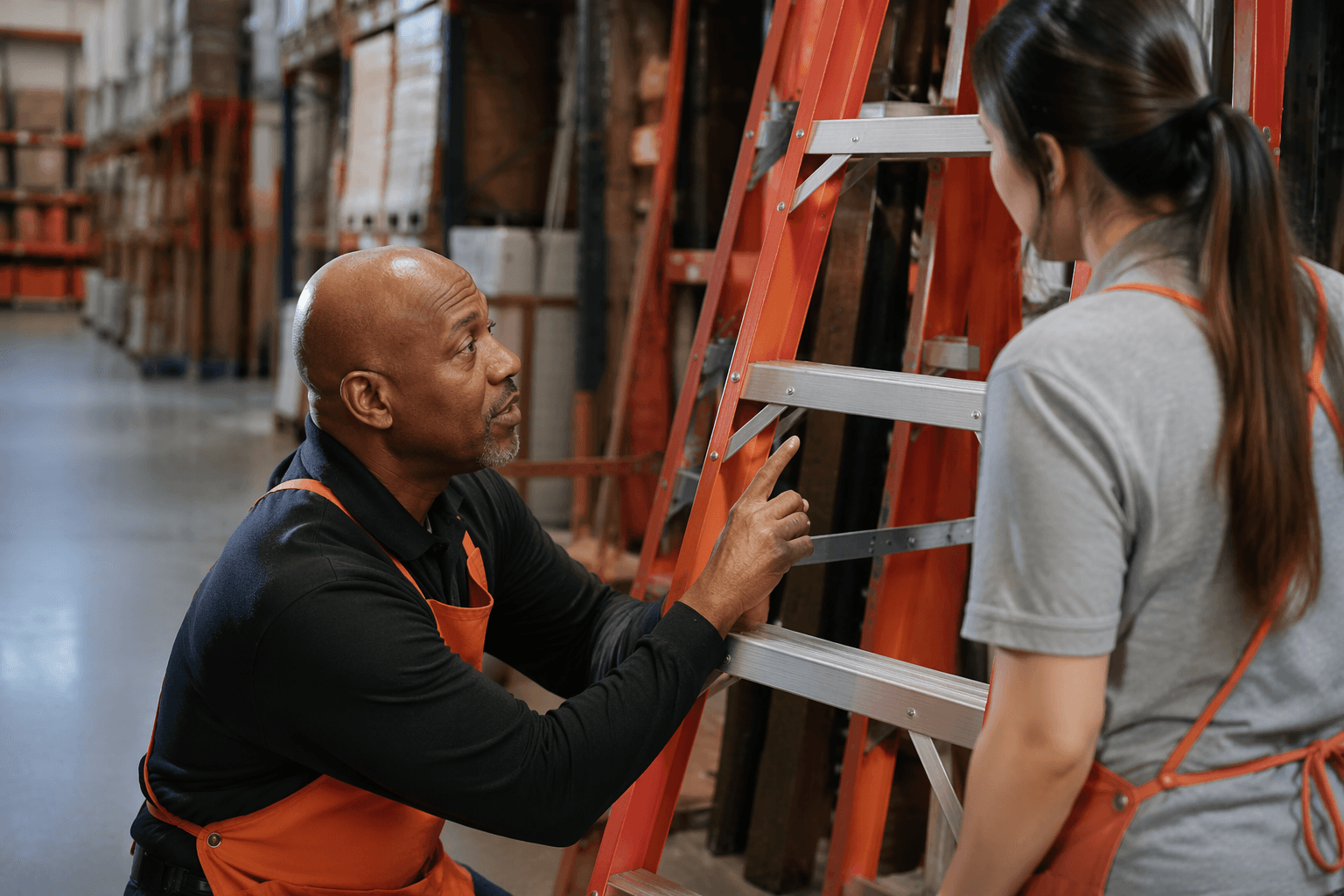
What managers should reinforce every shift
Home Depot already has operating tools that fit this kind of enforcement. Its public reporting says the company uses daily store inspection checklists, routine follow-up audits by store-based safety team members, preventative maintenance programs, and departmental merchandising safety standards. Its latest annual report says associate training and awareness initiatives are intended to support physical and psychological safety and emotional wellness. Those are not just corporate phrases. On the floor, they should mean a manager is checking ladder condition, watching for shortcuts, and correcting unsafe access habits before they become incidents.
A useful manager checklist is straightforward:
- Confirm the ladder is the right type for the work.
- Inspect it before the shift’s first use, and again if conditions change.
- Make sure the area is clear of customers, carts, and product clutter.
- Stop work if an associate is reaching, rushing, or using a ladder as a substitute for proper access equipment.
- Reassign the task if the job requires a different ladder or a safer setup.
Home Depot also publishes ladder-safety advice that tells users to choose ladders that meet OSHA or ANSI regulations and inspect ladders before use. That guidance aligns with OSHA’s own standard and should be part of daily coaching, especially in departments where associates routinely work overhead. The goal is not just compliance on paper. It is keeping a normal stock or merchandising task from turning into an injury report.
The broader lesson for a retail safety culture
The American Ladder Institute said in a 2024 survey release that the most common cause of ladder incidents was incorrect setup, followed by using the wrong ladder for the job. That lines up with what managers see in busy stores: the failure is often not that a ladder exists, but that it was set up badly or chosen badly. In a high-volume retailer like Home Depot, that is exactly where enforcement has to live, in the moment before the climb, not after the fall.
OSHA’s ladder standards and guidance make the employer’s responsibility clear. The company must ensure each ladder meets the rule, ladders must be inspected before initial use in each work shift and more often as needed, and workers need equipment that fits the task. For Home Depot managers, the message is direct: ladder safety is a floor-level accountability issue. The stores that avoid preventable injuries are the ones where supervisors treat every climb as a decision that can be stopped, corrected, or reassigned before anyone leaves the ground.
This article was produced by Prism’s automated news system from verified source data, official records, and press releases, then run through automated quality and moderation checks before publishing. The system is built and supervised by the people who set the standards it runs under. Read our full AI policy.
Know something we missed? Have a correction or additional information?
Submit a Tip