States weigh self-checkout limits, Home Depot faces staffing implications
States are turning self-checkout into a staffing issue, and Home Depot’s front end could feel it first in lane coverage, monitoring, and shrink control.
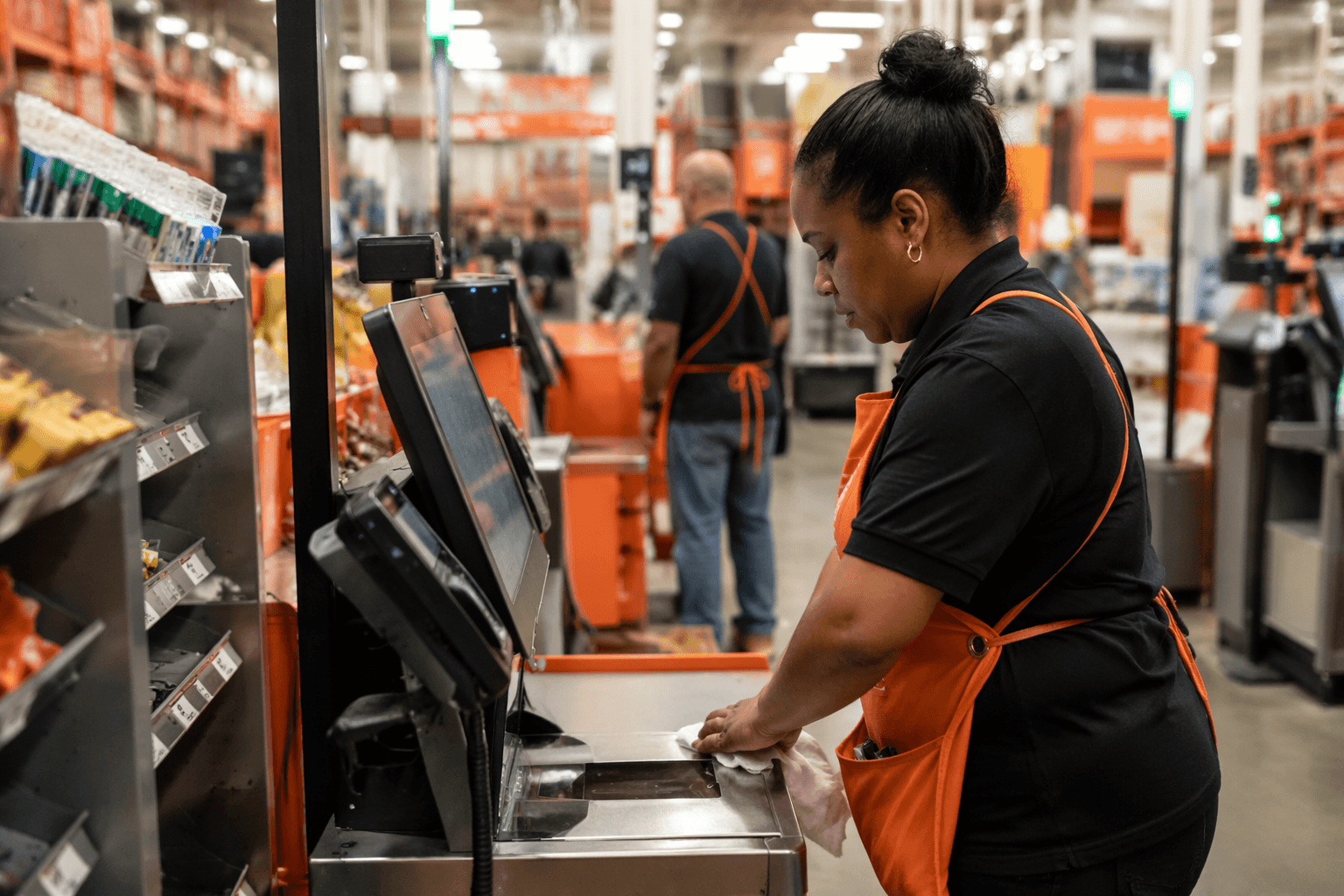
Self-checkout is no longer just a store layout choice. As state lawmakers move from broad complaints about theft and labor pressure to actual restrictions, the front end at Home Depot could face tighter staffing ratios, more lane supervision, and a heavier load on cashiers, service desk teams, and managers.
What the new rules would change on the floor
The clearest signal comes from Connecticut, where SB 438 would force grocery stores with self-checkout to staff one manual lane for every two self-checkout stations, assign one employee to monitor every two self-checkout stations, cap locations at eight self-checkout stations, and protect workers and customers from retaliation if they complain. The bill’s effective date is listed as October 1, 2026. That is not abstract policy language. It is a direct operating rule that would change how many people have to stand at the front end, how many kiosks can stay open, and whether the monitor is allowed to do anything else at the same time.
For a Home Depot store, the first ripple would likely hit scheduling. If lawmakers keep moving in this direction, managers may have less flexibility to run a lean self-checkout model during slower periods and then pile more responsibility onto one associate at a busier register during rushes. The practical result could be more staffing pressure at the exact moments when contractor traffic, large-basket DIY trips, and mixed orders already make the line harder to manage.
Why Home Depot cannot treat this like a grocery-store problem
The bills are aimed at grocery stores, but the operational logic reaches well beyond groceries. Home Depot shoppers often arrive with bulky items, lumber, seasonal product, tool purchases, and baskets that are far more complicated than a typical small-ticket scan-and-go transaction. That makes checkout policy a real floor issue, not a theoretical debate about convenience.
In a big-box environment, the front end is tied to the whole customer experience. When a transaction involves heavy merchandise, restricted items, or a contractor trying to get in and out fast, extra monitoring or extra manual lanes can either smooth the visit or jam it up depending on how the store is staffed. That is why the impact would likely show up first in cashier scheduling, service desk coverage, lane monitoring, and the amount of backup managers need to provide during peak periods.
Where the state bills are heading
Hunton’s June 18 analysis says the current wave of proposals spans Massachusetts, Rhode Island, Connecticut, Ohio, Tennessee, Oklahoma, Washington, and California. The common thread is not just theft. It is a growing willingness to regulate how many kiosks a store can run, how many items a customer can process, and whether an employee watching the stations can do anything else.
Washington’s HB 1739, titled “Regulating the use of self-service checkout stations,” was first read and referred to Labor & Workplace Standards on January 30, 2025, then reintroduced and retained in present status on January 12, 2026. Massachusetts’ S.237, filed by Sen. Paul R. Feeney, would limit the amount of self-checkout stations in grocery establishments and impose fines for multiple violations. It was referred on February 27, 2025, had a joint hearing scheduled for October 20, 2025, and was later reported favorably by committee on December 18, 2025.
That sequence matters for store leaders because it shows the issue is not stalling out. It is moving through committees, hearings, and reintroductions. Even if one bill does not reach a Home Depot store directly, the policy direction can spread fast enough to influence how retailers think about staffing models, front-end technology, and lane supervision across states.
What managers and associates should watch first
If these rules spread, the first people to feel them will not be executives. They will be the associates standing closest to the front of the store.
- Cashiers could see more pressure to cover staffed lanes during periods when self-checkout used to absorb traffic.
- Front-end supervisors may need to track how many kiosks can remain open under different state rules and whether monitoring duties can be combined with other tasks.
- Service desk teams could pick up more overrides, item checks, and problem transactions if self-checkout becomes more restricted.
- Department leads may be pulled into backup coverage more often when the front end gets congested.
- Store managers will have to think about lane design, scheduling, and training as compliance issues, not just labor choices.
That is the key workplace shift. Self-checkout policy starts as legislation, but on the floor it becomes a question of who is watching the stations, who gets pulled off their main job, and how many associates are needed to keep the line moving.
The shrink and technology backdrop already in play
The debate is happening against a real shrink problem, not a hypothetical one. Capital One Shopping’s self-checkout research says theft rates at self-checkout can be as much as 65% higher than at staffed lanes. That kind of number helps explain why lawmakers are reaching for caps, staffing ratios, and item limits instead of leaving the decision entirely to retailers.
Home Depot is also already leaning on technology to manage store operations. In fiscal 2025, the company said sales reached $164.7 billion and comparable sales rose 0.3% for the total company and 0.5% in the United States. Management has said stores are the core of the business and that knowledgeable associates and on-shelf availability are critical to the store experience. The company also says it is leveraging computer vision in U.S. stores to improve visibility into where product is located and to support productivity.
That fits with what a Home Depot technology fellow said in a 2023 interview: the company’s Sidekick app uses computer vision to help associates prioritize tasks and improve store readiness. In other words, Home Depot is already using technology to help workers see more, do more, and keep shelves and aisles in shape. Self-checkout regulation would push the same conversation to the front end, where the question becomes not just how to speed people through, but how to keep enough trained eyes on the transaction.
The real takeaway for Home Depot
For Home Depot, the lesson is simple: self-checkout is moving from a convenience feature to an operations and staffing issue that lawmakers are willing to write into law. That means the front end may need more formal lane monitoring, tighter scheduling, and better backup planning long before any single national rule exists.
Store leaders should treat checkout policy the way they treat safety or wage changes, because once a state starts defining staffing ratios and monitoring duties, the rules can reach deep into everyday work. The stores that are ready will be the ones that can keep lines moving without burning out the people standing closest to the registers.
This article was produced by Prism’s automated news system from verified source data, official records, and press releases, then run through automated quality and moderation checks before publishing. The system is built and supervised by the people who set the standards it runs under. Read our full AI policy.
Know something we missed? Have a correction or additional information?
Submit a Tip