KPMG billable hours, how client work and training compete for time
Billable hours are only part of the story at KPMG. Training, internal work, and staffing pressure all shape careers, and the wrong metric can distort your choices.
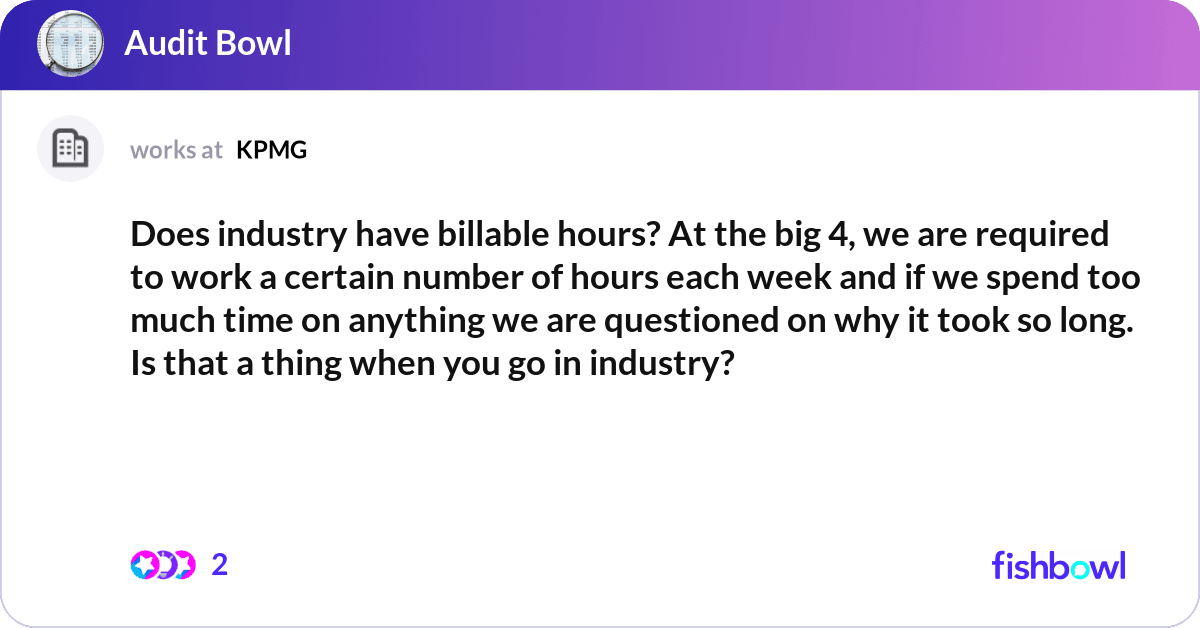
Billable hours are the currency, but they are not the whole job
At KPMG, the difference between being busy and being billable can shape how your year feels, how your team staffs you, and how your performance is read. Billable hours are the hours you can charge to a client, and that means non-project-related time does not count. The line sounds simple until it runs into real life: a week filled with client meetings, research, planning, review work, and client emails can still be interrupted by training, recruiting, proposal work, and practice-building that matter to the firm but do not move the billable meter.
That tension is especially sharp in consulting, audit support, and advisory roles, where your calendar is split between client delivery and everything that supports it. If you only watch the chargeable side of the ledger, you miss the fact that the firm is asking you to do two jobs at once: serve clients now and build the platform for the next engagement.
Why utilization matters so much
Utilization is the ratio managers use to track how much of your available time becomes client work. In plain terms, it is billable hours divided by available time. That makes it one of the most watched metrics in professional services, because it tells leaders whether staffing matches demand and whether the firm is converting capacity into revenue.
But utilization can be misleading if you read it too narrowly. Industry guidance separates billable utilization from productive utilization, because someone can be fully occupied and still post a weak billable number if the week is swallowed by internal IT work, mandatory training, or administration. That distinction matters at KPMG, where the pressure to stay chargeable can run headfirst into compliance, learning, and internal obligations that cannot be ignored.
The broader market tells the same story. A recent consulting benchmark put billable utilization at 68.9 percent in 2024, the lowest level in five years. That is not just a number for finance teams to worry about. It is a sign that firms are under strain from margin pressure, staffing mix, and revenue leakage, and that every hour has become more visible to management.
KPMG’s culture says learning is part of the job
KPMG describes itself as a people business and says it offers career paths with opportunities to grow and do work that matters. That framing is important because it signals that training is not supposed to be an afterthought squeezed into whatever time is left after client work. It is part of the model.
KPMG in India spells that out even more clearly. Its career-development materials point to versatile client engagements, flexibility and mobility, vigorous training programs and courses, open performance development pathways, coaching and mentoring, and collaborative assignments with other teams. In other words, the firm is not pretending the calendar belongs only to clients. It is asking people to develop, rotate, and collaborate while still performing on live work.
The transparency reports add another layer. Annual training priorities for development and delivery are identified by Audit Learning and Development groups at the global, regional, and firm level. That means non-client learning time is planned and governed, not treated as personal downtime. KPMG’s performance-development language also points to an Open Performance Development approach built around Everyone a Leader principles, which reinforces the idea that development is expected across ranks, not only at the top.
Where people misread the numbers
The biggest mistake professionals make is assuming the highest utilization is automatically the best utilization. It is not. If you squeeze out all internal time, you can end up undertrained, undercoached, and underprepared for the next promotion cycle. That is a real risk in a firm like KPMG, where partner track progression depends on more than hours alone, including client service, judgment, leadership, and the ability to work through others.
The opposite mistake is just as common. Some people fill the week with internal work, committee work, or practice-building and feel indispensable, yet their chargeability suffers. That can be useful for visibility in the right dose, but it can also become a trap if you are consistently spending time on work that strengthens the firm but does not strengthen your utilization story.
A practical way to read the metric is to ask three questions:
- Does this hour count as client chargeable time, or is it internal investment?
- If it is not billable, does it still support my performance goals, such as training, coaching, or leadership?
- Am I using my time mix to build a sustainable career, or just to look busy?
Busy season, AI, and the pressure to choose wisely
Busy season magnifies every one of these tradeoffs. When delivery ramps up, client work can crowd out learning, mentoring, and recovery time, and the firm’s demand for output can make a high-utilization week feel like a badge of honor. But sustained overload is where quality slips, client relationships get thinner, and burnout starts to affect both work-life balance and long-term performance.
AI makes the equation even more complicated. As automation takes more of the repeatable parts of audit and consulting work, the remaining human work is likely to tilt toward judgment, review, and client-facing problem solving. That can make billable hours look different over time, and it raises the stakes for people who still think of utilization as a simple volume game. The valuable hours will not always be the longest hours, and the most promotable professionals will be the ones who know the difference.
For KPMG professionals, the lesson is not to chase one number blindly. Billable hours matter because they keep the engine running, but training, coaching, and internal contribution keep the firm viable over the long run. The people who manage that mix well are not just protecting their utilization. They are protecting their careers.
This article was produced by Prism’s automated news system from verified source data, official records, and press releases, then run through automated quality and moderation checks before publishing. The system is built and supervised by the people who set the standards it runs under. Read our full AI policy.
Did this article answer your question?


.pdf%2F_jcr_content%2Frenditions%2Fcq5dam.thumbnail.319.319.png&w=1920&q=75)