KPMG consulting salary guide breaks down pay by level and role
KPMG’s pay bands show how the money climbs from associate to partner, and where leverage, mobility and promotion power really sit inside consulting.
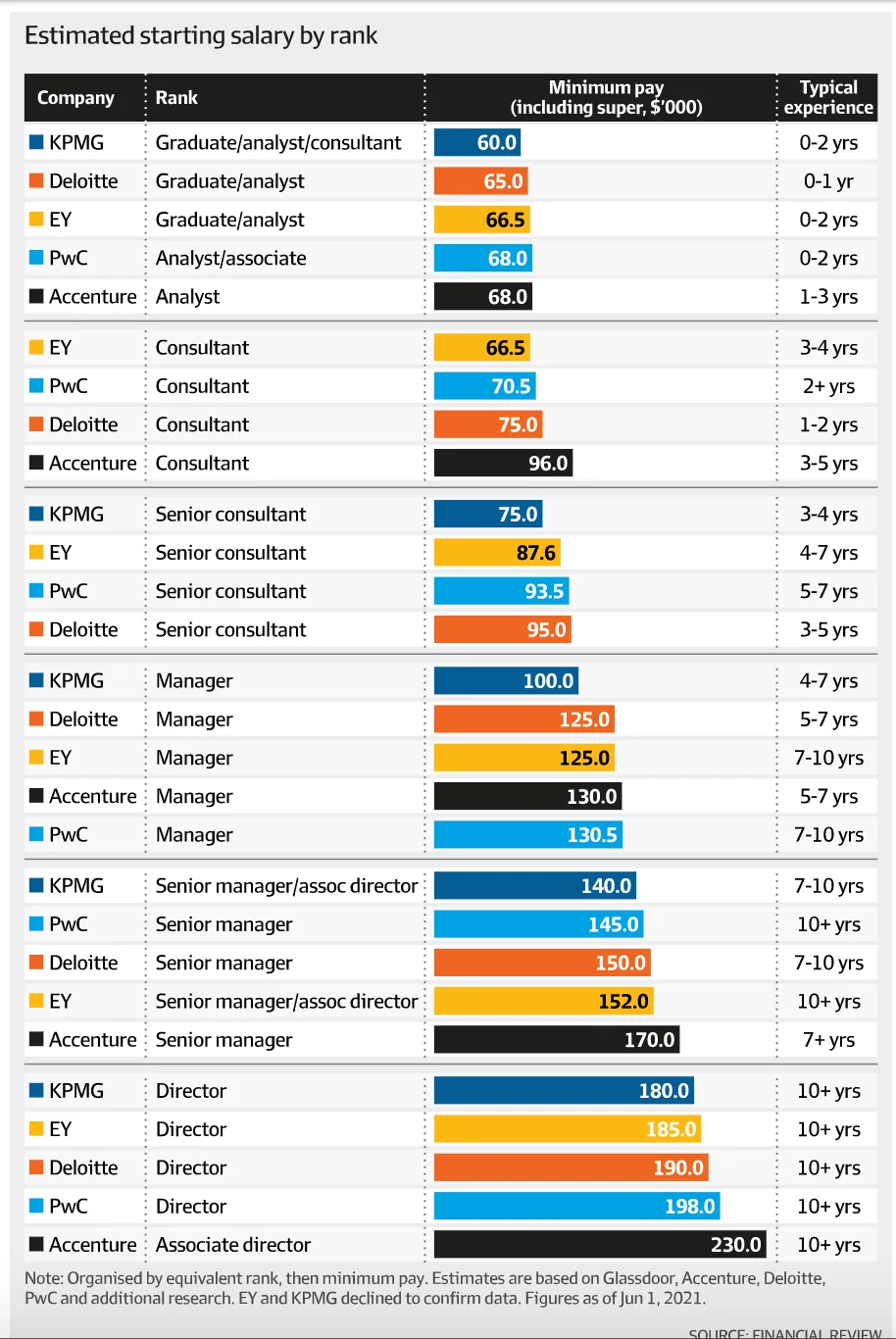
KPMG operates in 143 countries and territories with more than 273,000 partners and employees. Inside a firm that large, consulting pay changes fast as roles move from delivery to ownership, with estimates running from roughly $80,000 for an entry-level Associate to $500,000 to over $1 million for some Managing Directors and Partners.
Why salary transparency matters at KPMG
In a Big 4 environment, the work is tightly structured by level, and compensation depends on title, performance, market and office location. CaseBasix’s breakdown of KPMG consulting pay includes base salary, performance bonuses and additional perks, and the headline number is only part of the package. For people weighing an internship, an entry-level consulting offer or a move into senior consulting, the real question is less “what is the number?” and more “what changes when I move up one level?”
That question is sharper at KPMG because the firm is so large and so spread out. KPMG has more than 80 offices and approximately 36,000+ employees and partners in the country, and KPMG says it grew faster than the other Big Four firms globally in fiscal year 2025. In a firm that size, a national average can blur the difference between an office with heavy deal flow and a smaller market where the work mix, promotion pace and pay band can look very different.
The pay bands tell a clear story
The outside trackers do not line up perfectly, but they point in the same direction. Levels.fyi lists KPMG management consultant compensation at about $96.8K to $301K+, while PayScale shows an average base salary of about $116K for KPMG Consulting employees in the U.S. Glassdoor’s range is wider because it spans different roles, from about $43,984 for an EVS Associate to $324,736 for a Managing Director. Hacking the Case Interview puts Directors at about $335,000 or more.
Those figures are not interchangeable, but they are useful together because they show the same internal logic. The first jump into the profession is meaningful, but the larger salary inflection points arrive when the role expands into people management, client ownership and business development. Junior consultants can look broadly aligned with the market, while senior roles become much harder to generalize once bonuses and leadership scope enter the picture.
What the ladder looks like from the inside
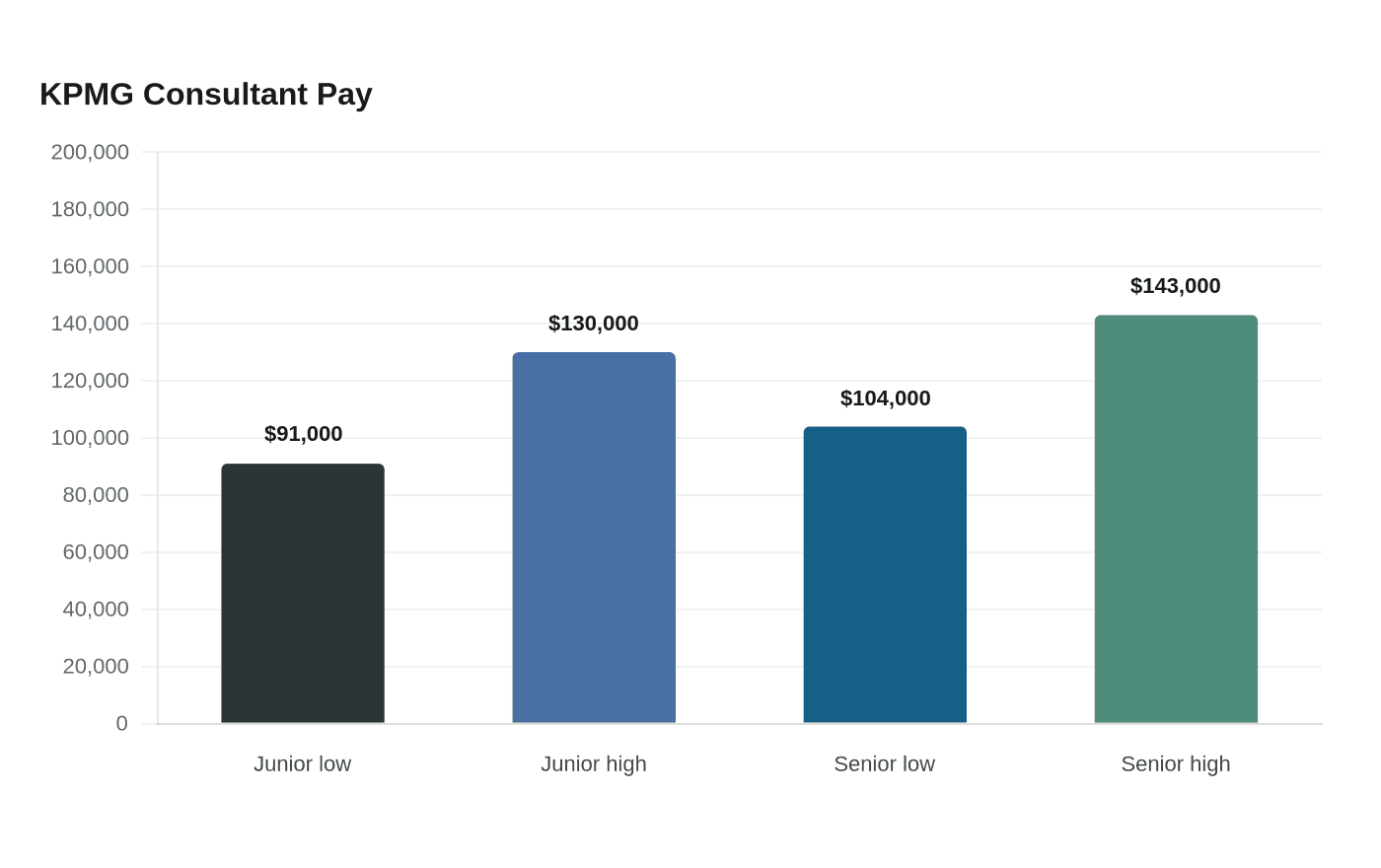
StrategyCase’s KPMG ladder has seven main career levels, including Associate, Senior Associate, Manager, Director, Managing Director and Partner. That sequence is familiar to anyone inside consulting, and it helps explain why pay rises in stages rather than in a straight line. MConsultingPrep’s range for a junior-level KPMG U.S. consultant is about $91,000 to $130,000 a year, while a senior-level consultant is closer to $104,000 to $143,000 annually, which shows how the middle of the ladder can compress even as responsibility expands.
The bigger money arrives once the work becomes less about execution and more about leverage. Associates and Senior Associates are judged on delivery, utilization and how cleanly they support the team; Managers begin carrying client deadlines and reviewing others; Directors and Managing Directors are expected to pull in work, retain accounts and make the economics of the team work. That is also where the partner track starts to matter in a way it does not at the lower levels, because the compensation jump reflects not just seniority but the expectation that you can originate revenue.
What candidates and employees can infer
For candidates, the pay bands are a clue about where demand sits. Management Consulted puts KPMG’s starting consultant salary on par with the other Big Four accounting firms, which suggests the firm is staying competitive at the entry point even as the broader market remains highly salary-conscious. For employees, the spread between the junior and senior consultant ranges is a reminder that a title change alone does not guarantee a huge raise if the new role is still mostly delivery work rather than a genuine scope increase.
Comparing practice areas or cities is also useful. A move across offices or into a different consulting niche can come with a financial tradeoff, even if the title looks similar on paper, because KPMG’s scale makes pay more sensitive to market conditions than many candidates expect.
This article was produced by Prism’s automated news system from verified source data, official records, and press releases, then run through automated quality and moderation checks before publishing. The system is built and supervised by the people who set the standards it runs under. Read our full AI policy.
Did this article answer your question?