KPMG Greece tracks July tax changes for client teams
KPMG Greece’s July tax notes landed as Pillar Two moved from policy into filing reality. Teams had to reset deadlines, platform readiness, and client briefing notes fast.
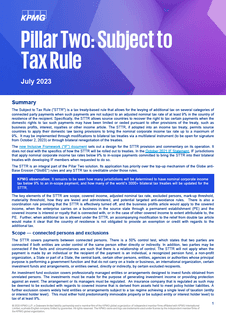
KPMG Greece’s July 8 tax update matters because it sits in the narrow gap between a published GIR framework and the actual launch of the filing platform. For tax, finance, and client-service teams, the immediate issue is not abstract policy, it is whether top-up tax workpapers, deadlines, and submission steps are aligned before the compliance window shifts again.
Pillar Two is now an operations problem, not just a rules problem
The July 8 page belongs to KPMG Greece’s ongoing tax intelligence stream, and that matters for the way client work gets done inside a Big 4 firm. These updates are built for practitioners who need to turn legislative movement into action items for filing teams, controllers, and engagement leaders, especially when rules are still settling. In practice, that means the page functions as a triage point for who needs to act now, who can wait for the next clarification, and which matters belong in a client briefing note rather than a technical memo.
The main theme around this period was Pillar Two implementation. KPMG Greece’s July 1 update had already flagged Decision A.1131/2026, which covered the submission and exchange of GloBE Information Returns. By July 13, the picture had moved again: on 9 July 2026, the Independent Authority for Public Revenue extended the filing deadline for top-up tax returns and launched the GIR platform. That sequence shows why the July 8 update is useful inside client teams, because it sits at the point where the legal framework was no longer the only issue. Execution was.
What changed in the filing calendar
The biggest immediate business consequence was timing. The July 13 Greece update said the Independent Authority for Public Revenue extended the top-up tax returns filing deadline and launched the GIR platform on 9 July 2026. That is the kind of change that forces a rapid reset across tax compliance calendars, entity trackers, and internal sign-off schedules.
For KPMG teams, that affects more than the tax manager drafting the return. Finance teams need to know whether deferred tax work, provision calculations, and quarter-close disclosures need to be adjusted. Tax leaders need to decide whether the extension creates breathing room or just compresses the next reporting cycle. Client-service teams need to update their guidance before clients make decisions based on a deadline that no longer matches the live filing environment.
This is also where professional-services discipline matters. A rule that exists on paper is not the same thing as a rule that can be filed against in a platform. When the GIR platform launches, the practical questions become mundane but urgent: who has access, what data fields are required, whether the return data maps cleanly to existing workpapers, and whether client groups across jurisdictions are using the same timetable.
Why the GIR platform launch changes the work
The GIR platform launch is important because it turns a policy discussion into a systems issue. The July 1 update had already pointed to Decision A.1131/2026 on the submission and exchange of GloBE Information Returns, but the July 13 note shows that Greece was moving from publication to active administration. That shift is where implementation friction usually appears: logins, data standards, submission sequencing, and internal review steps that are easy to overlook until the filing clock starts running.
For KPMG Greece, this creates work across several internal functions:
- Tax compliance teams need to confirm which entities are in scope and which return version applies.
- Finance teams need to reconcile the return with financial reporting, especially where Pillar Two affects tax provisioning.
- Advisory and legal teams need to keep client recommendations consistent with the live filing process.
- Engagement managers need to make sure client deadlines, internal review dates, and platform access are all synchronized.
That is also why these updates travel quickly across a firm like KPMG. A local filing change in Greece can affect how global accounts teams brief multinational clients, particularly those with entities that may be working through the same Pillar Two questions in multiple jurisdictions. The operational lesson is simple: once a platform is live, the advice has to change with it.
Why this lands beyond Greece
KPMG’s US tax newsflash also covered Greece’s extension of the Pillar Two top-up tax returns filing deadline and the launch of the GIR platform. That is a useful signal for anyone working inside a cross-border client team. When KPMG’s international tax network is tracking the same development, it usually means the issue has moved beyond a local compliance footnote and into the broader workflow of multinational reporting.
That broader relevance is especially clear in mid-2026, when tax teams were already dealing with Pillar Two implementation, digital filing systems, transfer pricing scrutiny, and country-by-country reporting changes. In that environment, a Greece update is not just a Greece update. It becomes part of the pattern of how firms are translating new rules into repeatable client responses. The teams that stay ahead are the ones that treat each bulletin as a change in workflow, not just a change in law.
What KPMG teams and clients need to do now
The practical response is to treat the July changes as a filing-readiness exercise. The update cycle around July 8, July 1, and July 13 shows that teams cannot rely on one memo or one deadline notice. They need a live process for checking whether the latest position is a publication, an operational launch, or an actual extension.
The highest-priority actions are straightforward:
- Reconfirm the current filing deadline for top-up tax returns.
- Check whether GIR submission access is live and whether client credentials are in place.
- Map GloBE data from finance systems to the return format before the next filing step.
- Update client-facing talking points so advice matches the current Greek administrative position.
- Flag any disclosure, control, or deferred tax impacts to audit and reporting teams early.
For younger staff especially, this is the kind of moment that defines the day-to-day value of a professional-services firm. The work is not only knowing the rule. It is knowing when the rule becomes operational, who has to move first, and how to keep the client out of avoidable risk when the deadline shifts under them.
The July 8 update is a reminder that the real pressure point in tax is often timing. In Greece, Pillar Two has now moved into a live filing environment, and the firms that serve clients well are the ones that can adjust the advice before the next update lands.
This article was produced by Prism’s automated news system from verified source data, official records, and press releases, then run through automated quality and moderation checks before publishing. The system is built and supervised by the people who set the standards it runs under. Read our full AI policy.
Did this article answer your question?