KPMG says AI adoption in finance is surging, reshaping audit and assurance
KPMG says 93% of U.S. companies will scale AI in finance within 18 months, pushing teams toward multi-agent workflows and new control work.

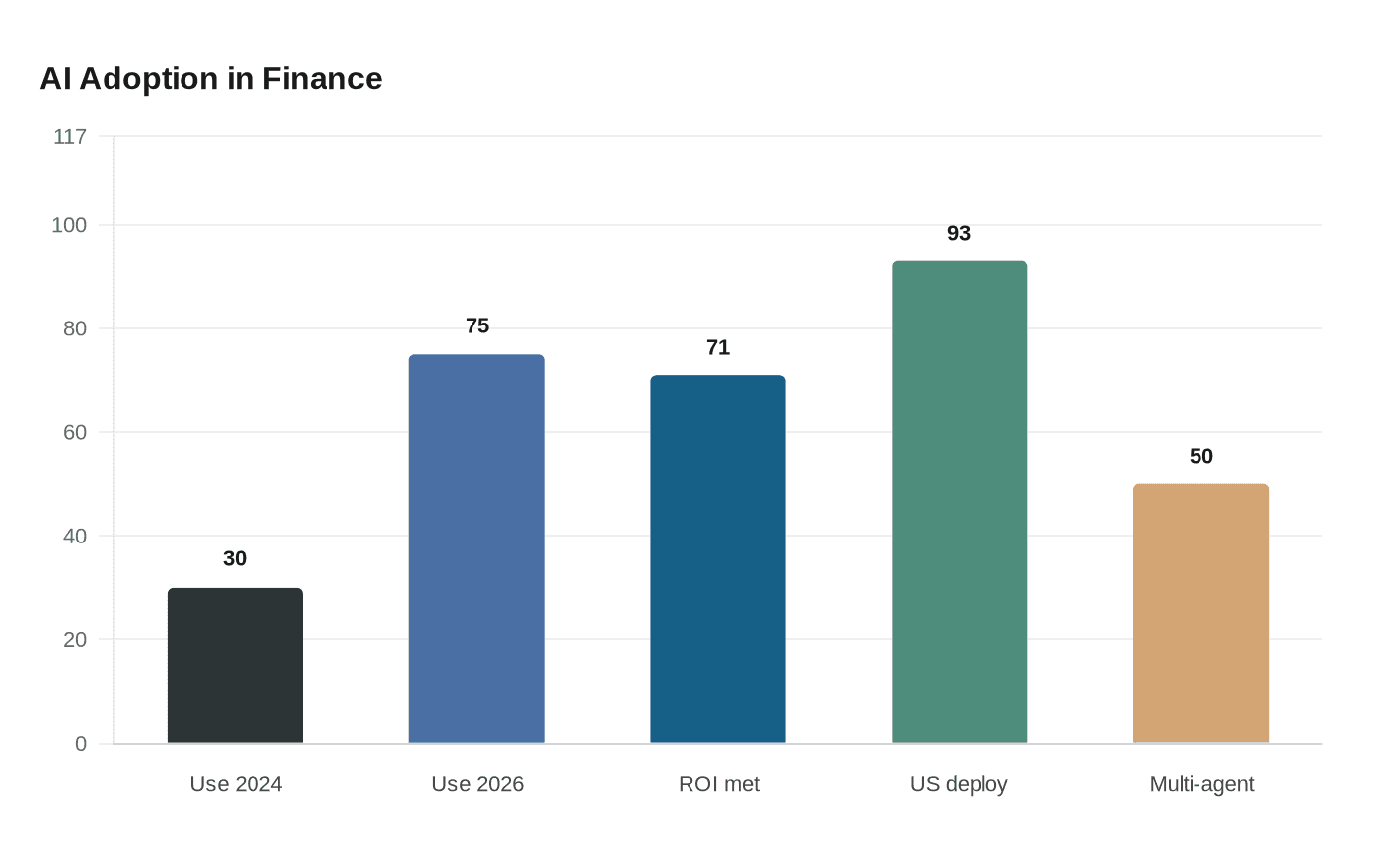
Enterprise orchestration is moving finance work from isolated pilots to coordinated workflows, and KPMG says 93 percent of U.S. companies will be deploying or scaling AI in their finance functions over the next 18 months. Half already plan to orchestrate or develop multi-agent AI systems across those workflows, a sign that the next phase is not just about automating a task here or there, but about centralizing pieces of forecasting, reporting, monitoring and review into systems that finance staff will have to supervise rather than simply perform.
That shift is already showing up in the numbers. KPMG said active AI use in finance jumped from 30 percent in 2024 to 75 percent in 2026, while 71 percent of leaders now say AI is meeting or exceeding return-on-investment expectations. The biggest gains are concentrated in decision-making quality, speed and forecast accuracy, which matters for audit, tax and advisory teams that are increasingly being asked to help clients trust outputs, not just generate them. For KPMG professionals, that changes the work on the ground: more time on exception handling, controls, judgment calls and review, less time on repetitive manual steps that once sat with junior finance staff.
The firm’s 2026 Global AI in Finance report is based on a survey of 1,013 senior finance leaders across 20 countries and 13 sectors, fielded in March 2026. KPMG said the study expands on its 2024 research on AI in financial reporting and broadens the lens to the full finance function, including governance, controls and workforce issues. That matters inside a Big Four shop because the pressure is no longer just to show that AI can work in a demo. It is to show that finance teams can redesign roles, build controls and train people fast enough to use it without creating new blind spots.
KPMG’s own earlier data shows how quickly the floor has moved. In December 2024, 62 percent of U.S. companies were already using AI to a moderate or large degree, 58 percent were piloting or deploying generative AI, and 52 percent were using AI in financial reporting. A separate global KPMG study found almost three-quarters of 1,800 companies across 10 major economies were already using AI to some degree in financial reporting. By 2026, the question had clearly shifted from whether finance would adopt AI to whether organizations could move fast enough and responsibly enough to reimagine business processes.
That is where the real workforce impact sits for KPMG people. KPMG’s broader 2026 AI Pulse research says AI spending is rising sharply and more than half of organizations are actively deploying AI agents, but the harder part is execution: change management, workforce readiness, cybersecurity and the assurance needed around systems that now help produce the numbers. For audit and assurance teams, that creates a bigger mandate and a tougher standard. The work is moving toward validating the systems behind the statements, not just the statements themselves.
This article was produced by Prism’s automated news system from verified source data, official records, and press releases, then run through automated quality and moderation checks before publishing. The system is built and supervised by the people who set the standards it runs under. Read our full AI policy.
Did this article answer your question?


.pdf%2F_jcr_content%2Frenditions%2Fcq5dam.thumbnail.319.319.png&w=1920&q=75)