KPMG says trade uncertainty is slowing client investment decisions
Tariffs are delaying hiring and big capital calls at KPMG clients, as the firm says trade policy has become a standing cost inside supply chains.
Trade uncertainty is now slowing the decisions KPMG clients make about hiring, investment and sourcing, even as global trade flows proved “remarkably resilient” in 2025 after the first tariff shocks in April.
KPMG’s 2026 Trade Outlook uses a Hydra metaphor to describe the new operating reality: when one trade issue is resolved, another emerges through tariffs, geopolitical tension, weather or shifting alliances. That constant churn, KPMG said, has created “hesitation and paralysis” around large investment decisions, including hiring. For consultants and advisers inside the firm, that means clients may be talking less about expansion and more about whether to delay a plant, push back a headcount plan or hold off on a contract while policy moves again.

The company’s related 2026 Tariff Survey, published March 30, 2026, sharpens that picture. After one year of significant tariffs, KPMG said U.S. businesses were dealing with falling margins and rising operating costs. It also said companies were moving from evaluating tariff responses to actually executing supply-chain changes, including reshoring manufacturing to the United States. That shift matters for KPMG teams working in customs, transfer pricing and supply-chain restructuring, because the work is no longer a one-time response to a tariff round. It is becoming a rolling engagement that has to track policy as it changes.
KPMG’s broader supply-chain commentary makes the same point in a different register. The firm says trade policy in 2026 is likely to be treated as a standing cost embedded in global supply chains, not a temporary disruption to wait out. Uncertainty over the scope, duration and enforcement of tariffs is already changing sourcing and inventory strategies. That is the kind of pressure that lands on finance teams, procurement leaders and advisory staff at the same time, with decisions that used to take weeks now stretching into months.
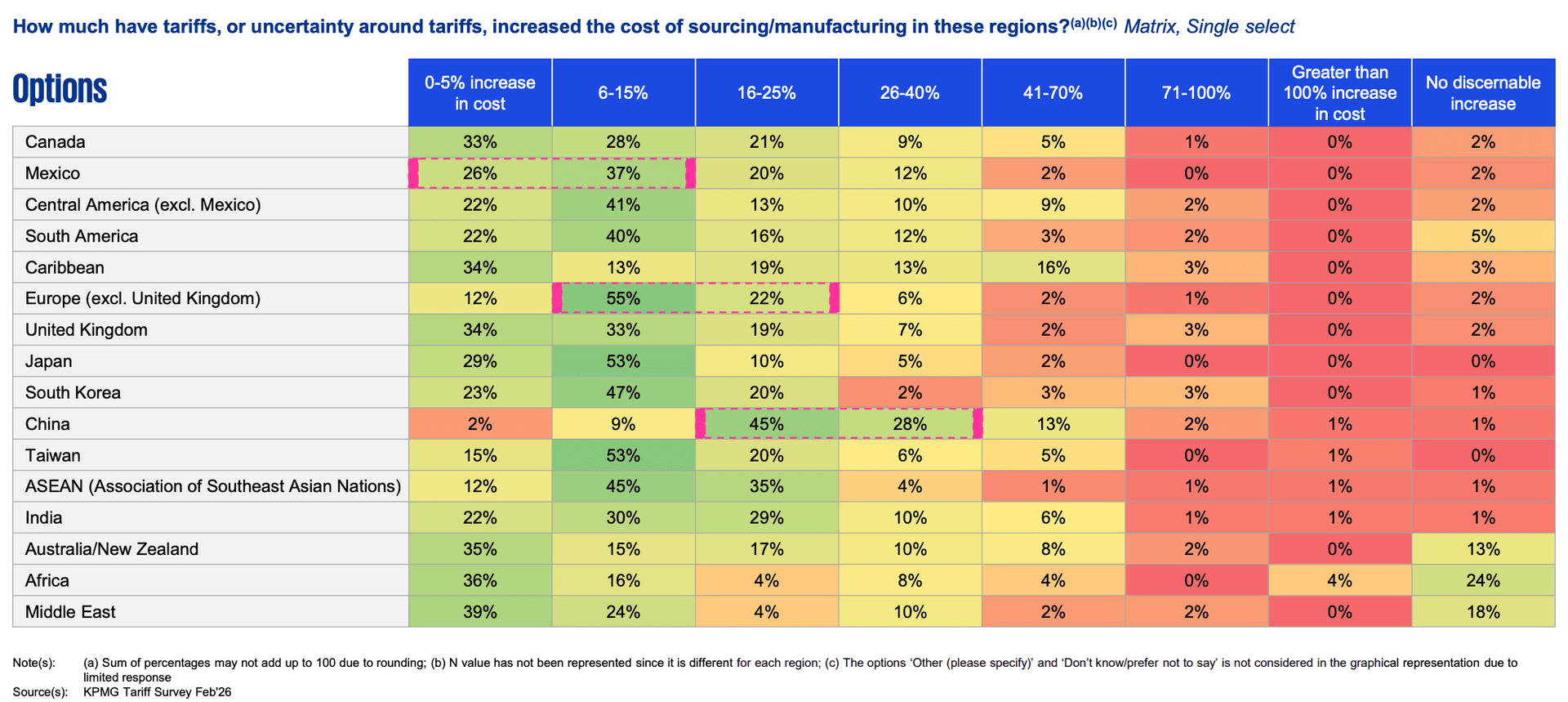
The distortion is showing up in the numbers, too. In January 2026, KPMG said the U.S. trade deficit narrowed 25.3 percent to $54.5 billion, but gold and pharmaceuticals warped the headline. The firm has also tied that noise to wider trade behavior, arguing that resilience is now winning over timeliness as companies adjust to what it calls normal disruption. Its supply-chain team is pushing the same idea under the banner of “Total Value,” a sign that trade work at KPMG is increasingly about operating-model redesign, not just compliance. For employees, that means more scenario planning, more client anxiety and more demand for advice in a market where policy can move faster than a company can restructure.
This article was produced by Prism’s automated news system from verified source data, official records, and press releases, then run through automated quality and moderation checks before publishing. The system is built and supervised by the people who set the standards it runs under. Read our full AI policy.
Did this article answer your question?


.pdf%2F_jcr_content%2Frenditions%2Fcq5dam.thumbnail.319.319.png&w=1920&q=75)