KPMG tax teams eye growth as firms expand beyond compliance
Tax margins are still holding above 30%, but KPMG teams should read that as a shift signal: compliance work is being automated while advisory skills move closer to promotion track.
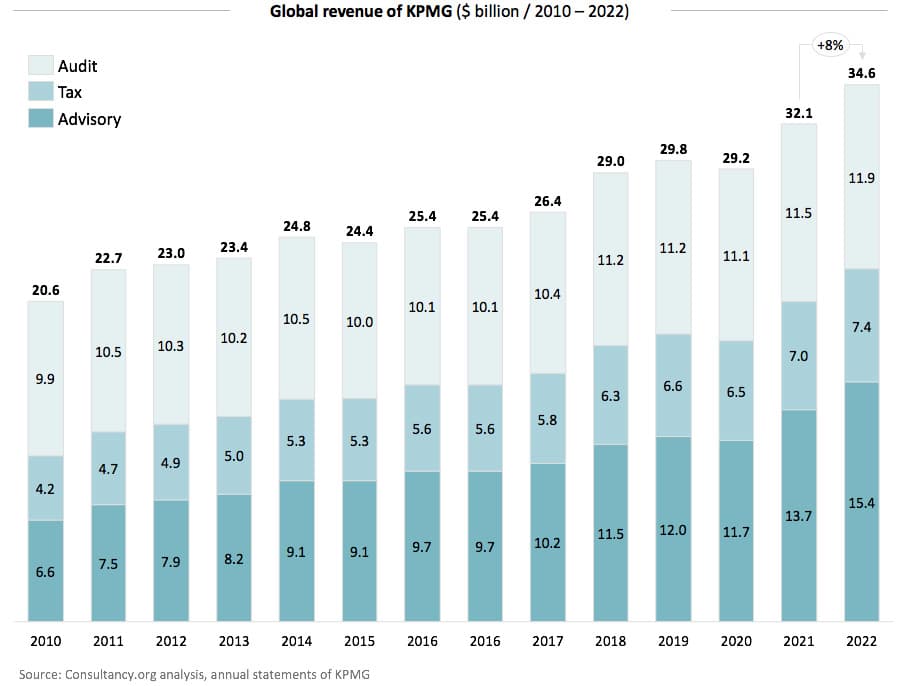
Tax and accounting firms held average profit margins above 30% throughout 2025, Thomson Reuters’ 2026 State of Tax Professionals Report found. Another 49% of tax firms saw profits rise, and two-thirds expect revenue to climb again over the next 12 months. For KPMG tax professionals, that points to a market where the center of gravity keeps moving away from pure compliance and toward higher-value advisory work.
Margins are holding, but the work mix is changing
The report surveyed 600 tax, audit and accounting professionals worldwide, with 56% from midsize firms, 23% from small firms and 21% from large firms. Across that mix, firms are still prospering despite a chronic talent shortage, and the ones with scale are pushing fastest into tax strategy, business consulting, decision support and financial planning.
Stronger profits are not simply a reward for keeping the old model intact. They are giving firms room to invest in the tools and staff mix needed to do more advisory work with fewer people tied up in routine compliance.
The first tasks to be automated are the most repetitive ones
In tax, automation usually lands first on standardized, rule-based work repeated across clients. At KPMG, that means the tasks most exposed to AI and workflow automation sit lowest on the value chain: gathering source documents, organizing workpapers, mapping client data into consistent formats, drafting recurring filings and first-pass memos, and flagging obvious exceptions before a manager ever sees the file.
That shift is already visible in KPMG’s technology direction. KPMG and Microsoft said on June 9, 2026, that Microsoft 365 Copilot would expand across KPMG’s global workforce of more than 276,000 professionals, and that Microsoft Agent 365 would be used to manage AI agents across the firm’s network. KPMG also describes its Digital Gateway as an AI-enabled portal for tax clients with GenAI data management, analysis and virtual assistant capabilities built into the tax technology suite.
The machine handles retrieval, sorting, summarizing and routing. The human team spends more time on judgment calls, exception handling and client-facing advice. That does not eliminate review work, but it does compress the time juniors spend on repetitive production.
The skills that become more valuable are not just tax technical
As the lower-value work gets automated, the skills that matter most are the ones that connect tax knowledge to business decisions. The shift toward tax strategy, business consulting, decision support and financial planning is a clue to what firms will reward: professionals who can explain tradeoffs, design workflows and translate tax positions into something a client can actually act on.
- deep technical tax knowledge
- workflow and process design
- client communication under deadline
- comfort with data and AI tools
- the judgment to know when automation is wrong
For KPMG staff, the strongest combination is:
A strong performer is no longer just someone who can produce accurate work quickly. It is someone who can use technology to raise throughput, manage exceptions without breaking the process, and speak to clients in a way that turns a compliance engagement into an advisory conversation. In practice, managers will be watching for people who can handle more than their own workstream, especially in a talent market where experienced reviewers are retiring and the pipeline underneath them is thinner.
Workload shifts before it shrinks
Tax firms face a chronic shortage of qualified talent, with the pipeline for new talent shrinking, senior practitioners retiring and competition for qualified candidates staying intense. Automation will not simply make tax quieter. It makes teams leaner, more specialized and more dependent on a smaller number of people who can review complex issues fast.
For KPMG employees, that cuts two ways. On one hand, less manual work reduces some of the grind that dominates busy season, especially on repeatable compliance work. On the other, the push for efficiency raises output expectations, because firms that preserve margins by using technology more effectively expect the remaining people to cover more ground.
Instead of building every engagement around a large junior-heavy team, firms centralize some work, spread AI-enabled tools across broader groups and reserve the most experienced people for higher-risk issues, complex client conversations and quality control.
The talent shortage is structural, not cyclical
The shortage is not a new complaint. The National Pipeline Advisory Group began work in July 2023 and released its final report on the accounting talent shortage on August 1, 2024, after being convened in response to AICPA action.
For KPMG, the implication is blunt: recruitment alone will not solve the staffing gap. Firms have to widen the capacity of the people they already have through automation, better process design and upskilling. Those margins give firms the financial room to do that, but they also raise the bar. The market is rewarding firms that keep compliance efficient while building out advisory revenue.
This article was produced by Prism’s automated news system from verified source data, official records, and press releases, then run through automated quality and moderation checks before publishing. The system is built and supervised by the people who set the standards it runs under. Read our full AI policy.
Did this article answer your question?