KPMG touts audit quality push as it automates core processes
KPMG says AI and standardization will lift audit quality, but the real change is tighter control over what staff document, review and own.

KPMG’s quality push is really a control story
KPMG is presenting its latest audit overhaul as a quality play, but for staff it reads as a change in how the work is managed. The firm says sustaining audit quality with innovation is paramount, and that its approach is rooted in its system of quality control and the KPMG Clara smart audit platform. In practice, that means more standardization, more centralization, and more automation in the middle of the audit workflow, so engagement teams can spend more time on the highest-risk areas and less on repetitive processing.

For auditors, that shift changes the daily rhythm of the job. Search, extraction, and routine documentation are the pieces most likely to get streamlined; review, judgment, and sign-off become more important, and more exposed. That is especially relevant in a profession already living under heavier deadlines, more scrutiny from clients and regulators, and the familiar pressure to do more with less time.
Why KPMG is pushing this now
The firm is not making this argument in a vacuum. KPMG says its most recent PCAOB inspection report, released on March 31, 2025, showed its lowest Part 1.A deficiency rate since 2009. It also says there were no restatements of audit opinions on the financial statements or internal control reports covering the 2023 and 2022 audits in that inspection cycle. That gives the firm a concrete quality benchmark to point to as it pushes a broader redesign of audit work.
The external pressure is still obvious. Reporting tied to the regulator’s March 2025 results said the PCAOB inspected 64 KPMG LLP audits in the most recent U.S. cycle. The same year, the PCAOB sanctioned nine firms in KPMG’s global network for Rule 3211 and related quality-control violations, underscoring how quickly documentation and disclosure failures can become network-wide liabilities. In other words, KPMG’s automation story is also a response to the reality that every audit file has to stand up to a regulator looking closely at who did what, when, and why.
What KPMG Clara is supposed to change
KPMG’s core platform, KPMG Clara, is where the firm is building much of this transformation. The 2026 material says the platform sits inside its quality-control system and is meant to support a more standardized audit process. KPMG says AI can reduce time spent on search and data extraction by 80% for certain tasks, while also giving auditors instant reviews of documentation and risk-mapped transaction data.
That matters because it changes which tasks are elevated and which are pushed down the stack. The rote work gets easier, but the work that remains is less forgiving: if software helps surface a risk faster, the team is expected to respond faster and document better. The practical effect is a tighter audit file, a narrower range of acceptable judgment calls, and more emphasis on whether the team can explain every decision in a way that holds up later.
How AI is being embedded into the workflow
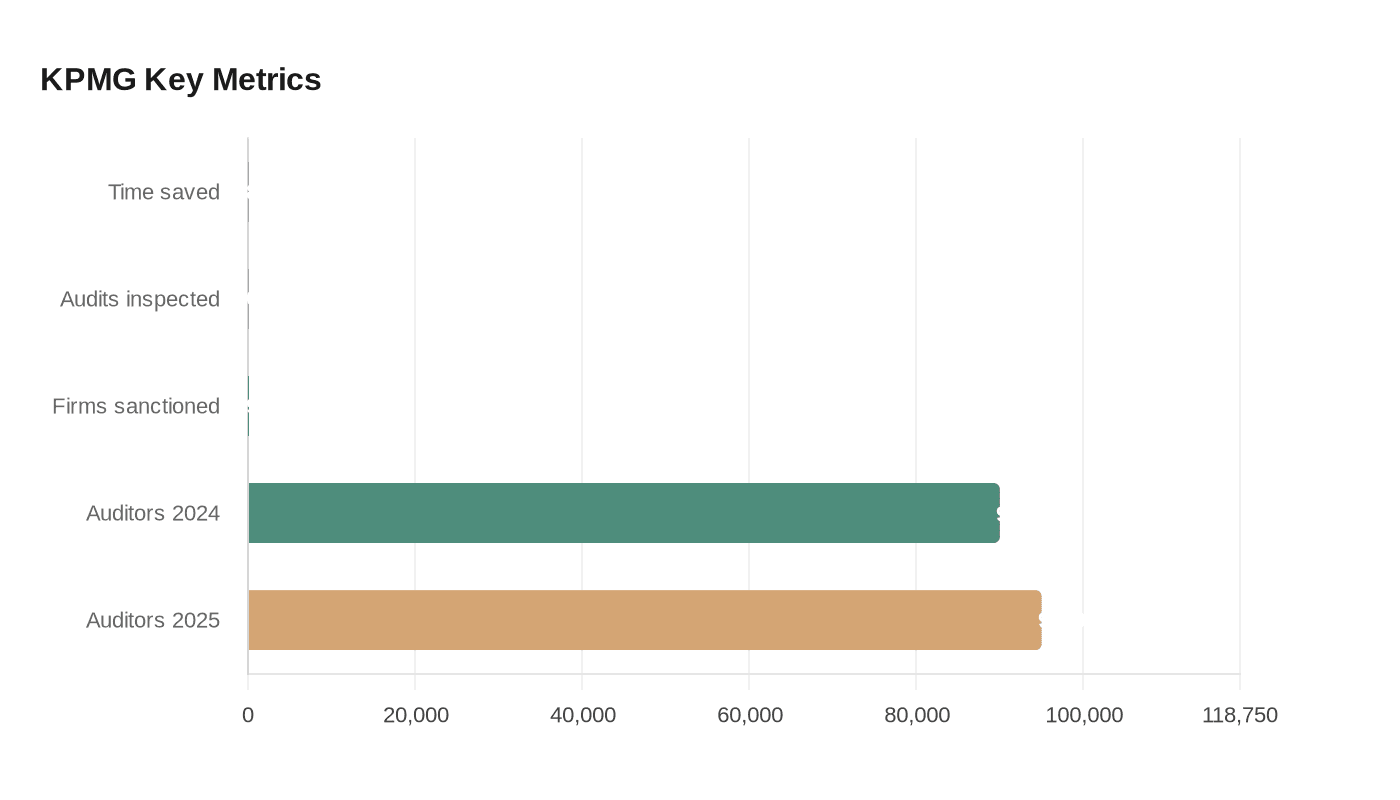
KPMG’s technology pitch is broader than a one-off tool launch. In June 2024, it said integrating the Databricks Data Intelligence Platform into KPMG Clara would allow audit professionals to analyze billions of financial transactions across thousands of audits. In July 2024, KPMG said generative AI in KPMG Clara would affect about 90,000 auditors globally. By April 2025, the firm said AI agents in KPMG Clara would empower more than 95,000 auditors globally.
The firm is also describing a more layered workflow. Its 2025 materials say the AI-enabled audit process now includes generative AI and AI agents built into KPMG Clara AI to refine risk assessments, automate substantive procedures, and surface audit insights for audit committees and management teams. It also says the platform includes a Financial Report Analyzer AI engine intended to help complete disclosure checklists, with a human-in-the-loop model still in place.
That last point is important for anyone working inside the audit line. Human-in-the-loop does not mean less responsibility. It usually means the firm wants the machine to accelerate the easy parts while the auditor remains accountable for the final call, the final memo, and the final sign-off. If something goes wrong, the question will not be whether the model produced an output. It will be whether the team challenged it properly and documented the challenge.
What gets easier, and what gets harder
The clearest benefit is speed on mechanical work. Search, extraction, and some disclosure checks should become faster, and the firm says auditors can use instant reviews of documentation and transaction data rather than combing through the same material line by line. That can free up time during busy season, when teams are already juggling long hours, late-night review cycles, and competing deadlines across multiple engagements.
But the harder part of the job may become more visible, not less. Standardization narrows the range of acceptable approaches, and automation tends to make deviations easier to spot. Junior staff may find that they spend less time building workpapers from scratch and more time validating whether the system’s output matches the evidence. Senior staff, meanwhile, may feel the accountability squeeze: if the technology is supposed to make the audit more consistent, then exceptions will stand out more sharply.
For managers, that creates a new workforce challenge. The firm can say it is reducing low-value tasks, but it also has to make sure the remaining work is not simply pushed onto a smaller group of people with more responsibility and the same deadlines. Otherwise the pressure does not disappear, it just moves.
The governance structure behind the message
KPMG is also trying to show that this is not just an IT project. Its global transparency report says the firm operates across 138 countries and territories, and that its global head of audit and global head of audit quality report to the Global Audit Quality Committee of the Global Board. That structure matters because it signals centralized oversight at the same time the firm is centralizing tools and processes.
The point is to show control from the top down. If the audit platform is becoming more unified, then the governance around quality has to be equally firm. That is especially true in a network as large as KPMG’s, where consistency across geographies is part of the promise and part of the risk.
What auditors should take from it
KPMG’s own materials make the basic tradeoff plain: the firm wants a more proactive, insightful, quality-first audit experience, and it is betting that AI and standardization can help deliver it. The upside is less time spent on repetitive work and more capacity for the hardest judgment calls. The downside is a more tightly monitored workflow, more reliance on disciplined documentation, and potentially less room for informal discretion.
That is the real workplace story here. KPMG is not just adding automation to audit. It is redesigning who controls the pace, who owns the evidence, and who carries the risk when something slips.
This article was produced by Prism’s automated news system from verified source data, official records, and press releases, then run through automated quality and moderation checks before publishing. The system is built and supervised by the people who set the standards it runs under. Read our full AI policy.
Did this article answer your question?


.pdf%2F_jcr_content%2Frenditions%2Fcq5dam.thumbnail.319.319.png&w=1920&q=75)