California's $20 Fast-Food Wage Linked to 3.5% Price Increases, Study Finds
Prices at California fast-food restaurants climbed 3.3–3.6% after the $20 wage hit; the sharper change for crew is in how schedules, staffing, and hours have been redrawn since April 2024.
The menu price increases that followed California's $20 fast-food wage are now quantified. A working paper by economists Jeffrey Clemens, Olivia Edwards, Jonathan Meer, and Joshua D. Nguyen, published through the National Bureau of Economic Research in March 2026, found that food-away-from-home prices in four California metropolitan statistical areas rose 3.3 to 3.6 percent relative to 17 comparison markets through December 2024. The law, AB 1228, went into effect April 1, 2024 and raised the hourly floor to $20 for workers at large chain fast-food restaurants, marking the largest single fast-food minimum wage increase in recent U.S. history.
The price bump was not confined to limited-service counters. The researchers attributed part of the increase to spillovers into full-service restaurants, suggesting the law reshaped labor cost dynamics across a broader slice of California's dining industry than its sector-specific framing might imply.
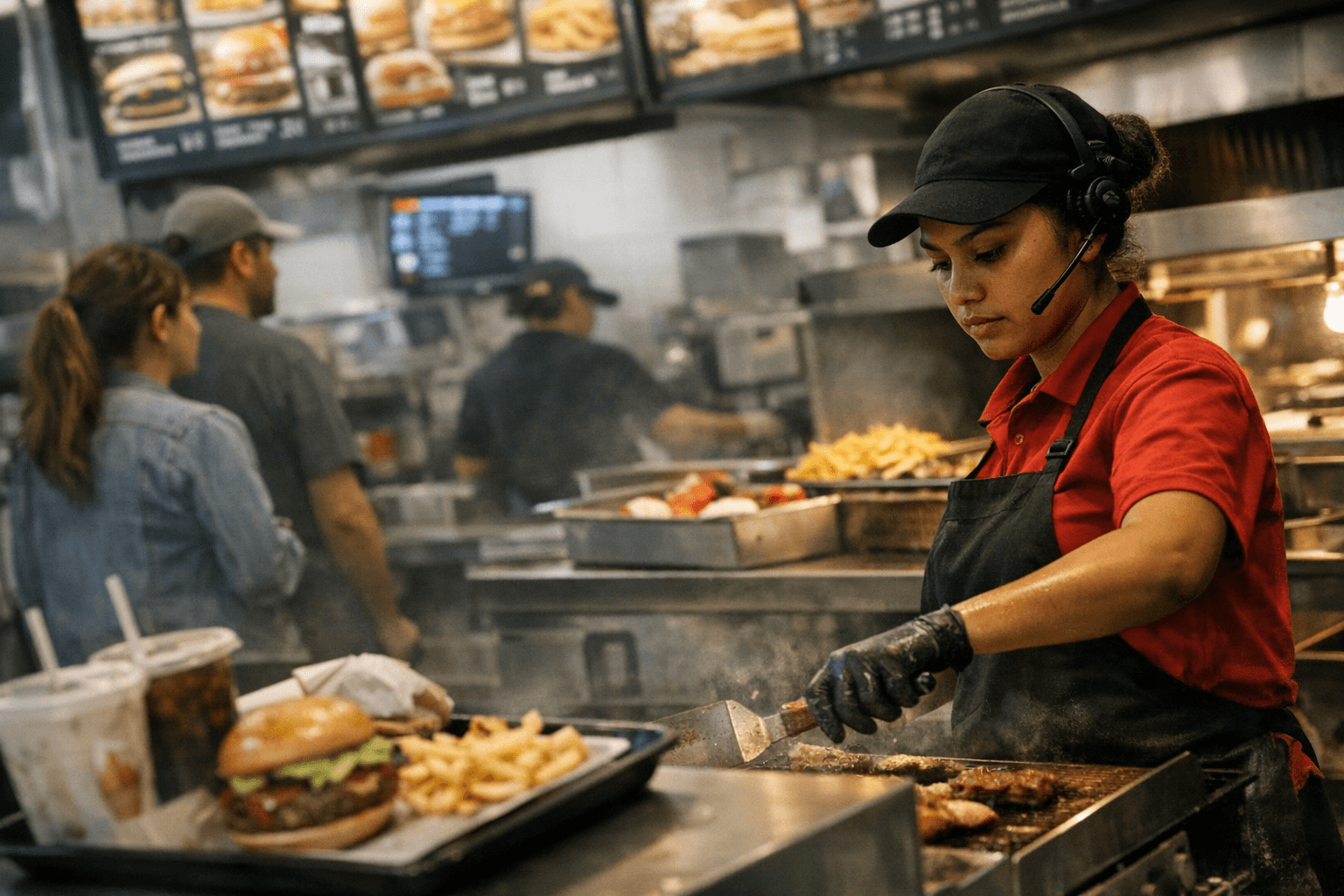
For crew members, the 3.5 percent average price increase is background context compared to what has been happening on shift. The research describes a three-channel operator response: pass wage costs to consumers through higher prices, compress labor hours and tighten scheduling, or invest in automation and labor-saving technology to offset the higher wage bill. All three have been running simultaneously at fast-food locations across the state since April 2024.
A companion NBER study found fast-food employment in California fell roughly 2.7 percent relative to the rest of the country in the year following the law's enactment, equivalent to approximately 18,000 positions. Early survey data from Harvard's Shift Project offered a more mixed early picture, finding that weekly hours for California fast-food workers held roughly stable in the months immediately after the wage took effect, with understaffing levels appearing to ease. The divergence reflects how unevenly operators have responded and how quickly conditions have continued to shift.
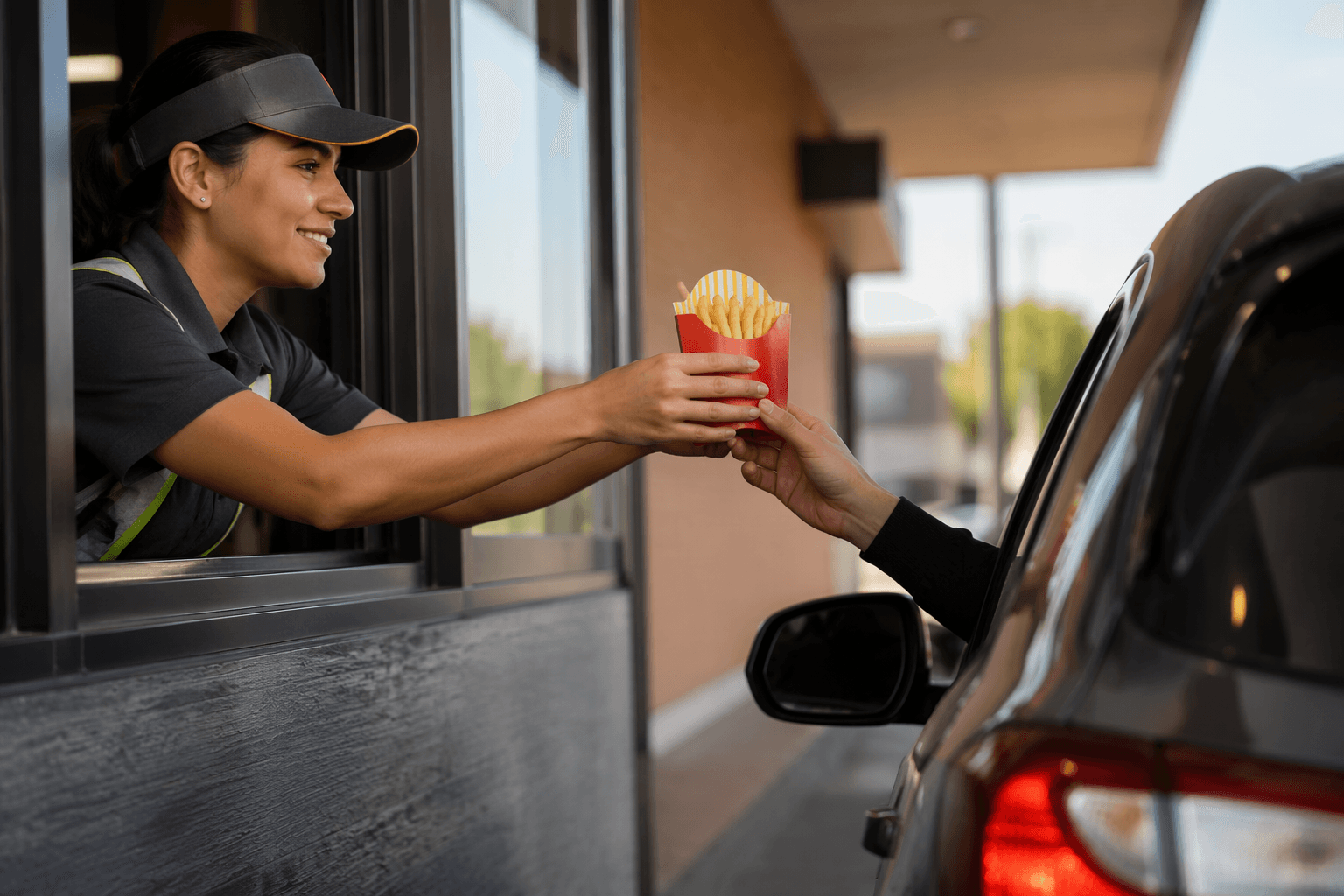
At McDonald's, the franchise structure amplifies that variation. Some operators absorbed higher payroll costs without major changes to crew structure; others moved faster on order kiosks, drive-thru upgrades, and cross-training programs designed to extract broader task coverage from the same headcount. Two McDonald's workers on the same Los Angeles street may have experienced spring 2024 through early 2026 in fundamentally different ways: one with stable hours and clear pay progression, another with tighter shifts and narrowed overtime windows.
The pay-band compression problem runs underneath all of it. When the statutory floor jumps by $4 in a single move, the wage gap between a new hire and a seasoned crew trainer, or between crew and shift management, shrinks unless operators deliberately raise rates across the ladder. The NBER pricing paper does not resolve whether California franchisees have done so, but the structural pressure is real and will not recede on its own.
Under AB 1228, the Fast Food Council is authorized to set annual wage adjustments through 2029, indexed to the Consumer Price Index. The pricing, scheduling, and automation calculus California operators ran in April 2024 will have to be run again, every year, for the next three.
This article was produced by Prism’s automated news system from verified source data, official records, and press releases, then run through automated quality and moderation checks before publishing. The system is built and supervised by the people who set the standards it runs under. Read our full AI policy.
Did this article answer your question?