Connecticut Highway Plaza Fast-Food Workers Secure Landmark First Union Contract
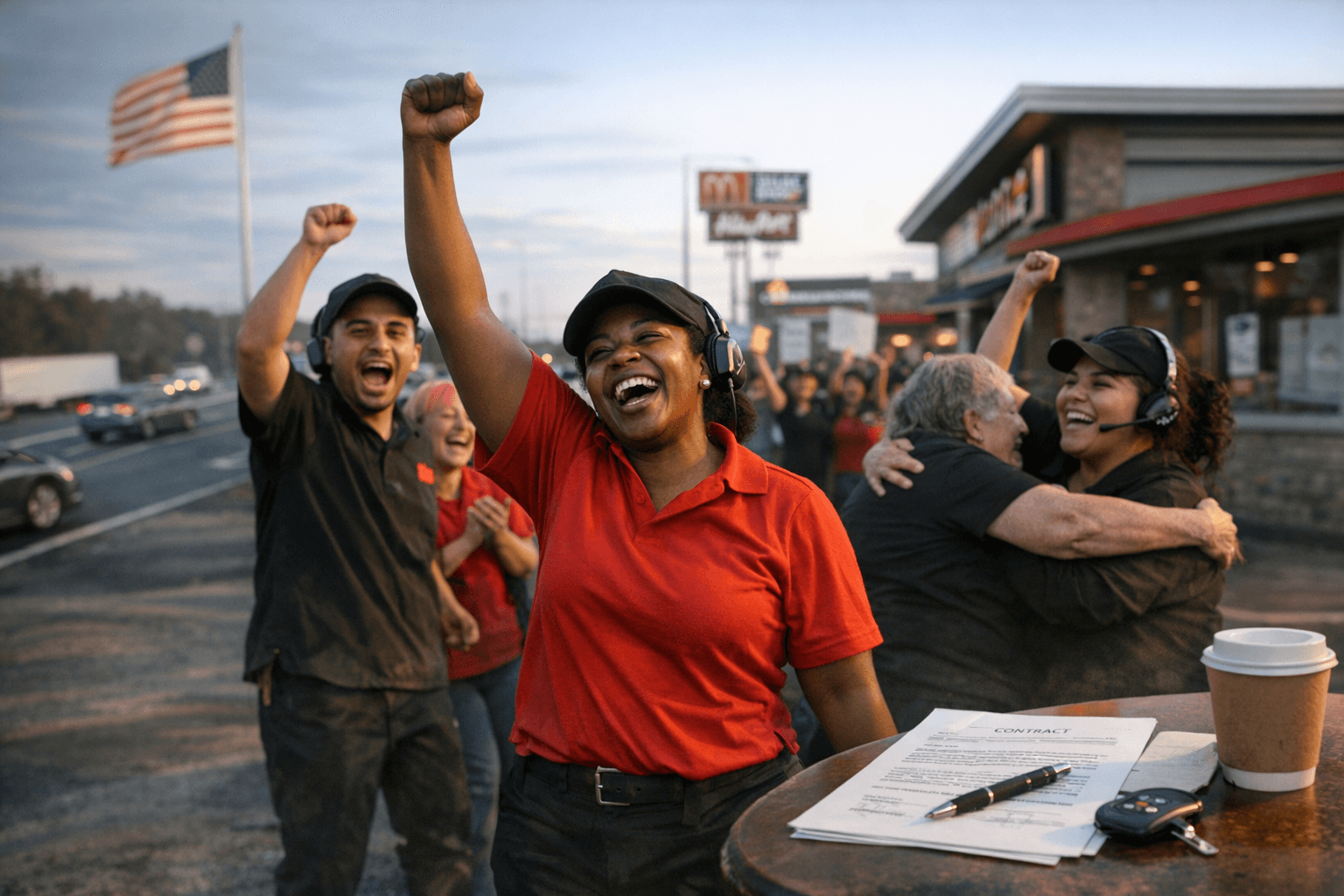
Fast-food workers at 23 Connecticut highway plazas secured a first union contract with Applegreen, effective April 1, covering scheduling, just cause, and pay through 2031.

After years of organizing drives, worker complaints, and at least one NLRB rehiring order, hundreds of fast-food workers at 23 Connecticut highway service plazas secured something their industry rarely delivers: a signed, multi-year union contract.
32BJ SEIU and Applegreen USA Travel Plazas reached the agreement on March 27. The contract takes effect April 1, 2026 and runs through March 1, 2031, locking in five years of protections that include predictable scheduling, just-cause discipline standards, a formal grievance and arbitration process, improved vacation accruals, stronger training requirements, and alignment with Connecticut's Standard Wage Law.
The path was not quick. Workers and organizers spent years building pressure through documented complaints about wages and working conditions before the effort escalated to formal legal proceedings. An NLRB judge issued at least one rehiring order in related cases, a step that signals serious unfair labor practice findings and typically raises the stakes considerably for employers still at the bargaining table.
For franchise operators and managers tracking this from outside Connecticut, the just-cause and scheduling provisions are the most operationally significant pieces. Just-cause standards require documented, legitimate reasons before a worker can be disciplined or terminated; grievance and arbitration processes give employees a formal channel to challenge those decisions. Both represent a meaningful shift from the at-will, manager-discretion norms that still govern most fast-food workplaces.
Scheduling predictability carries weight beyond fairness. Consistent hours affect workers' ability to budget, plan childcare, and hold second jobs. They also shape how franchise operators build labor cost models. As more states and municipalities pass fair scheduling legislation, this contract gives labor groups a concrete, enforceable example to reference in future negotiations and policy arguments.
The broader momentum is hard to overestimate. 32BJ SEIU and affiliated groups have pursued sector-wide strategies for years, including multi-employer bargaining approaches and supported petitions. This agreement is among the more concrete results of that campaign and will almost certainly surface in future organizing drives and legislative pushes for sector-specific labor standards.
What happens in Connecticut rarely stays in Connecticut. The combination of sustained legal pressure, multi-employer organizing, and a concrete contract win gives labor groups a reproducible playbook. For fast-food operators of every size, the question is no longer whether organizing campaigns will reach their sector, but when.
Know something we missed? Have a correction or additional information?
Submit a Tip