Dawson Creek McDonald's Hopes Foreign Worker Changes Ease Staffing Shortage
A Dawson Creek, BC franchise is counting on a federal rule change that lifts the rural temporary foreign worker cap from 10% to 15%, though BC's premier has yet to request it.

The McDonald's franchise in Dawson Creek, B.C., is watching a freshly announced federal policy change with cautious optimism, hoping it can finally put a dent in the staffing shortage that has dogged the restaurant for months.
The federal government announced in March that eligible rural employers would be allowed to temporarily raise their share of low-wage temporary foreign workers from 10% to 15% of their workforce. The change, announced jointly by Employment and Social Development Canada and the Federal Economic Development Agency for Northern Ontario, takes effect April 1, 2026, and runs through March 31, 2027. The government cited "acute labour shortages due to low unemployment rates" and ongoing recruitment challenges as the rationale for the adjustment.
For a franchise in a remote northeastern B.C. city like Dawson Creek, that 5-percentage-point shift could mean the difference between operating a full crew and asking existing workers to cover gap after gap. The town is no stranger to staffing pressure: Dawson Creek and District Hospital closed its maternity ward overnight in early March and shut its emergency room temporarily later the same month, both attributed to staffing shortages, underscoring how pervasive the labour problem is in the region.
There is a significant complication for B.C. franchises hoping to benefit. The expanded TFW cap is not automatic: a province or territory must formally request it from Ottawa before its employers can access the higher threshold. B.C. Premier David Eby signaled in mid-March that he would not make that request, arguing the federal government should focus on creating pathways to permanent residency for foreign workers rather than cycling them through the program on closed work permits. The new allowances are tied to a province's request, meaning B.C. operators could be left out unless Eby's position shifts or Ottawa finds another avenue to extend the relief.
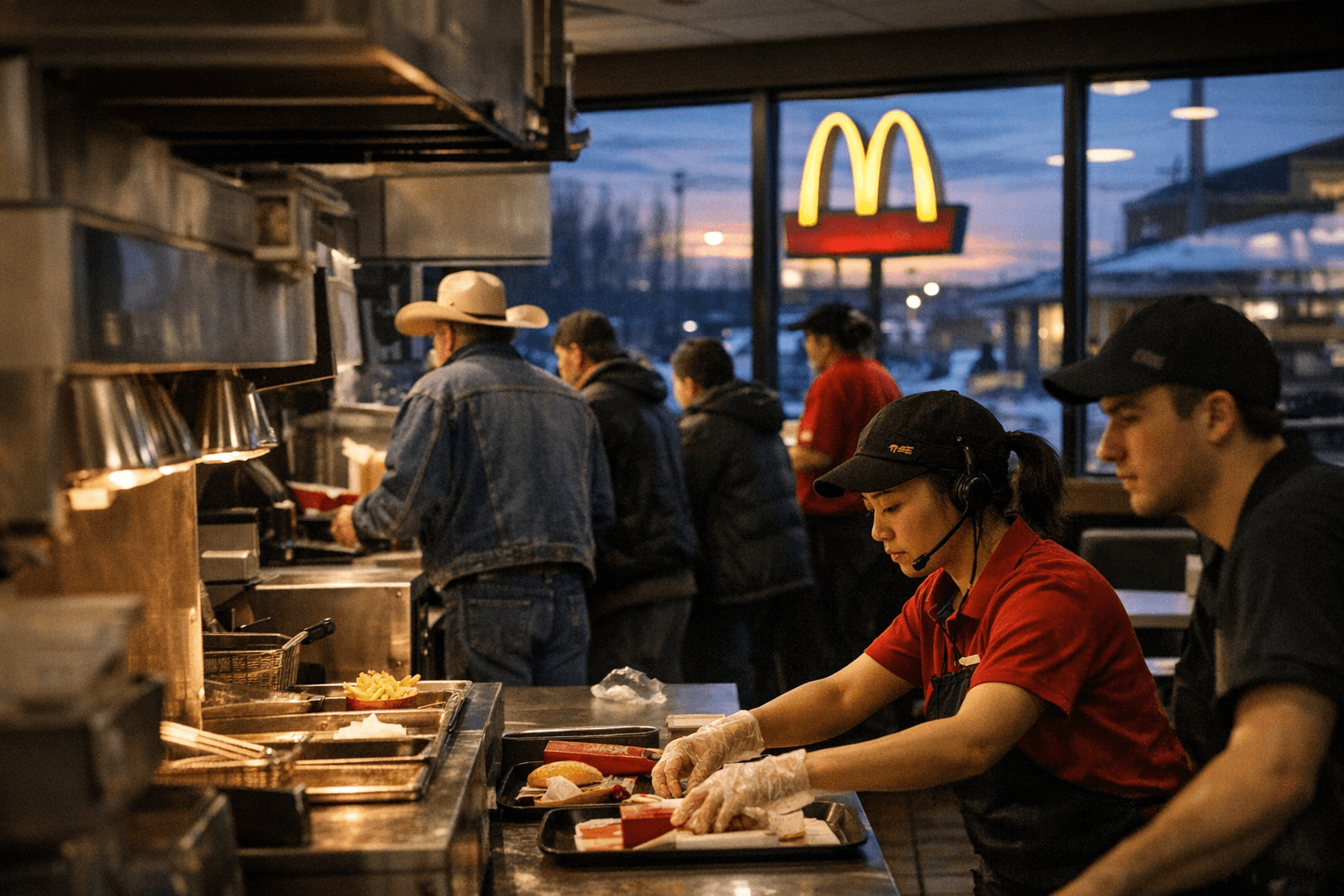
For crew and managers already stretched thin, the stakes are real. Under current rules, food service employers remain capped at 10% low-wage foreign workers at any given location, a restriction tightened from a previous 20% cap in September 2024. That rollback slashed eligible applications for the low-wage stream by roughly 70%, according to federal records. Restaurants in booming small towns, where local unemployment tends to run low and competition for workers is fierce, absorbed that cut the hardest.
The broader economic backdrop adds another layer of uncertainty. Ottawa's announcement came as Canadian businesses were already navigating disruption from U.S. tariffs, with the federal government acknowledging the policy landed "during a tough period for job seekers." For a franchise operator in Dawson Creek weighing whether to hold a job fair or file a Labour Market Impact Assessment, the math on foreign worker hiring has rarely felt more complicated, or more consequential.
This article was produced by Prism’s automated news system from verified source data, official records, and press releases, then run through automated quality and moderation checks before publishing. The system is built and supervised by the people who set the standards it runs under. Read our full AI policy.
Did this article answer your question?