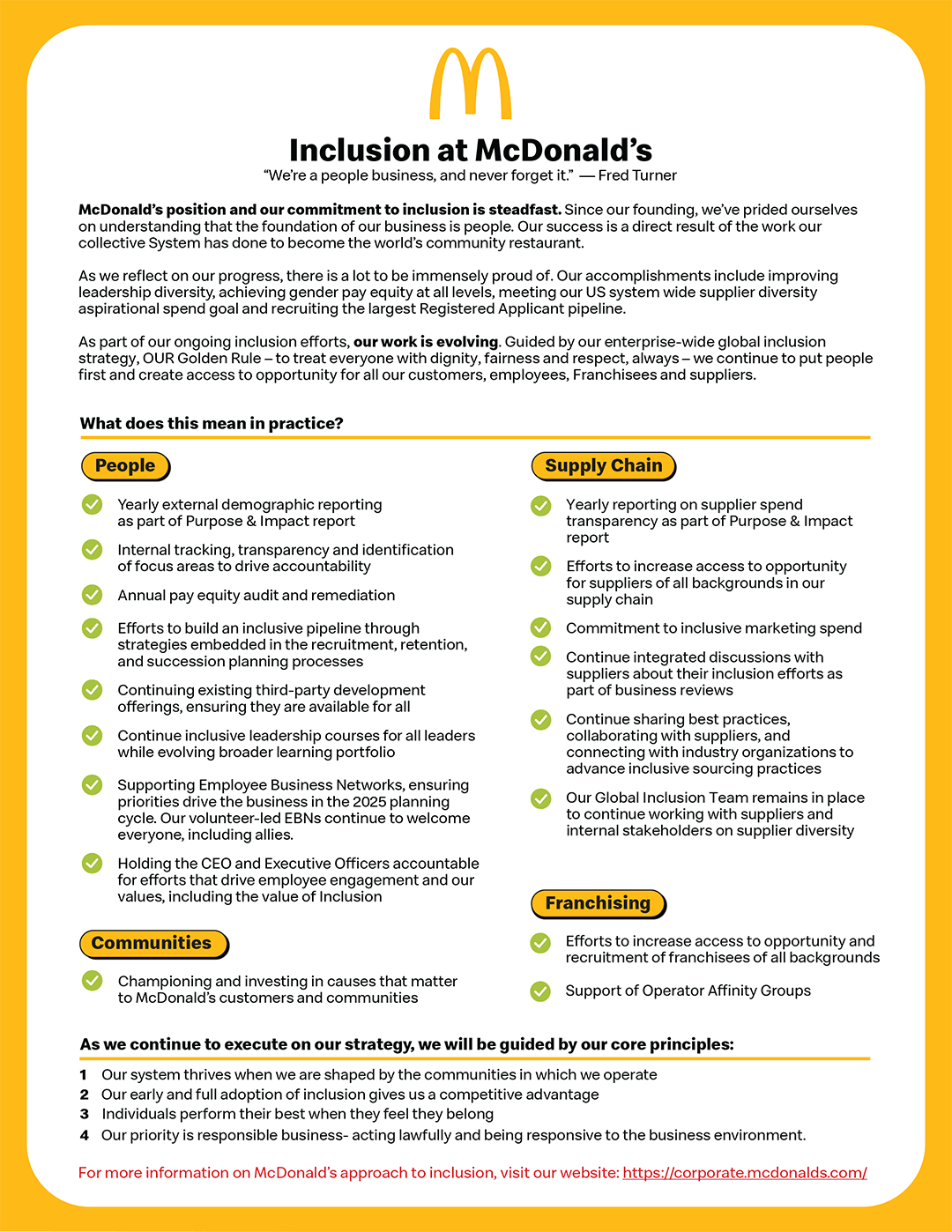
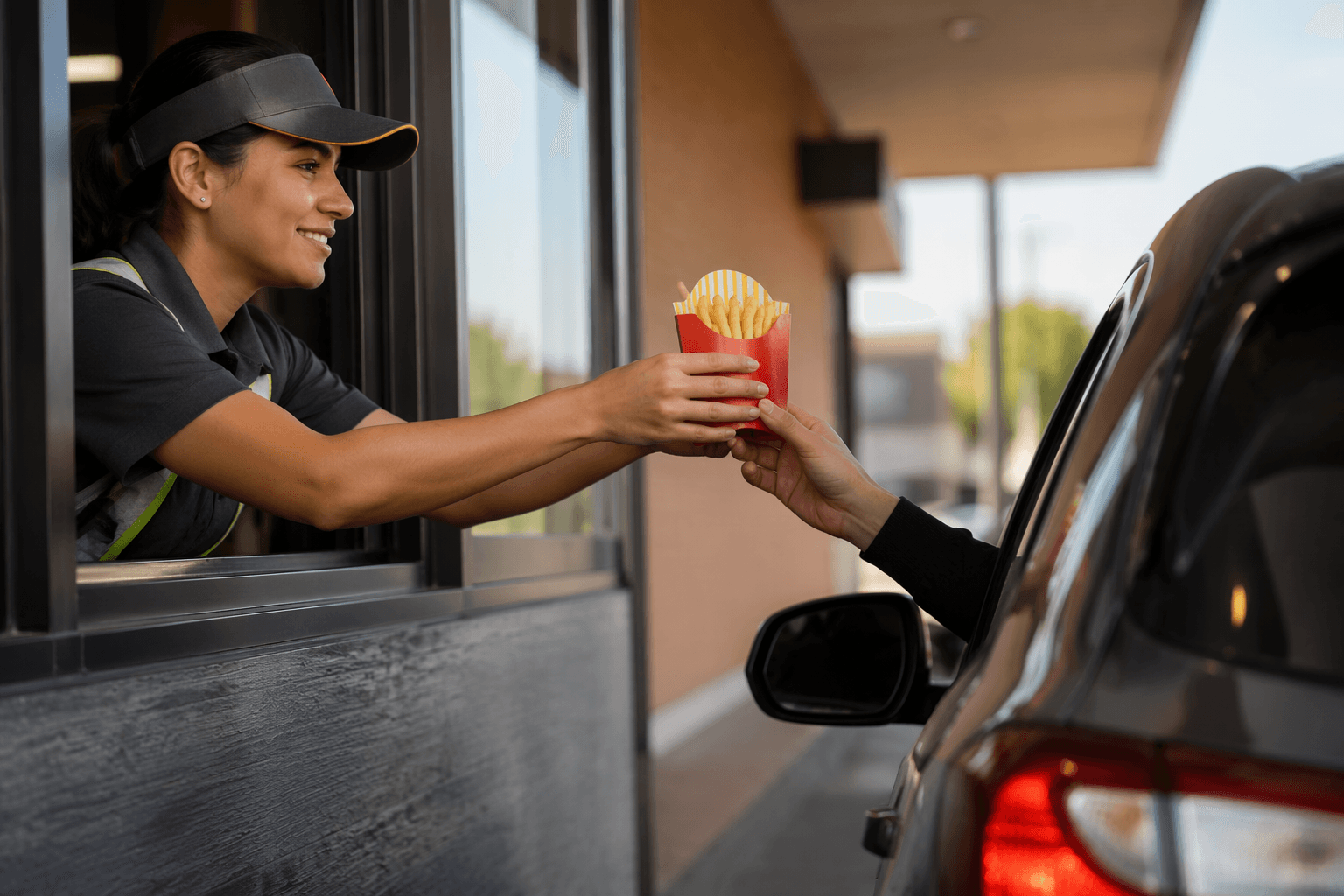
Ohio McDonald's Franchise Leader Brooke Teetz Champions Mentorship and People-First Management
Brooke Teetz climbed from frontline roles to Director of Operations across 20 Columbus-area McDonald's, modeling a career path most crew members don't realize exists.
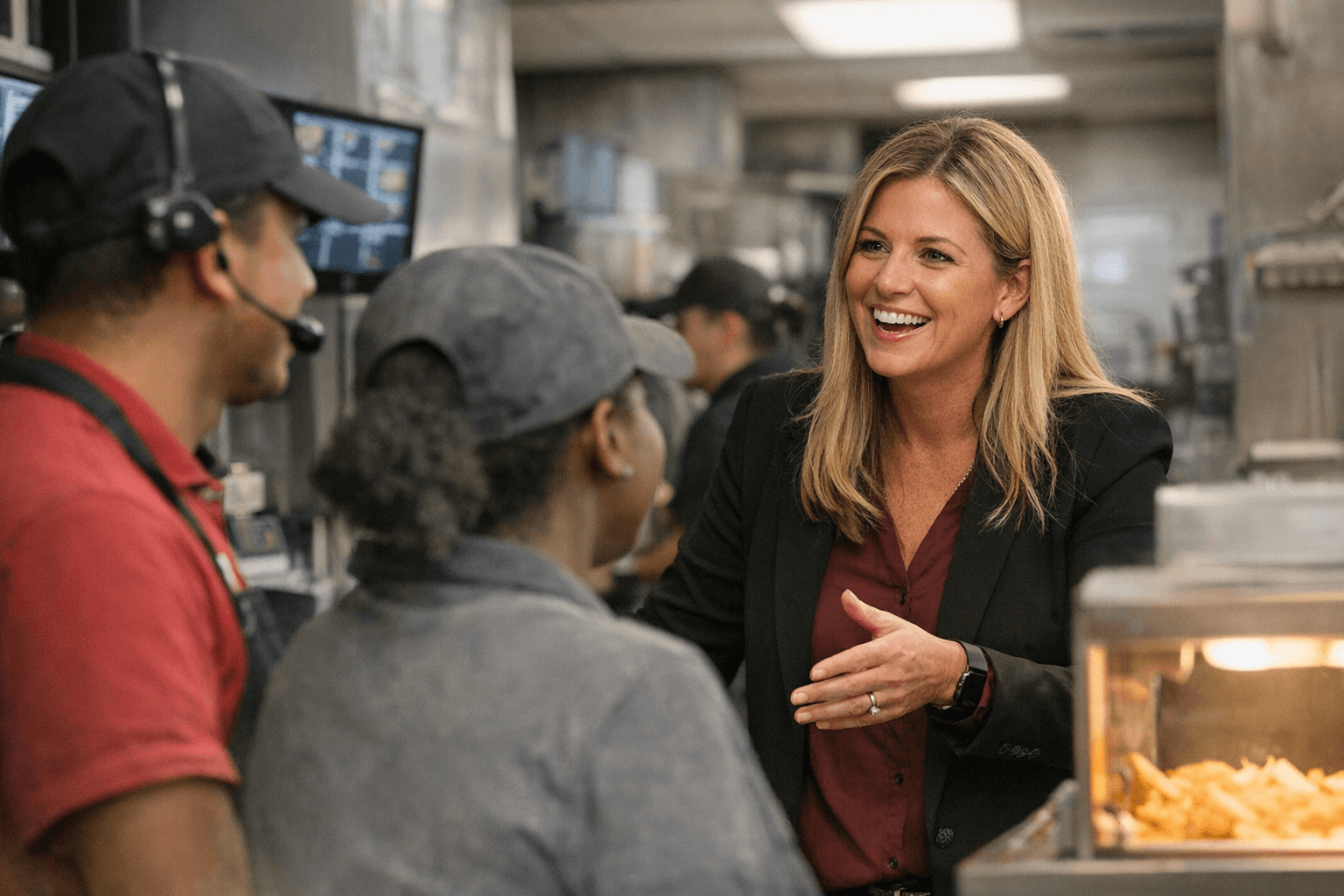
Most McDonald's corporate announcements land from 30,000 feet: system-wide AI rollouts, menu pivots, new app features. But the decisions that shape a crew member's actual workday, whether they get trained or ignored, promoted or stalled, recognized or burned out, are made by people like Brooke Teetz.
Teetz is the Director of Operations at the Mendoza Company, a franchise operator running 20 McDonald's restaurants across the Columbus, Ohio area. Her profile, published in the Columbus Dispatch in late March 2026, isn't a press release about quarterly results. It's a window into how one franchise organization is trying to build something different from the ground up, starting with the people who take orders and flip burgers.
From Crew to Corner Office: A Career Built Inside the System
Teetz's path to Director of Operations wasn't a lateral hire from outside the industry. She came up through frontline roles inside the McDonald's system, accumulating the kind of ground-level operational knowledge that can't be taught in a training module. That trajectory matters, both as a statement about the Mendoza Company's culture and as a proof point for every shift manager in Columbus who wonders whether upward mobility is real or just something posted on a breakroom bulletin board.
Her progression tracks what McDonald's, at its best, has always promised: that the system rewards people who invest in it. Teetz has described her leadership as shaped by daily milestones, small wins and significant ones alike, accumulated over years of operational work. That framing is deliberately unglamorous. It's a rejection of the idea that leadership is a title you receive rather than a practice you develop.
What People-First Management Actually Looks Like
The Mendoza Company's approach, as reflected in Teetz's profile, centers on a few concrete commitments: structured training for hourly staff, recognition programs including employee-of-the-month, internal promotions, and a deliberate emphasis on mentorship at every level. These aren't soft perks. In a high-turnover industry where the average fast-food restaurant sees more than 100% annual employee turnover, recognition and advancement pathways are operational tools as much as they are morale boosters.
Mentorship, in particular, is a differentiator. At many franchise locations, a new crew member gets a few hours of onboarding and then learns by doing, often without a clear sense of who to ask, what comes next, or whether there's a next at all. Teetz's model inverts that: franchise leaders and restaurant managers are expected to actively invest time in developing the people beneath them. Cross-training across stations and roles broadens crew capability and builds the kind of flexibility that makes a store run better on a Saturday rush.
Balancing McDonald's System Priorities with Local Culture
Running 20 restaurants inside the McDonald's system means operating inside a dense web of brand standards: speed of service, food quality, execution consistency. The corporate playbook is not optional. But how operators meet those standards, and how they build the teams that execute them, is where franchise culture diverges.
The Mendoza Company's approach tries to hold both. System priorities, speed, quality, consistent execution, are non-negotiable. But Teetz's leadership model treats staff development and community presence as enablers of those priorities rather than distractions from them. Community engagement, including local hiring and local initiatives in the Columbus area, is part of how the franchise builds goodwill and keeps its labor pipeline functional. That's not altruism; it's operational pragmatism with a human face.
Why Franchise Governance Shapes Your Experience More Than Corporate Headlines
Here's something worth understanding if you work in a McDonald's: the franchise operator sets the tone for nearly everything you experience on the job. Corporate McDonald's determines the menu, the app, the marketing, and the baseline brand standards. But your schedule, your training plan, your shot at promotion, the culture of your specific restaurant, all of that flows from the franchise organization you actually work for.
The Mendoza Company runs 20 locations in Columbus. That means roughly 20 different store environments all operating under the same franchise culture, shaped by people like Teetz. For crew members and shift managers in those restaurants, that's a significant factor. The difference between a manager who champions your development and one who doesn't isn't a corporate policy issue; it's a franchise governance issue. Knowing who owns the franchise you work for, and what they actually prioritize, is more useful intelligence than reading about McDonald's national strategy.
A Practical Playbook for Crew and Managers
Teetz's profile is most useful not as inspiration but as a template. For anyone working in a McDonald's franchise, it raises a set of questions worth asking directly:
- Does your restaurant have a structured training plan for new hires and hourly staff, or is onboarding improvised?
- Are there formal recognition programs in place, and does leadership actually use them?
- What are the internal promotion criteria? Is there a clear pathway from crew to shift manager to salaried management?
- Is there a mentorship structure, or does development depend entirely on whether your manager happens to be a good teacher?
For shift managers and assistant managers specifically, Teetz's trajectory points toward a direct conversation with franchise HR. Franchise operators like the Mendoza Company often have development programs, cross-training opportunities, and mentorship structures that aren't automatically communicated to hourly employees. Asking about them isn't overreaching; it's how people like Teetz built careers.
For anyone currently in a frontline role, the broader lesson is structural: McDonald's franchise operators have significant latitude to invest in their people, and some use it more aggressively than others. When a franchise leader at the Director of Operations level came up through the system herself, that tends to shape how the whole organization thinks about crew development. It's worth finding out whether your franchise operates that way.
The fight over wages and scheduling in fast food gets most of the headlines. But the quieter contest, over who gets developed, who gets promoted, and who gets a real career out of what starts as a part-time job, plays out franchise by franchise, manager by manager. Teetz's work in Columbus is a reminder that the outcome isn't predetermined.
This article was produced by Prism’s automated news system from verified source data, official records, and press releases, then run through automated quality and moderation checks before publishing. The system is built and supervised by the people who set the standards it runs under. Read our full AI policy.
Did this article answer your question?