EEOC Guidance Tells McDonald’s Workers How to File Discrimination Charges
Learn how McDonald’s crew and managers can file a Charge of Discrimination with the EEOC, what to expect, and practical steps to preserve rights and evidence.
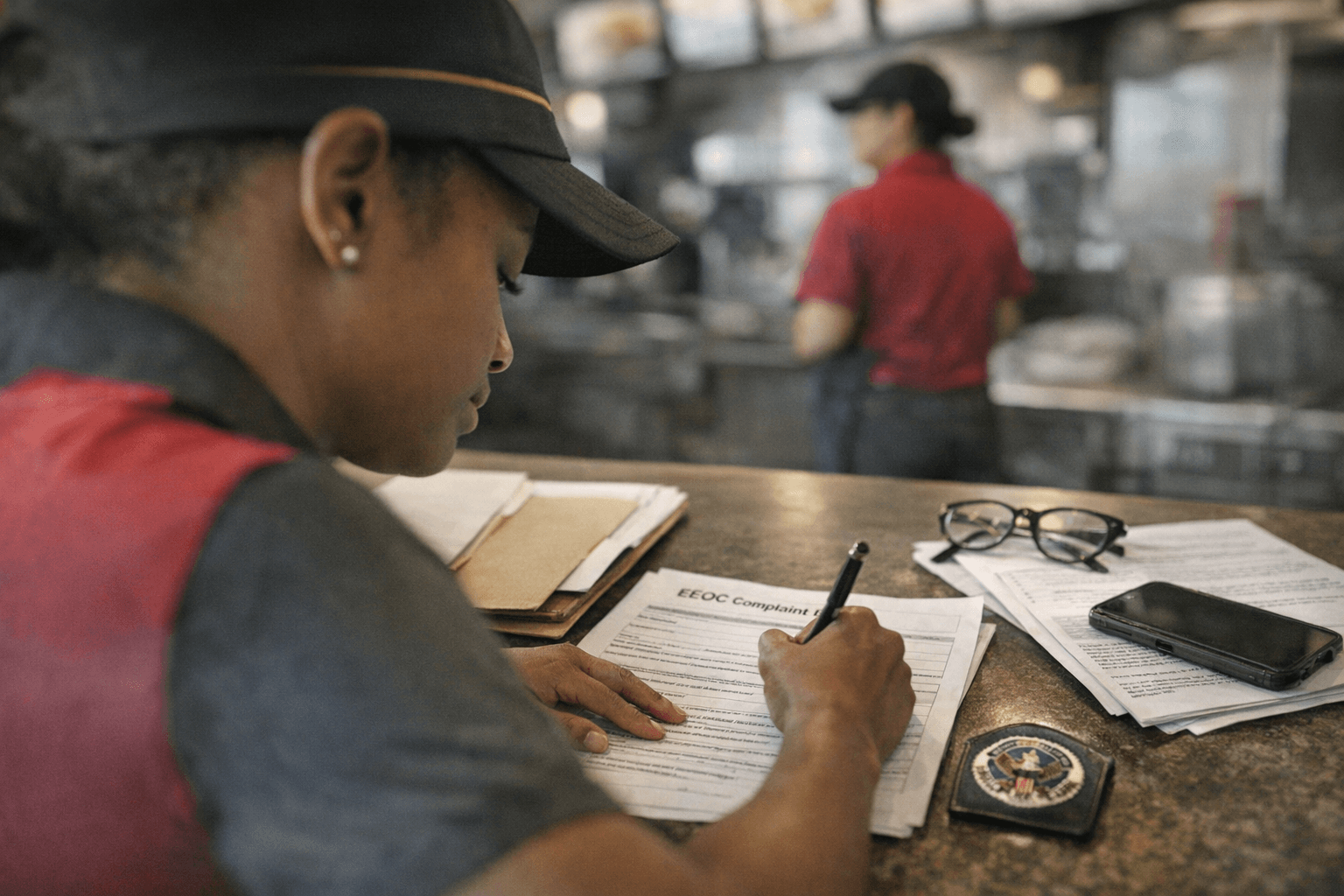
If you work at McDonald’s and believe you faced discrimination or harassment on the job, the EEOC’s guidance lays out the formal steps to get a federal charge started and preserve legal options. Below are the core points, step-by-step filing routes, what happens next, and practical tips tailored to fast-food workers and shift leaders.
1. What a Charge of Discrimination is
A Charge of Discrimination is a signed statement that alleges an employer violated federal anti-discrimination laws. Filing a charge is usually required before you can bring many employment-based discrimination lawsuits, so it’s the formal trigger that starts the EEOC’s involvement. Think of it as the official complaint that opens an administrative investigation and preserves key legal rights.
2. How to start with the EEOC Public Portal
You can begin the process online at the EEOC Public Portal (publicportal.eeoc.gov), where you submit initial information and schedule an intake interview. The portal walks you through the intake questions, lets you upload documents, and is the quickest route for crew members working irregular shifts who can’t visit an office during business hours. Use the portal to set the record in motion even if you later choose mediation or to consult an attorney.
3. Filing on paper or in person at local EEOC offices
If online filing isn’t an option, you can file a Charge on paper or in person at a local EEOC office. Paper filings require you to sign the charge; in-person filings allow you to speak with staff who can explain next steps and paperwork. Local offices can also help you schedule interviews and point you to community resources, which is handy if you need same-day guidance after a tough shift.
4. Statutes of limitations and time limits
The EEOC guidance explains statutes of limitations and the importance of filing promptly; these deadlines vary by law and location. Missing the applicable time limit can bar federal claims, so don’t rely on memory, start the process as soon as possible after the discriminatory act or retaliatory action. If you’re unsure how long you have, use the portal or contact a local office immediately to check deadlines for your situation.
5. Dual-filing with state or local Fair Employment Practices Agencies (FEPAs)
In many states you can dual-file with a state or local FEPA, which sometimes extends filing deadlines and provides overlapping enforcement. Dual-filing can increase the chances a complaint is investigated more quickly and gives you access to additional remedies or local enforcement tools. Ask the EEOC intake staff whether your case should be cross-filed with a FEPA and how that affects timing.
6. What to expect after you file: intake, investigation, and timeline
After you file, expect an intake interview where you provide details and evidence; the EEOC will determine whether to investigate. Investigations can include document requests, witness interviews, and attempts at mediation; timelines vary based on caseload and complexity. The EEOC may issue findings of “cause” or “no cause,” and in some cases will issue a Notice of Right to Sue if it closes the charge without a successful settlement.
7. Confidentiality, mediation options, and possible remedies
The EEOC explains confidentiality limits, while some information is protected, absolute secrecy isn’t guaranteed because investigations often require sharing details with the employer. Mediation is offered as a voluntary, confidential way to resolve disputes early; it can be faster than a full investigation and may restore shifts, back pay, or workplace policy changes. Possible remedies the EEOC pursues include back pay, reinstatement, injunctive relief, and corrective policies, depending on findings.
8. Covered bases and common McDonald’s workplace scenarios
Federal protections include race, color, religion, sex (including pregnancy and sexual orientation), national origin, age (40+), disability, and genetic information. For McDonald’s crew members that can mean filing for incidents ranging from racial harassment on the floor to pregnancy-related accommodations denied by management, discriminatory scheduling, or retaliation after internal complaints. Addressing these issues through a charge can change dynamics at the store level by creating official records and prompting employer corrective action.
9. Practical evidence and record-keeping steps to preserve rights
Good documentation strengthens a charge: log dates, times, locations, and the names of people involved or who witnessed incidents. • Keep copies of pay stubs, schedules, messages, personnel records, and any internal complaint emails or notes. • Take photos of physical evidence (injury, workplace postings) and save screenshots of electronic communications. • If possible, collect witness contact details and brief written statements while memories are fresh.
10. Language access, contact options, and extra support
The EEOC provides toll-free numbers, local office contacts, and guidance in multiple languages; interpreters are available during intake and investigations if needed. Use the public portal to find your nearest office or call the EEOC to get help in your preferred language, this helps ensure you don’t miss deadlines or misunderstand procedures. Community legal aid groups and worker centers can also guide shift workers through filing if you need in-person support.
Closing practical wisdom Don’t let a bad shift or a single dismissal be the last word, filing a charge puts your concerns on official record and starts processes that can protect you and co-workers. Start with the EEOC Public Portal or your local office, document everything, and ask about dual-filing and mediation options early; prompt action is the simplest way to preserve your rights and keep the fries from getting cold while the paperwork moves.
This article was produced by Prism’s automated news system from verified source data, official records, and press releases, then run through automated quality and moderation checks before publishing. The system is built and supervised by the people who set the standards it runs under. Read our full AI policy.
Did this article answer your question?