Federal and Illinois Child Labor Laws: What McDonald's Employers and Teen Workers Must Know
A Lockport McDonald's franchise racked up 568 child labor violations in six months; here's what Illinois law actually requires for teen workers.
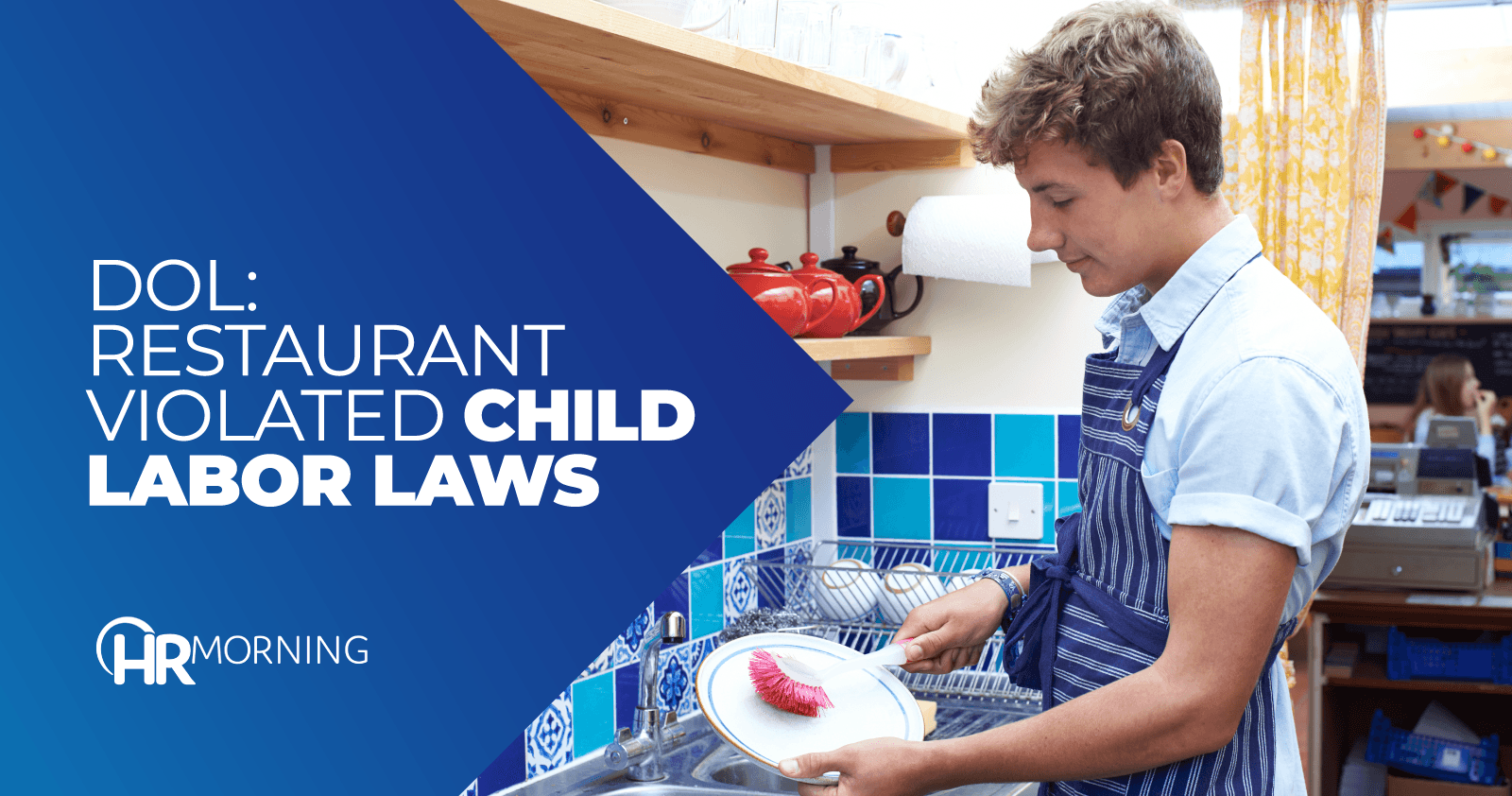
A lawsuit filed by the Illinois Attorney General's Office against the company owned by Nicholas J. Kory, which operates a McDonald's in southwest suburban Lockport, lays out one of the more striking recent examples of child labor enforcement in the state: dozens of 14- and 15-year-olds allegedly working without proper authorization, pulling shifts as late as 1 a.m. during the school year, and logging stretches as long as 17 hours straight. An Illinois Department of Labor audit covering just six months, January 1 through July 8, 2023, found at least 568 violations of state law. The IDOL subsequently fined the business more than $2.1 million, which, according to the lawsuit, had not been paid.
Whether you manage a McDonald's location, work at one as a teenager, or are a parent trying to understand what protections exist, the gap between what the law requires and what allegedly happened in Lockport is a useful place to start.
The federal floor: what the FLSA establishes
Child labor protections in the United States are governed primarily by the Fair Labor Standards Act and its implementing regulations. The FLSA sets general minimum working ages, places hour limits on younger workers, and bars minors entirely from certain hazardous occupations. Think of it as the national baseline: every employer in every state must meet these standards at a minimum.
Where it matters for McDonald's operators specifically is the FLSA's treatment of workers under 16. The federal law restricts both the types of tasks they can perform and the number of hours they can work, with tighter limits during the school year. Certain equipment common in fast-food kitchens, including meat slicers and dough mixers, falls into federally restricted categories for workers in this age group.
The FLSA is enforced by the U.S. Department of Labor's Wage and Hour Division, which can assess civil money penalties for violations and, in willful or repeat cases, pursue criminal prosecution. Federal enforcement operates independently of state action, meaning a business can face both simultaneously, though the Lockport case as reported involves only Illinois state action.
Illinois goes further: what state law adds
State law frequently exceeds federal minimums, and Illinois is a clear example. Under Illinois child labor law, as described in the attorney general's lawsuit, employing anyone under 16 comes with specific prerequisites and restrictions that go beyond what the FLSA alone requires.
First, work authorization is not optional. Workers under 16 must obtain employment certification from a local school authority before they can legally be hired. This is not a formality an employer can skip or process after the fact. The lawsuit against Kory's company alleges that dozens of 14- and 15-year-olds were employed without that necessary authorization, meaning the baseline legal requirement was allegedly never met.
Second, the work itself is limited by both type and timing. Illinois law restricts minors under 16 to "non-manufacturing and non-hazardous jobs" and requires that work occur outside of school hours. The implication for a fast-food operator during the school year is that scheduling a 14-year-old for a late-night shift is not a gray area. The lawsuit alleges that managers at the Lockport location scheduled underage employees to work hours that ran as late as 1 a.m., directly contradicting both the spirit and the letter of that restriction.
Third, the law caps both daily hours and weekly days. The lawsuit does not reproduce the specific statutory numbers in the excerpts available, but the alleged 17-hour continuous shift attributed to the Lockport location is so far outside any plausible legal limit that the specifics of the cap become almost beside the point.
What 568 violations looks like in practice
Numbers can be abstract, but 568 violations across roughly six months at a single location translates to roughly three violations per day, on average, for the entire audit period. This is not a case of paperwork slipping through the cracks. According to the lawsuit as reported by Fox32Chicago, the violations included the absence of work authorization documentation, excessive hours during the school year, and late-night scheduling of minors.
The Illinois Attorney General's lawsuit frames the conduct in direct terms: "Now, the Illinois Attorney General files this action to hold Lockor and Kory accountable for their egregious, unlawful employment of children in violation of State law."
IDOL Director Jane Flanagan's statement is worth quoting in full because it articulates not just the legal issue but the stakes involved: "This case should send a clear message: exploiting children in the workplace will not be tolerated in Illinois. Our investigation uncovered minors working excessive hours, late into the night, and without the basic protections the law requires. These are not technical violations — they are serious breaches that put young people's health, safety, and education at risk. The Illinois Department of Labor will continue to use every tool available to hold employers accountable and ensure that workplaces protect, not endanger, our children."
What operators and managers at McDonald's locations must do
For anyone responsible for scheduling and hiring at a McDonald's franchise in Illinois, the Lockport case is a direct illustration of what non-compliance costs, both financially and legally. The more than $2.1 million in IDOL fines assessed against the Lockport business, combined with a state AG lawsuit, represents a significantly higher price than the compliance steps required to avoid the situation in the first place.
Practically, that compliance checklist looks like this:
- Verify that any worker under 16 has obtained employment certification from their local school authority before their first shift. This document should be in the employee file before scheduling begins.
- Do not schedule workers under 16 during school hours. For franchise operators running multiple shifts, that means the scheduling system itself should have controls or flags for minor employees.
- Do not schedule workers under 16 for late-night shifts. The allegation that 14- and 15-year-olds were working until 1 a.m. during the school year represents exactly the kind of violation that draws audit attention and regulatory action.
- Respect the daily hour and weekly day limits the law imposes. A 17-hour shift for any employee under 16 is not a scheduling oversight; it is a serious violation.
- Train managers explicitly on these rules. The lawsuit alleges that restaurant managers actively scheduled the excessive hours, which means either they did not know the law, did not apply it, or were directed not to follow it. All three scenarios point to a management training failure.
What teen workers and their families should know
If you are 14 or 15 and working at a McDonald's or any other employer in Illinois, the law is on your side in specific and enforceable ways. You are entitled to work only outside school hours, only in non-hazardous jobs, and only after your employer has obtained the required authorization through your school. You cannot legally be scheduled to close a restaurant at 1 a.m. on a school night. You cannot legally work a 17-hour shift.
If your employer is scheduling you in ways that appear to violate these rules, you have options. Complaints about child labor violations in Illinois can be filed directly with the Illinois Department of Labor. Federal FLSA complaints can be filed with the U.S. Department of Labor's Wage and Hour Division. Both agencies investigate complaints and can take enforcement action, as the Lockport case demonstrates.
Parents who believe their minor child is being scheduled illegally should document the shifts, preserve any pay stubs or scheduling communications, and contact IDOL. The audit that uncovered 568 violations at the Lockport location came through official channels, and that process exists for precisely this reason.
The broader picture for McDonald's franchisees
McDonald's corporate has not been named in the Lockport lawsuit as reported; the action targets the specific franchise operator. But for the broader network of Illinois McDonald's franchisees, and for franchise operators across the country, the case is a reminder that the franchise model does not insulate an operator from state labor enforcement. Owning and operating a McDonald's location means owning and operating compliance with every applicable labor law, including the ones that protect 14-year-olds from working until sunrise.
The IDOL's willingness to audit, assess more than $2.1 million in fines, and support an AG lawsuit over a single location's violations signals that Illinois enforcement agencies are treating child labor protections as a priority. Franchise operators who have not recently audited their own scheduling practices for minor employees have a clear incentive to do so now.
This article was produced by Prism’s automated news system from verified source data, official records, and press releases, then run through automated quality and moderation checks before publishing. The system is built and supervised by the people who set the standards it runs under. Read our full AI policy.
Did this article answer your question?