Franchise Fight Over Dual-Branding Shows Risks for McDonald's Operators
A Texas Applebee’s lawsuit is a reminder that franchise battles can reach the kitchen fast, changing staffing, training, and day-to-day store decisions.
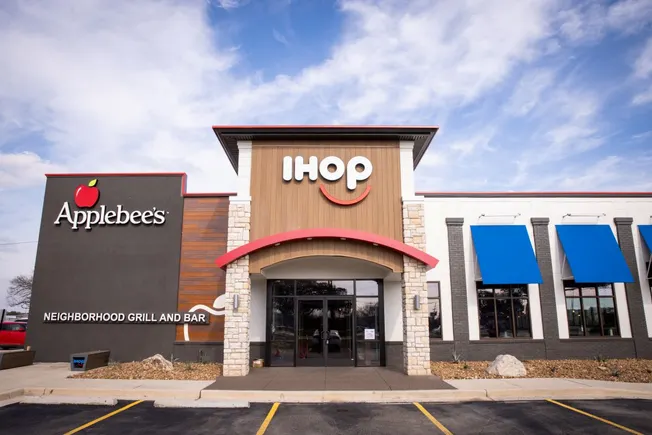
A fight over whether Applebee’s can keep building inside IHOPs is exposing a familiar franchise problem: when corporate growth plans collide with local ownership rights, the people on the shift feel it first. The legal battle is about exclusivity and development rights, but the practical fallout can look a lot like what McDonald’s workers already know from menu changes, remodel pushes, tech rollouts, and fights over who controls the store.
What the lawsuit is really about
Two Texas operators, Apple Texas Restaurants and Apple Houston Restaurants, both subsidiaries of SSCP Management, sued Dine Brands in the U.S. District Court for the District of Kansas on March 19, 2026. The franchisees say co-branded Applebee’s and IHOP restaurants in Texas violate rights they believe were protected by a 2008 franchise agreement and a 2012 development agreement. The dispute covers at least one co-branded location already open and additional proposed restaurants in Texas.
The operators are not small players. Together, they run about 70 Applebee’s restaurants, and SSCP says its broader Applebee’s footprint is about 80 locations across California, Texas, and Virginia. That scale matters because the case is not just about one store or one market. It is about how much say a large franchisee has when a brand decides to change the shape of the system.
Why dual-branding becomes a flashpoint
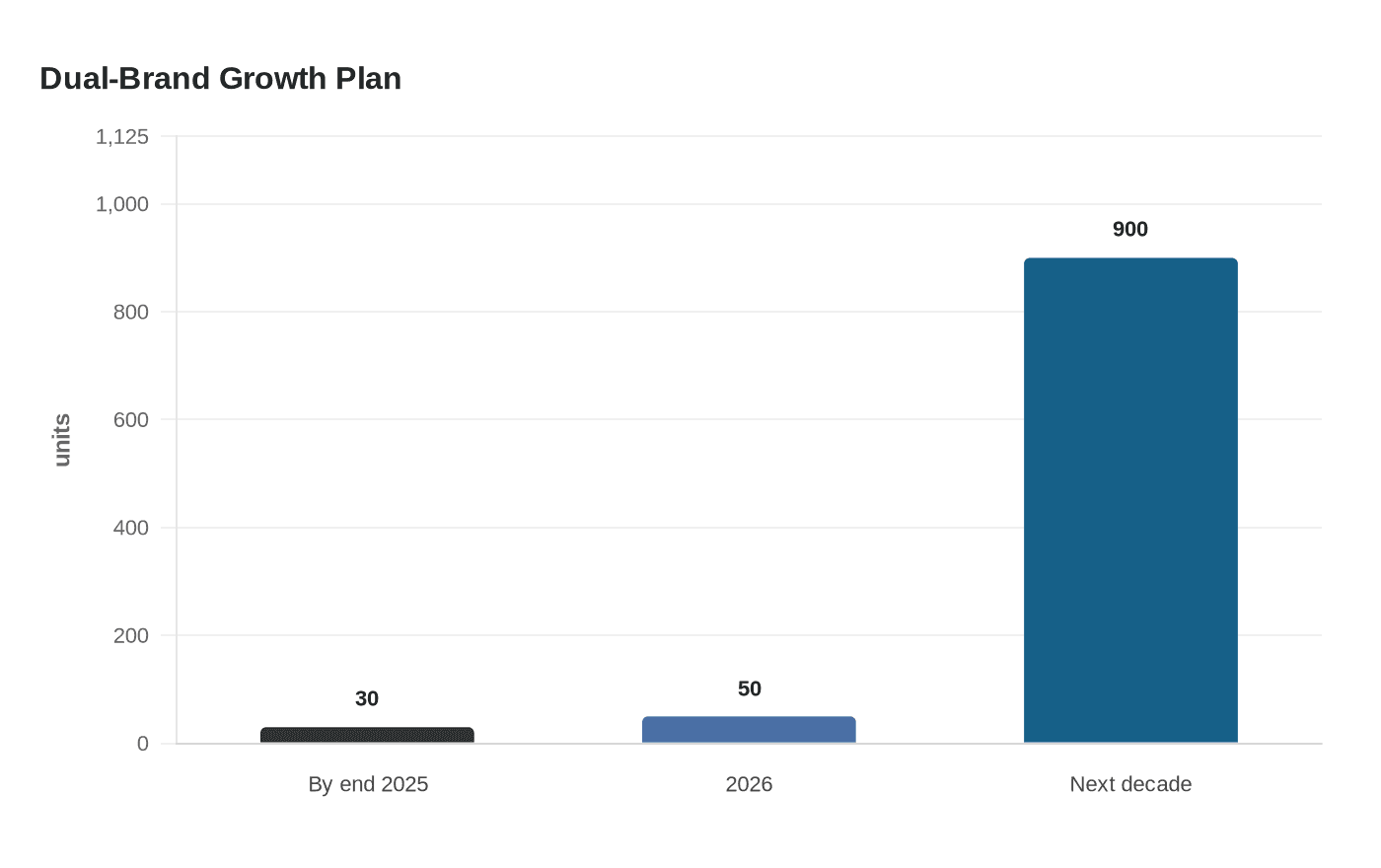
Dine Brands has made dual-branding a growth strategy, not a side experiment. It opened its first U.S. Applebee’s and IHOP co-brand in Seguin, Texas, on February 18, 2025, then said it expected about 30 dual-brand restaurants to be open or under construction by the end of 2025 and at least 50 more in 2026. The company has also said it sees room for roughly 900 dual-branded units over the next decade.
That is a big bet, and big bets often create friction. Dual-branding can promise better traffic and stronger unit economics, but it can also raise hard questions about territory, cannibalization, and whether a franchisor is shifting growth into a market that existing operators believed they already controlled. The lawsuit reportedly says Applebee’s “secretly plotted” for two years to weaken the franchisees’ position, while Dine Brands argues the plaintiffs themselves breached their agreements.
For a McDonald’s crew member, the legal language may sound distant. The store-level reality is not. When a franchisor pushes a new concept, a combined format, or a fresh operating model, operators can end up absorbing the cost in staffing, retraining, tighter kitchens, and more complicated procedures.
What this means on the restaurant floor
Franchise conflict rarely stays in corporate offices. If a franchisee thinks corporate expansion is crowding out its protected territory, that tension can show up in decisions about labor budgets, remodel timing, equipment upgrades, and how quickly new systems are rolled out. A manager may be told to do more with a tighter labor plan while also handling more menu complexity or a new brand-standard process.
That is why McDonald’s workers should pay attention. The chain sits in the same franchised ecosystem as Applebee’s and IHOP, where local owners, corporate standards, and brand-wide initiatives are constantly balancing one another. When that balance breaks down, the ripple effects can include inconsistent training, delayed maintenance, slower support from ownership, or more pressure on already stretched shift managers.
This is also the same basic tension that has shaped other fast-food fights over wages, automation, and scheduling. Crew members have seen how national decisions can land as local problems: a new kiosk system, a tighter staffing model, a higher minimum wage, or a menu test that adds steps without adding labor. Franchise disputes are another version of that story.
Why this matters for McDonald’s operators
For McDonald’s franchisees, the Applebee’s case is a warning about how quickly growth strategy can become a legal and operational fight. If corporate thinks a dual-brand or multi-brand strategy will expand the system, local operators may see it as a threat to their sales or long-term rights. That split can be especially sharp when the franchisor is trying to prove a concept across multiple markets at speed.
The lesson for operators is that strategy is never abstract. If the company wants faster expansion, local owners may be asked to carry the burden through remodels, staffing changes, and fresh training requirements before the economics are settled. If the company wants to simplify the system, workers may still feel the churn as stores get reorganized around a new format or a new chain of command.
That is exactly why franchisees care about exclusivity language. The Applebee’s suit shows how a disagreement over where one concept can be placed turns into a broader argument over who gets to control the economics of the restaurant system. In a McDonald’s context, that same argument can shape everything from drive-thru flow to kitchen pacing to how much autonomy a local owner really has.
What workers and managers should watch next
If this kind of dispute reaches your restaurant, the first signs are usually operational, not legal. Look for changes in staffing targets, new training modules, altered delivery schedules, menu additions that require new prep steps, or a sudden pause in local expansion plans. Those are often the real-world clues that corporate and franchise interests are pulling in different directions.
For workers, the practical question is simple: will the change make the shift easier or harder? For managers, the question is whether the store is being asked to absorb more complexity without more labor or support. For franchisees, the fight is over control, territory, and return on investment. For everyone on the floor, it is about whether the business is expanding in a way that creates stability or one that spreads uncertainty across the chain.
The Applebee’s case is not a McDonald’s lawsuit, but it is a clean example of how franchising pressure works. When corporate growth plans and local ownership rights collide, the people making fries, running the line, and covering the dinner rush often feel the consequences long before the lawyers do.
Know something we missed? Have a correction or additional information?
Submit a Tip