Franchisee Group Requests Meeting with McDonald’s President Over Labor, Inspections
An independent franchisee group asked to meet with McDonald’s U.S. president to raise alarm about tighter inspections and corporate standards that could affect franchise autonomy and worker risk.
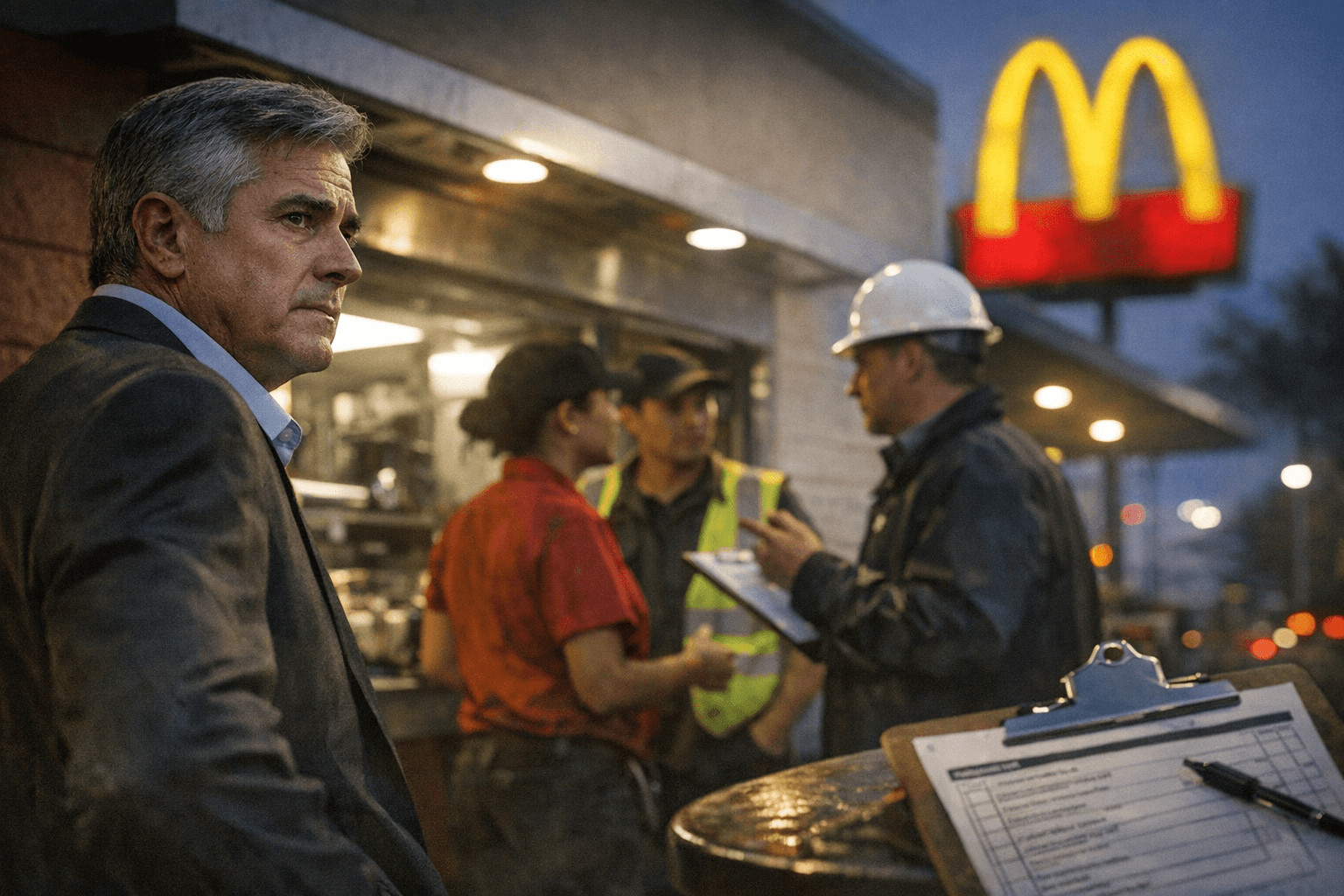
An independent franchisee organization requested a meeting with McDonald’s U.S. president on January 18, 2026 to press concerns about recent corporate operational standards, a heightened inspection cadence and what owners describe as encroachments on franchise autonomy. Franchisees framed the appeal as a defense of independence and warned that certain corporate actions could create regulatory or labor classification risks for owners and the system as a whole.
The group’s letter to corporate outlined specific grievances tied to increased oversight from corporate operations teams and a more frequent inspection schedule that owners say has intensified compliance pressure at the store level. Franchisees contend that tighter standards and more frequent reviews are blurring the line between franchisor direction and franchisee control of day-to-day employment practices, potentially exposing owners to liabilities traditionally borne by individual operators.
This dispute is part of a longer-running tension between some owner groups and McDonald’s corporate operations apparatus. Franchisors and franchisees have long negotiated the balance between systemwide consistency - which can protect brand equity and customer experience - and local autonomy, which allows owners to manage staffing, scheduling and labor practices according to local conditions. The latest friction centers on whether recent corporate moves amount to necessary standardization or an overreach that risks co-employment exposure and other regulatory scrutiny.
For frontline workers and store managers, the outcome could matter in practical ways. Changes in how responsibilities are delineated may affect who sets schedules, who implements discipline and who is accountable for wage-and-hour compliance. A shift toward more centralized operational enforcement could result in tighter uniformity in procedures such as clocking policies, breaks and task assignments. Conversely, a retreat from corporate-driven inspections could leave a patchwork of practices that vary by owner, with uneven protections or expectations for employees.
Labor-policy alignment is another downstream effect. If franchise autonomy is constrained, corporate could take a larger role in defining employment policies; that might simplify compliance across territories but also concentrate liability. If the company steps back, franchisees could retain more control but also shoulder more legal and regulatory risk.
McDonald’s response to the meeting request was not immediately public. The group’s appeal signals a dispute that could shape how operations teams and owners interact in the months ahead. For workers and managers, the implications will play out through changes in store-level practices, communication from owners and any company guidance that follows. Employees should watch for updates from their local management and for any new directives that alter schedules, training or compliance procedures.
This article was produced by Prism’s automated news system from verified source data, official records, and press releases, then run through automated quality and moderation checks before publishing. The system is built and supervised by the people who set the standards it runs under. Read our full AI policy.
Did this article answer your question?