Indiana House Approves Penny-Rounding and Tip-Tax Changes Affecting McDonald's Workers
The Indiana House passed SB 243 77-19, letting retailers round cash sales starting in 2027 and adding temporary tax deductions for overtime, tips and interest on loans for U.S.-made vehicles.
The Indiana House of Representatives approved Senate Bill 243 in a bipartisan 77-19 vote after floor debate on Monday, Feb. 23, 2026, advancing a package that would allow retailers to round cash transactions and add temporary state tax deductions. Rep. Jeff Thompson, R-Lizton, is the House sponsor of the amended measure and told colleagues, “The way we have drafted this is, if the … business wants to round up, they may; they may round down. It’s their call.”
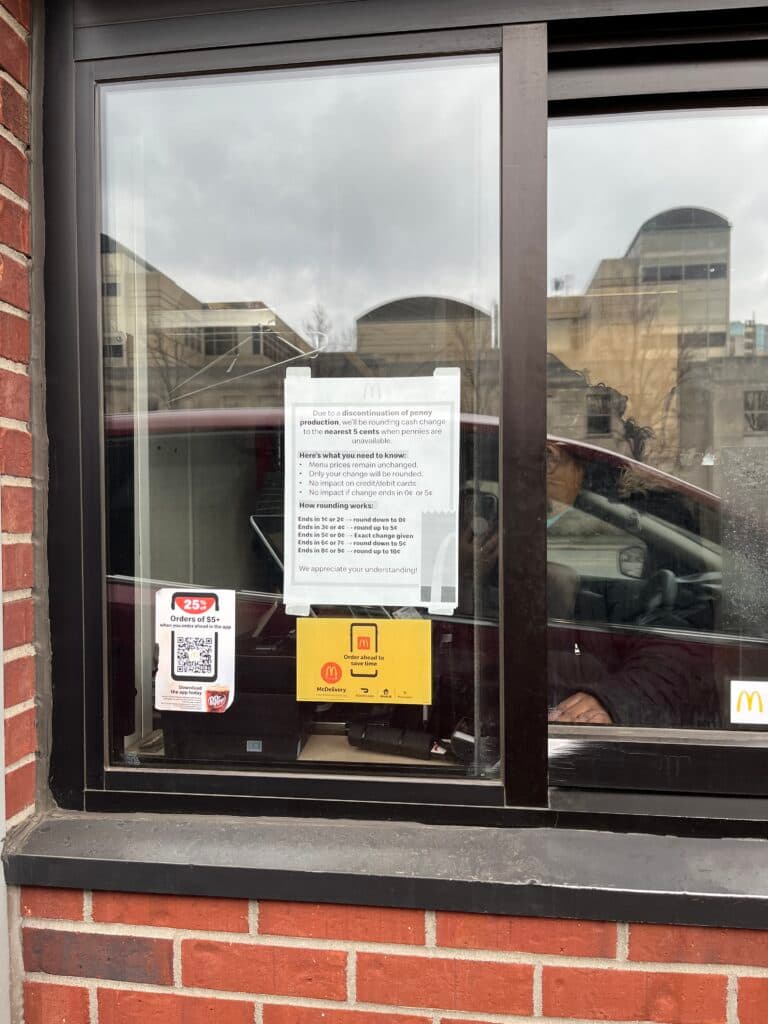
Under the House-amended text, retailers could begin rounding cash transactions up or down to the nearest nickel or dime, with the rounding regime slated to take effect in 2027. The bill would require Hoosier governments to round down, while private businesses may choose their rounding practice; committee supporters urged businesses to round down to the next nickel and warned those who round up could face customer blowback. “The rounding regime could cost the state millions in sales tax revenue, while agencies could lose thousands in earnings off fees, fines and more,” reporting on the bill noted.
SB 243 also adopts several provisions modeled on President Donald Trump’s One Big Beautiful Bill Act, adding temporary tax deductions that the Indiana Economic Digest described as one-year tax deductions on overtime and tip income along with interest on loans for U.S.-made vehicles. Estimates of the package’s savings to Hoosiers vary in published accounts: the Indiana Capital Chronicle wrote, “Hoosiers who work overtime or for tips are another vote closer to a $200 million break on next spring’s tax returns,” while the Indiana Economic Digest said the measure would save Hoosiers about $250 million. IndyStar framed the changes as temporary state-level tax cuts for workers earning tips and overtime pay that “will sap millions from the state's coffers.”

The House debate included sharp warnings about local revenue and benefit distribution. Rep. Greg Porter, D-Indianapolis, who spoke against the Senate-origin bill as it moved through the House, said, “In local government, that’s not walking around money, that’s survival money,” and argued the tips break “would benefit higher earners more.” Rep. Jack Jordan, R-Bremen, argued for broader reductions, saying, “I love tax cuts,” and advocating cuts to help dishwashers, gas station workers and a “plethora” of other employees. A photo by Leslie Bonilla Muñiz captured Rep. Jeff Thompson listening as Rep. Greg Porter spoke against the bill on Monday.
The bill now returns to the Senate for concurrence on House changes, or both chambers must craft a compromise before the expected final day of the legislative session on Friday; if the Senate gives final approval the measure would then go to Gov. Mike Braun for signing. One outlet reported SB 243 was “headed to the governor with a 47-0 vote,” a statement that conflicts with other accounts showing the Senate still must act. If enacted as passed by the House, the combination of 2027 penny-rounding rules and temporary deductions for overtime and tips would change cash receipts and tax filings for retail and hospitality employers and employees, including outlets pictured in reporting that displayed McDonald’s signage.
This article was produced by Prism’s automated news system from verified source data, official records, and press releases, then run through automated quality and moderation checks before publishing. The system is built and supervised by the people who set the standards it runs under. Read our full AI policy.
Did this article answer your question?

