McDonald's Corporate vs. Franchise Restaurants: What Employees Need to Know
Your store's golden arches look identical, but whether you work for a franchise or corporate McDonald's determines your pay, your benefits, and who actually has the power to fix your problems.

Walk into any McDonald's in America and the menu, the uniforms, and the procedures look the same. That uniformity is the point. But for the roughly 2 million people who work inside those restaurants, the entity signing their paychecks makes an enormous difference in what they earn, what benefits they can access, and who they should contact when something goes wrong.
Who actually employs you
For the vast majority — about 95% — of McDonald's locations, which are independently owned franchises, the minimum wage is determined by federal, state, and even city laws. A franchise is not McDonald's Corporation; it is an independent small business that pays McDonald's for the right to use its brand, menu, and operating system. McDonald's Corporation acts as the direct employer for all staff at its company-owned restaurants and corporate offices, and as a large corporation, it has standardized HR policies and benefits packages that it offers to its eligible employees.
This distinction matters more than most crew members realize. Most McDonald's restaurants are operated by independent franchisees who are independent employers and set their own employment policies and practices, including pay and benefits for the people working in their restaurants. McDonald's does not control the independent franchisees' employment policies and practices and does not employ individuals working at franchised restaurants.
The practical implication: a complaint escalated to McDonald's corporate about a franchise location often goes nowhere, because corporate is not your employer.
Pay: where the gap starts
The starting pay at a McDonald's depends entirely on its location and whether it's a corporate-owned or a franchise-operated restaurant. For the small percentage of restaurants McDonald's owns directly, the company sets its own starting wages, which are often above the federal minimum.
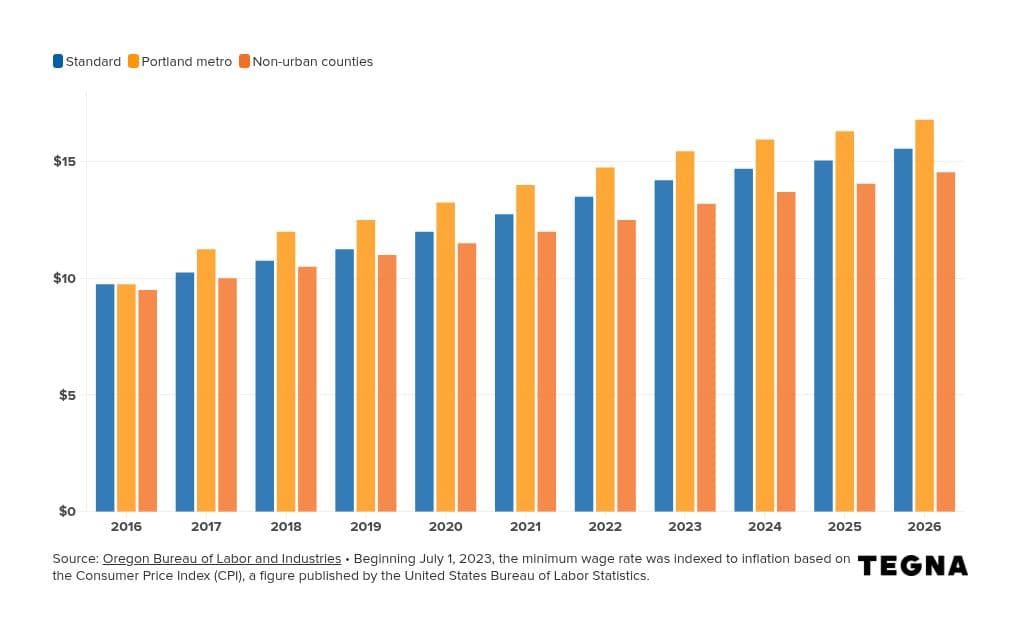
McDonald's corporate has committed to raising the average hourly wage in its company-owned restaurants to over $15 per hour, but this is a key distinction. The vast majority — around 95% — of McDonald's restaurants in the U.S. are independently owned and operated by franchisees. These owners set their own wages, which must meet at least the local minimum wage. You'll see a wide range of pay, from the state minimum in some rural areas to $15-$18 or more in competitive urban markets.
Geography compounds the franchise factor. In California, a statewide minimum wage of $16 per hour applies, and a specific law for fast-food workers mandates a $20 per hour minimum wage. So every McDonald's in California, franchise or corporate, must pay at least $20. A crew member's starting pay can be more than double that of another, based purely on geography.
For shift managers, pay scales diverge further. Shift managers oversee a specific shift and typically earn an hourly wage, often in the range of $15 to $20 per hour, depending on location. Assistant general managers are often salaried and take on more responsibility for store operations, with salaries ranging from $45,000 to $60,000 per year. Again, whether those figures apply to you depends on your operator.
The Fight for $15 movement, a global labor movement that began with fast-food workers in New York City in 2012 advocating for a minimum wage of $15 per hour and the right to unionize, has made McDonald's a primary target and symbol of the movement — precisely because corporate wage announcements affect only a fraction of the chain's actual workforce.
Benefits: a franchise-by-franchise lottery
Health insurance is where the corporate-versus-franchise divide becomes most consequential. A franchisee pays McDonald's for the right to use its brand, menu, and operating systems, but they are, in effect, the employer. This means each franchisee is responsible for setting wages, schedules, and their own benefits programs. While they must all comply with federal and state laws like the ACA's employer mandate, they have wide latitude beyond that.
Corporate restaurant employees who are full-time, corporate-level staff and restaurant managers are typically offered a comprehensive benefits package, including health insurance, shortly after they are hired. Crew members working full-time — averaging 30 or more hours per week — at a corporate-owned location are generally eligible for health insurance options after a waiting period.
Retirement savings plans are another area where corporate and franchise locations often differ. McDonald's Corporation offers a 401(k) retirement savings plan to its eligible employees, often with a generous company match. For franchise locations, the availability of a 401(k) plan is up to the owner. Larger, multi-restaurant franchise organizations are more likely to offer such a benefit than a single-restaurant owner, but it is not guaranteed.
Paid time off follows the same pattern. McDonald's PTO policy differs based on the job type — company-owned or franchisee-owned — and the location. Franchisees are independent business owners and may have some discretion over the benefits they offer to their employees. PTO accrual rates and eligibility might differ based on position and how long the employee has been with the company.
Archways to Opportunity: the education benefit with a catch
McDonald's flagship education program is one of the most compelling reasons to work at any location under the golden arches — on paper. Archways to Opportunity is a U.S. initiative consisting of multiple programs intended to provide education to members of the McDonald's family. Founded in 2015, Archways gives restaurant employees an opportunity to grow and learn. Through Archways to Opportunity, restaurant employees have the opportunity to learn English language skills, earn a high school diploma at no cost, pursue a college degree with the support of tuition assistance, and access free education and career advising services.
The tuition assistance tiers are specific. Restaurant crew — including maintenance — part-time managers, or part-time office staff of a participating franchise are eligible for $2,500 in tuition assistance each year if employed by the same owner/operator for at least 90 cumulative days, working an average of 15 hours per week, and in good standing as determined by the franchise owner/operator. Full-time restaurant managers or staff of a participating franchise are eligible for $3,000 in tuition assistance each year if they work a minimum of 30 hours per week for that operator.
The critical word throughout is "participating." The program's availability depends on voluntary participation by franchise owners. Because franchise owners may opt into or out of Archways, employees at different restaurants can face vastly different access. Franchise participation depends on the individual owner/operator opting into the program. You could be working at a location two miles from one where your coworker is banking $2,500 annually for school — and your operator simply hasn't signed up.
Scheduling: who controls your hours
McDonald's operates both corporate-owned stores and franchisee-owned stores. The benefits offered by corporate-owned stores might differ from those provided by franchisees. Franchisees are independent business owners and may have some discretion over the benefits they offer to their employees.
Scheduling practices reflect that autonomy in practice. At corporate-owned locations, HR policies tend to be standardized, documented, and subject to internal review. At a franchise, the owner-operator sets the floor rules, and consistency can vary across even a single operator's multiple locations. A franchisee in a rural area with a low cost of living and less competition for labor may offer a different wage than a franchisee in a bustling city where the labor market is tight. The same logic applies to how shifts are built, how hours are distributed, and how schedule change requests are handled.
Who to contact when problems arise
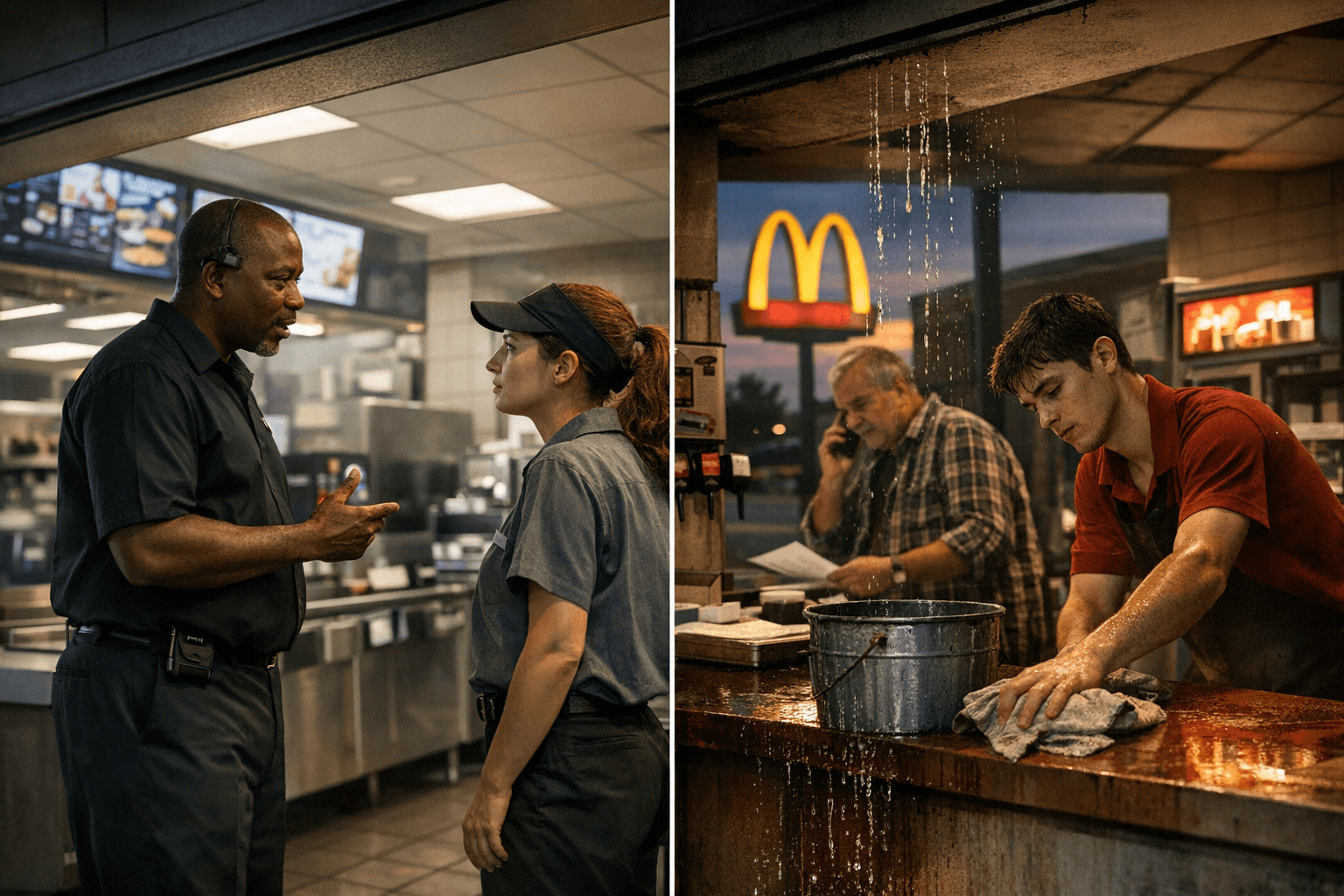
This is the most practical difference, and the one employees are least prepared for. If you work at a corporate-owned location and have a wage, scheduling, or HR dispute, your chain of escalation runs through McDonald's Corporation's standardized HR structure. If you work at a franchise, your employer is the owner-operator, not McDonald's corporate.
The franchise model allows for local ownership but creates inconsistency in employee benefits. Since there's no central database for franchise benefits, you have to be proactive. That means asking your manager — or the franchise office directly — which benefits your specific location offers, whether your operator participates in Archways, what your 401(k) options are, and exactly how health insurance eligibility is calculated at your store.
For wage and labor violations, the relevant authority is your state's Department of Labor, not McDonald's corporate. Federal protections under the Fair Labor Standards Act apply regardless of whether your restaurant is corporate or franchised, but enforcement starts with the employer of record — which, for 95% of McDonald's workers, is the local operator.
What this means before you take a job
The uniform is the same. The obligations McDonald's places on franchisees around food safety and brand standards are the same. But the employment experience can be vastly different depending on who owns the restaurant. Before accepting a role, the most important questions to ask are not about the job itself — they're about who runs the location: Does the operator participate in Archways to Opportunity? Is there a 401(k), and does the owner match contributions? What are the health insurance eligibility requirements? How is PTO structured?
While McDonald's Corporation has made efforts to increase wages at its company-owned restaurants and has encouraged its franchisees to follow suit, the final decision on compensation rests with the individual owner-operator. Knowing that up front is not cynicism; it's the most useful thing any McDonald's crew member can understand about the system they're working inside.
This article was produced by Prism’s automated news system from verified source data, official records, and press releases, then run through automated quality and moderation checks before publishing. The system is built and supervised by the people who set the standards it runs under. Read our full AI policy.
Did this article answer your question?